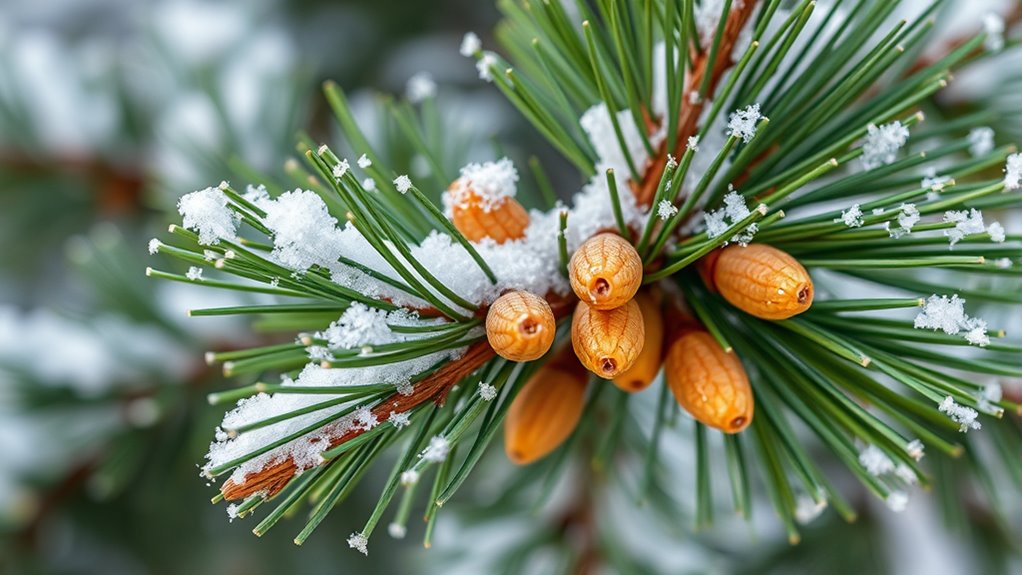
In winter, you can sustainably harvest edible pines by gathering their cambium, needles, and cones. You can sip pine needle tea for a vitamin C boost, collect pine nuts from fallen cones for a nutritious snack, and carefully peel cambium from the bark to enjoy its nourishing benefits. These simple acts foster self-reliance and deepen your connection with nature. Keep exploring to discover how these resources become allies in your winter wellness journey.

Get garden gear delivered free — and shop member deals
- Fast, free delivery on millions of items
- Access to Prime Big Deal Days deals on October 6–7
- Prime Video, Amazon Music and more included
Key Takeaways
- Edible pines provide winter foraging options through needles, nuts, cones, and cambium, supporting self-sufficiency.
- Pine needles can be steeped into nutrient-rich, vitamin C-packed tea for immune support.
- Pine nuts are harvested from cones, offering healthy fats and proteins, available in winter.
- Cambium, the inner bark layer, is edible and harvested carefully to nourish during cold months.
- Engaging with pine resources symbolizes abundance and promotes self-reliance in winter.
When winter blankets the landscape, edible pines remain a valuable resource for foragers. This is your chance to tap into nature’s hidden bounty, reclaiming a sense of freedom and self-sufficiency. Instead of relying on stores, you can gather nourishment directly from the land, transforming the cold months into an opportunity for connection and empowerment. Pine needle tea offers a invigorating way to harness the plants around you; its vibrant, aromatic leaves provide a rich infusion packed with vitamin C and natural antioxidants. Making pine needle tea is straightforward—simply steep fresh or dried needles in hot water, and you’ll enjoy a revitalizing drink that awakens your senses and bolsters your immune system. This simple act of harvesting and brewing reminds you that you’re capable of nourishing yourself from what nature freely provides.
Winter foraging reveals nature’s bounty—harvest pine needles, nuts, and cambium to nourish and empower yourself sustainably.
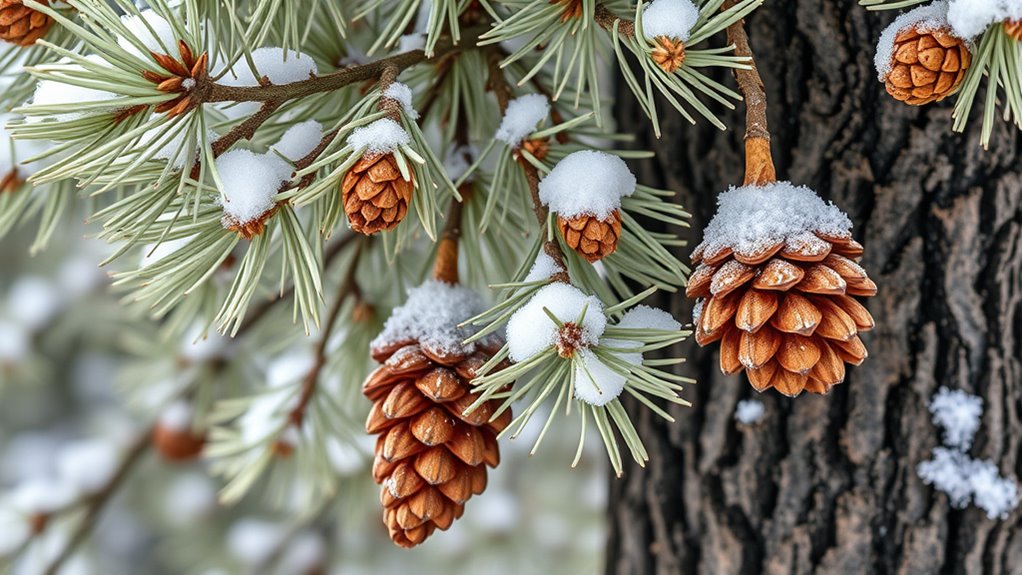
Beyond the tea, pine nut harvesting releases another level of liberation. During winter, some pine species release their edible seeds, which are packed with healthy fats and proteins. With patience and a keen eye, you can gather these nuts directly from fallen cones, feeling a deep connection to the cycle of life. Using your hands to extract pine nuts from their cones becomes a meditative act—an assertion of independence from processed foods and commercial supplies. Once collected, you can enjoy them raw or roasted, knowing you’ve sourced sustenance in a way that’s both empowering and sustainable.
The cambium, the soft layer beneath the bark, also holds edible potential during winter. Carefully peeling away small sections reveals a nutrient-rich food source that has sustained trees through cold months. It’s a practice that emphasizes respect for the tree and a deeper understanding of nature’s resilience. Harvesting cambium isn’t about exploitation; it’s about harmonious gathering, ensuring the tree remains healthy while you nourish yourself. This act of mindful foraging embodies a liberated mindset—taking only what’s needed, trusting your skills, and connecting with the land on a fundamental level.
In winter, the cones of pines serve as both a source of seeds and a symbol of abundance. They remind you that even in the cold, life persists and offers opportunities for growth. Whether you’re cracking open cones for pine nuts, brewing tea from the needles, or carefully harvesting cambium, each act reinforces your independence. You’re not just surviving winter—you’re reclaiming your ability to live freely, intimately connected to the earth’s cycles. Edible pines become more than trees; they’re allies in your journey toward self-reliance and liberation from dependency on external systems.
Frequently Asked Questions
Are Edible Pine Parts Safe for Children to Eat?
You should be cautious about giving children edible pine parts, as not all are safe. While some pine needle recipes and pine cone harvesting can be fun ways to explore nature, make sure you identify safe species and remove any inedible or potentially harmful parts. Always supervise children during these activities, and consult reliable sources or experts to guarantee safety, so everyone can enjoy nature’s bounty without risk.
Can Edible Pine Products Be Used Medicinally in Winter?
Pine medicinal practices provide powerful, natural support for winter health, helping you harness the healing herbs of the forest. You can use pine products like needles and resin to bolster immunity, soothe sore throats, and boost breathing. Embrace these age-old remedies to liberate yourself from winter ailments, revealing the invigorating potential of pine’s healing properties. With mindful use, you reclaim resilience and renewal during the coldest months.
How Do Climate Changes Affect Pine Edibility in Winter?
Climate impact directly influences winter growth, making pine edibility unpredictable. You might find that warmer winters cause pines to produce less nutritious cambium, needles, or cones, or alter their flavor and medicinal properties. Embrace this change as a chance to explore new wild foods and harness nature’s resilience. By staying adaptable, you can continue to enjoy the liberating experience of foraging and discovering edible pine parts, regardless of shifting climate patterns.
Are There Specific Pine Species More Nutritious in Winter?
Imagine finding a resilient white pine thriving despite winter’s chill—that’s because different species have unique nutritional variations. You’ll notice species differences, with some pines offering richer nutrients during winter, giving you a essential edge for sustenance. Certain pines, like the Eastern White Pine, may be more nutritious in winter, empowering you to harness nature’s bounty freely. Embrace these variations and access the wild nourishment around you.
How Should Edible Pine Parts Be Stored During Winter Months?
You should store edible pine parts in cool, dry, airtight containers to preserve freshness during winter. Use preservation techniques like freezing or vacuum sealing to prevent spoilage and retain nutrients. Keep needles and cambium in the fridge or freezer, ensuring they’re sealed tightly. This way, you stay liberated from spoilage worries, enjoying your pine harvest whenever you desire. Proper storage empowers you to savor nature’s bounty year-round with ease.
Conclusion
Don’t let winter’s chill keep you from exploring nature’s hidden treats. Edible pine parts like cambium, needles, and cones are often overlooked, but they offer nourishing options year-round. Some might worry about safety, but with proper identification, you can enjoy these gifts from the forest responsibly. So next time you hike, remember—winter’s not just for snow; it’s also for discovering delicious, natural surprises just waiting to be found.
Fall Picks
fall essentials
As an affiliate, we earn on qualifying purchases.