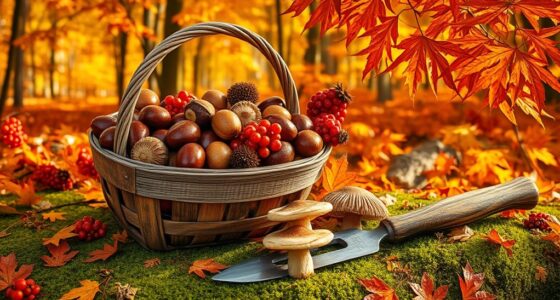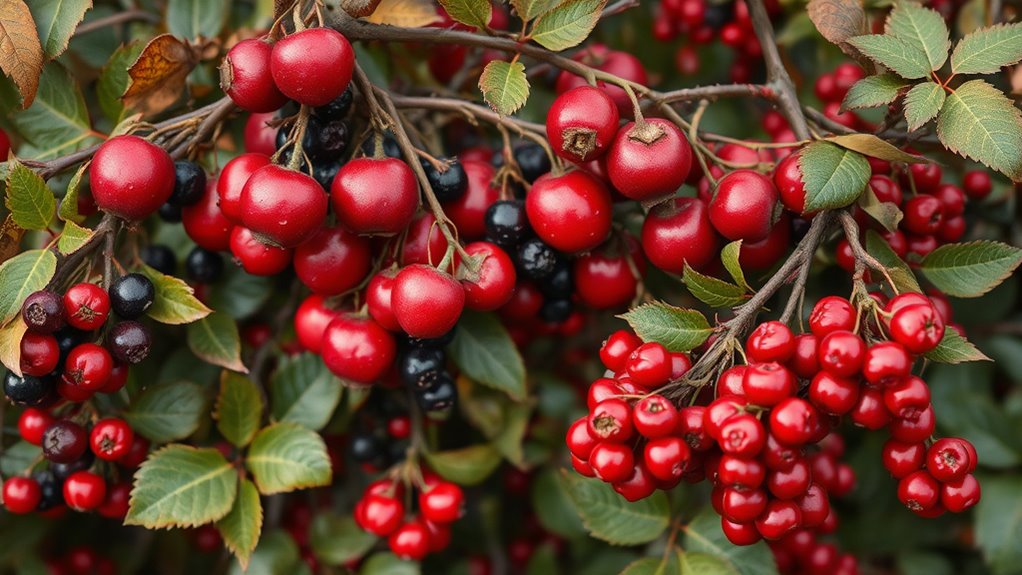

In November, hedgerows offer a wonderful opportunity to gather wild treasures like rosehips, sloes, and hawthorn berries. You can spot vibrant red rosehips, tart sloes perfect for gin, and clusters of hawthorn packed with antioxidants. Remember to harvest responsibly—leave plenty for wildlife and avoid damaged plants. Respectful foraging helps maintain the delicate ecosystem and fosters a stronger connection with nature. Keep exploring to discover more about safe and sustainable winter foraging practices.

Get garden gear delivered free — and shop member deals
- Fast, free delivery on millions of items
- Access to Prime Big Deal Days deals on October 6–7
- Prime Video, Amazon Music and more included
Key Takeaways
- November is ideal for harvesting ripe rosehips, sloes, and hawthorn berries, supporting winter wildlife and enjoying seasonal flavors.
- Identify and gather healthy, undamaged berries from dense hedgerows, ensuring sustainable foraging and leaving enough for wildlife.
- Rosehips are rich in vitamin C and safe to harvest, while sloes require careful handling for gin or jam making.
- Hawthorn berries are antioxidant-rich, easy to spot in clusters, and provide vital nourishment for birds and insects.
- Practice responsible foraging by respecting plant habitats, avoiding over-harvesting, and handling plants gently to preserve ecosystem health.
November is the perfect time to explore hedgerows as they prepare for winter. This is your moment to connect deeply with nature, to witness the transformation of the landscape, and to gather the wild treasures that have been quietly storing energy for the cold months ahead. As you venture into these dense, tangled corridors, you step into a world filled with vibrant berries and nourishing fruits—each offering a taste of freedom and resilience. But before you reach out and pick, remember that hedgerows serve as essential wildlife habitats. They shelter birds, insects, and small mammals that rely on these plants for survival. Respect their space, move gently, and guarantee your foraging remains safe and sustainable. Your goal isn’t just to harvest; it’s to honor the delicate balance that sustains this living mosaic.
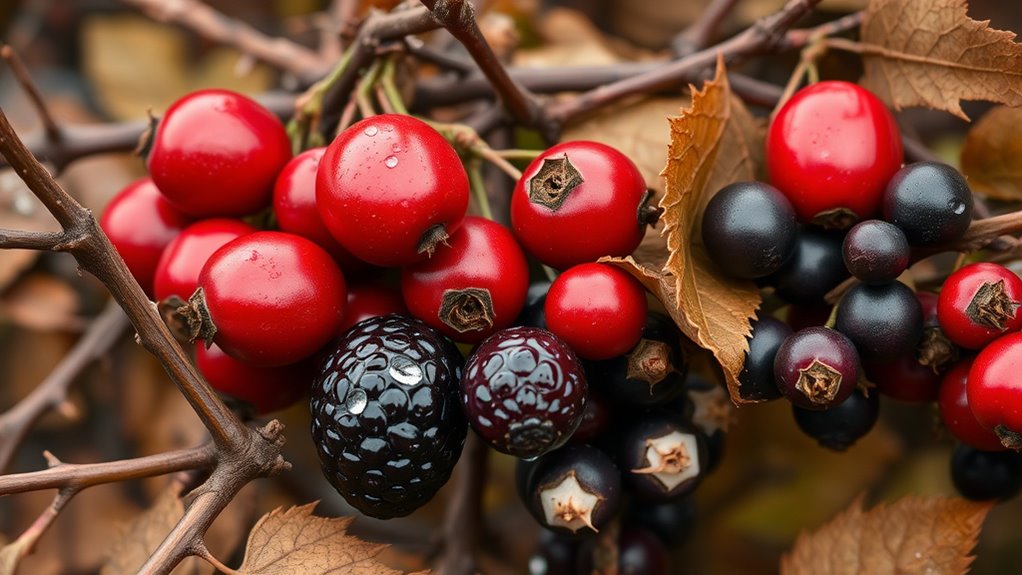
In November, the hedgerow’s bounty is abundant, yet it’s imperative to prioritize foraging safety. Many berries and fruits look tempting but can be toxic if misidentified. Rosehips, for example, burst with vitamin C and are safe to harvest when they’re bright red and firm. Sloes offer a tart, astringent flavor perfect for making gin or jams, but their tough skins and bitter seeds require careful handling. Hawthorn berries are another reliable find, packed with antioxidants and easy to identify by their clusters of small, red drupes. As you gather, keep an eye out for any signs of disturbance or damage in the plants—healthy, undamaged fruits are your best bet. Never take more than you need, and leave enough behind to support the local wildlife. Birds and insects depend on these berries for nourishment during winter, helping to sustain their populations and maintain the natural balance. Recognizing the importance of wildlife habitats helps ensure your foraging supports biodiversity rather than disrupts it.
Your exploration isn’t just about collecting; it’s about liberation—breaking free from the constraints of urban life and reconnecting with the wild. Hedgerows are alive with stories and survival lessons, and harvesting their gifts is an act of respect and gratitude. By choosing to forage responsibly, you contribute to the health of these habitats, guaranteeing that wildlife continues to thrive and that future generations can experience the same freedom and wonder. Remember, safety and respect are your guiding principles. Handle the plants carefully, avoid disturbing nesting sites, and never over-harvest. In doing so, you become part of a tradition rooted in harmony with nature, embracing the wild as your ally in the quest for nourishment and liberation.
As an affiliate, we earn on qualifying purchases.
Frequently Asked Questions
Are Hedgerows Safe for Children and Pets to Explore?
Hedgerows can be safe for children and pets if you choose child-friendly hedgerows and supervise closely. Always check for thorny branches and avoid plants with berries that might be toxic, like certain sloes. Keep an eye on your little explorers and teach them not to eat unknown berries. With careful hedgerow safety measures, you can enjoy liberating outdoor adventures while ensuring everyone stays safe.
How Can I Identify Different Types of Rosehips and Sloes?
Don’t worry about confusing rosehips and sloes; you can identify them easily. Look for rosehips—they’re round or oval, often red or orange, with a slightly fuzzy texture. Sloe berries are small, dark blue or purple, and grow in clusters on blackthorn bushes. By observing color, shape, and cluster patterns, you can distinguish these berries. Once you master this, you’ll feel free to explore hedgerows confidently and enjoy their wild bounty.
When Is the Best Time to Harvest Hawthorn Berries?
You should harvest hawthorn berries when they’re fully ripe, typically in late autumn after the first frost. Look for deep red berries that feel firm but yield slightly under gentle pressure. Use careful harvesting techniques to avoid damaging the branches and guarantee berry ripeness. Remember, harvesting at peak ripeness gives you the best flavor, so don’t rush—wait for that perfect moment when the berries are bursting with color and ready to be enjoyed.
Can I Grow Hedgerow Plants in My Garden?
Imagine wielding a time-traveling scythe, transforming your garden into a thriving hedgerow haven. You can definitely grow hedgerow plants in your garden; it’s all about smart plant selection and garden cultivation. Choose native species like hawthorn, rosehips, and sloes to create a wild, free space that invites nature in. Break free from the ordinary, and let your garden flourish with vibrant, natural beauty—your personal sanctuary of liberation.
What Wildlife Benefits Do Hedgerows Provide in Winter?
Hedgerows offer essential winter benefits, providing shelter and food for wildlife. You’ll see birds using the dense branches for nesting or roosting, giving them safety from harsh weather. Insects find refuge in the bark and leaf litter, helping sustain the ecosystem. By maintaining your hedgerow, you actively support biodiversity, giving nature a fighting chance to thrive even in the coldest months. It’s your chance to make a real difference.
Conclusion
As you explore the hedgerows this November, remember that these plants aren’t just beautiful—they’re essential for wildlife and your own foraging. Did you know that sloe berries contain twice the vitamin C of oranges? So, take your time to identify and harvest responsibly. By appreciating these plants now, you’ll help support the ecosystem and enjoy their seasonal bounty. Happy foraging, and cherish the wild treasures around you this autumn!
Fall yard work Picks
leaf blowers
As an affiliate, we earn on qualifying purchases.