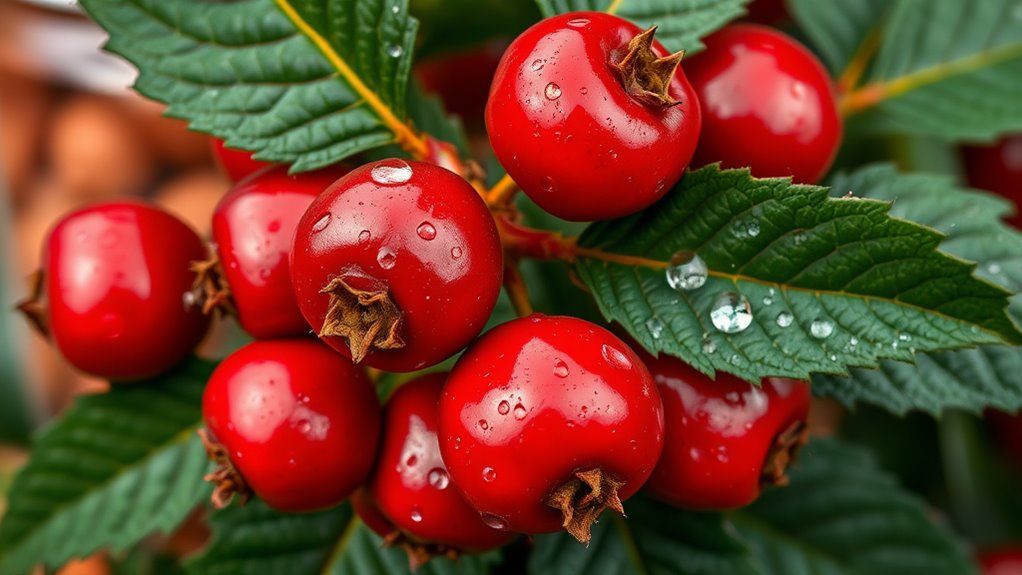

Hawthorn berries have a tart, slightly sweet flavor with a hint of bitterness, making them great for jams and jellies. You can identify them by their bright red clusters and their small, round shape. These berries are pectin-rich, helping your homemade jelly set naturally without added thickeners. To guarantee maximum health benefits, harvest the berries when fully ripe and free from pesticides. Keep exploring to discover more tips on harvesting, preparing, and enjoying hawthorn berries.

Get garden gear delivered free — and shop member deals
- Fast, free delivery on millions of items
- Access to Prime Big Deal Days deals on October 6–7
- Prime Video, Amazon Music and more included
Key Takeaways
- Hawthorn berries have a tangy, mildly sweet flavor with a hint of tartness, making them suitable for jellies and teas.
- They can be identified by their bright red color, clustered growth, and ripening in late summer.
- Pectin-rich jellies are made using hawthorn berries, which naturally contain pectin, aiding gelling without added thickeners.
- Proper harvesting involves collecting fully ripened, pesticide-free berries with clean, sharp tools.
- Incorporating hawthorn berries into recipes preserves their medicinal properties and offers health benefits.
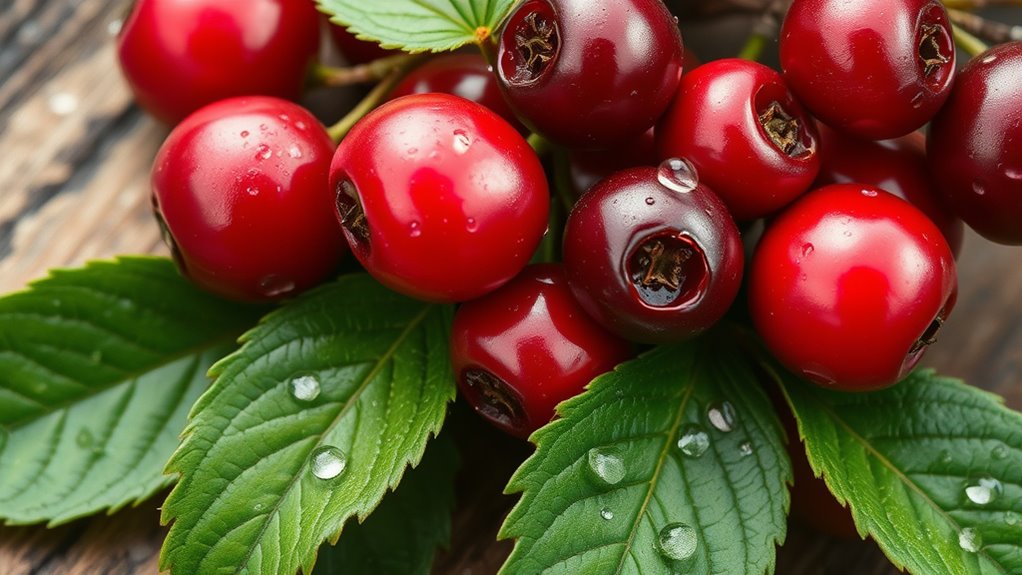
Have you ever wondered why hawthorn berries have been valued for centuries? It’s because they hold a powerful secret: their medicinal uses can transform your health and well-being. These small, vibrant berries aren’t just tasty; they’re nature’s gift for those seeking liberation from ailments and imbalance. When you understand how to harness their potential, you gain access to a natural remedy that’s been trusted for generations. The key lies in knowing how to properly harvest these berries to preserve their medicinal properties. Harvest techniques are simple but essential. When the berries ripen—usually in late summer—look for bright red clusters. Picking them at the right time ensures you capture their full medicinal potency. Use clean, sharp tools to gently pluck the berries, avoiding damage to the plant and ensuring you don’t introduce contaminants. Proper harvesting techniques also involve collecting berries from healthy, pesticide-free plants, so you’re not just gathering fruit but a pure, potent medicine. Additionally, understanding the medicinal properties of hawthorn berries helps you maximize their health benefits and incorporate them effectively into your wellness routine. Once harvested, hawthorn berries can be used in a variety of ways to promote your health. They’re renowned for their heart-supporting properties, helping to strengthen cardiac function and regulate blood pressure. Their medicinal uses extend to reducing anxiety, improving circulation, and supporting digestion. You can prepare teas, tinctures, or even incorporate the berries into homemade jams and jellies, which makes it easier to integrate their benefits into your daily routine. The berries contain compounds like flavonoids and oligomeric procyanidins, which act as antioxidants, fighting free radicals and reducing inflammation. This means you’re not just benefiting from their taste but actively defending your body against modern stressors and toxins. When you take control of the harvesting process, you ensure that the berries retain their full medicinal potential, giving you a natural alternative to synthetic medications.
Frequently Asked Questions
Are Hawthorn Berries Safe for Children to Consume?
Hawthorn berries aren’t recommended for children’s consumption without professional guidance because their safety for child safety isn’t fully established. You should prioritize caution with berry consumption for kids, especially with wild or unprocessed berries. Always consult a healthcare provider before introducing hawthorn berries into a child’s diet, as some parts may cause allergic reactions or stomach upset. Protect your child’s health by making informed decisions about berry safety.
How Long Do Hawthorn Berries Last After Harvesting?
Hawthorn berries can last up to a week at room temperature if harvested during peak ripeness, but proper berry preservation extends their life. If you store them in the fridge, they can stay fresh for two to three weeks. To maximize their harvest timing, keep berries cool and dry, and consider freezing for long-term use. This way, you’re free to enjoy their benefits whenever you choose, feeling empowered in your berry journey.
Can Hawthorn Berries Be Used in Diabetic-Friendly Recipes?
Yes, you can use hawthorn berries in diabetic-friendly recipes. They’re known for supporting blood sugar management, making them a great addition to your healthy eating plan. Incorporate them into teas, jams, or baked goods to enjoy their benefits while maintaining control over your blood sugar. Embrace the freedom of delicious, natural ingredients that help you stay balanced and empowered in your wellness journey.
What Are the Signs of a Bad or Spoiled Hawthorn Berry?
You’ll notice spoiled hawthorn berries if you see berry mold or a significant color change, like turning dull or dark. Fresh berries are firm and vibrant in color, but spoiled ones feel mushy, limp, or have an off smell. Don’t ignore berry mold or any unusual discoloration; these signs mean the berries are no longer good to use. Trust your senses to keep your recipes fresh and safe.
Are There Any Known Drug Interactions With Hawthorn Berry Supplements?
Surprisingly, hawthorn berry supplements might not be as harmless as they seem, especially if you’re on heart medications or blood thinners. Yes, there are potential drug interactions that could amplify or diminish your prescriptions’ effects. Don’t let supplement safety be an afterthought—being aware helps you take control. You deserve liberation from unnecessary risks, so always check with your healthcare provider before adding hawthorn to your routine.
Conclusion
So, don’t shy away from trying hawthorn berries, even if their tart flavor isn’t your usual go-to. With their rich pectin content, making jelly is easier than you think, and the health benefits make the effort worthwhile. If you’re worried about their intense taste, start with small batches and add a touch of sweetness. Once you get the hang of it, you’ll appreciate how these berries elevate your homemade jams and boost your well-being.
Fall Picks
fall essentials
As an affiliate, we earn on qualifying purchases.