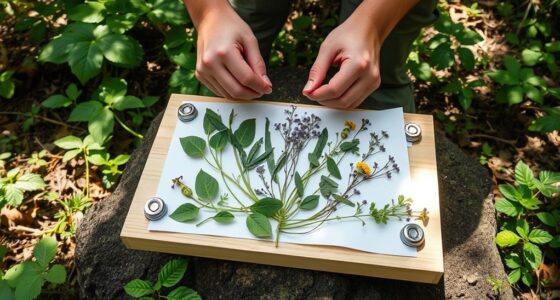
To ferment wild greens and roots, start by chopping or shredding the produce to encourage microbial activity. Pack it tightly in a non-reactive vessel, add a pinch of salt to draw out moisture, and create an environment where beneficial microbes can thrive. Naturally occurring microbes on the greens and in your environment will convert sugars into lactic acid, preserve your food, and boost its probiotic benefits. Keep exploring to discover how to master this vibrant fermentation process.
Key Takeaways
- Use non-reactive containers like glass or ceramic to create a safe environment for wild fermentation.
- Chop or shred greens and roots to enhance microbial contact and fermentation efficiency.
- Tightly pack produce and add salt or brine to inhibit spoilage and promote probiotic microbes.
- Rely on natural microbes present on produce and environment, or use starter cultures if desired.
- Maintain proper fermentation conditions, such as airtight sealing and appropriate temperature, for successful wild ferments.
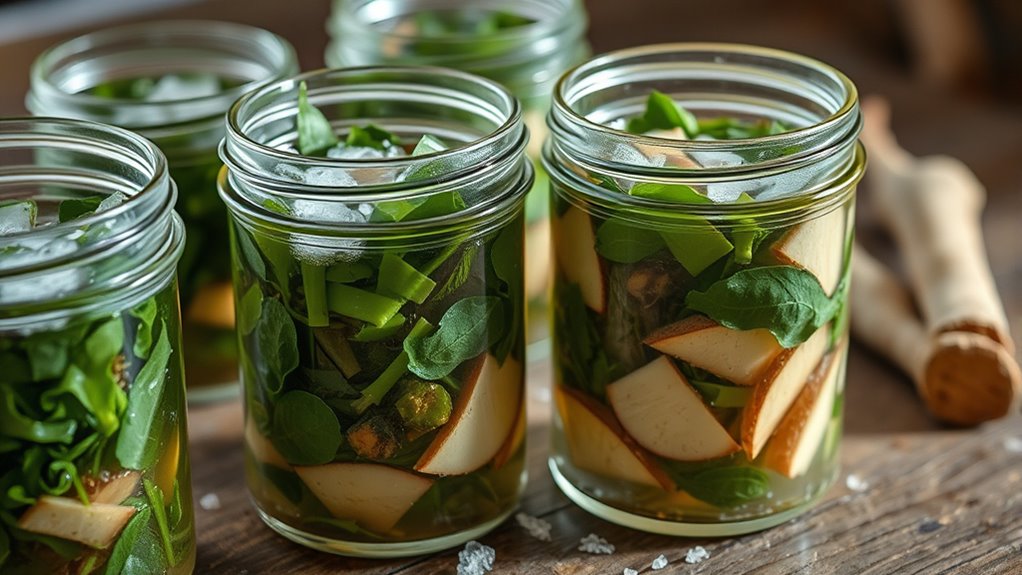
Have you ever wondered how simple ingredients transform into flavorful, probiotic-rich foods? The secret lies in fermentation—a process that releases the natural power of microbes to unlock vibrant flavors and health benefits. When you dive into fermenting wild greens and roots, you hold the key to liberation from processed foods and commercial preservatives. It’s about reclaiming your food’s natural origins, and to do that, you need a basic understanding of starter cultures and fermentation vessels.
Starter cultures are the foundation of successful fermentation. They are the beneficial microbes—like lactobacillus strains—that kickstart the transformation. You can use commercial starter cultures, but one of the most empowering aspects of fermenting wild greens and roots is harnessing the natural microbes present on the produce and in your environment. This wild fermentation taps into the microbial diversity of your surroundings, giving you a truly local and personalized probiotic food. To do this effectively, you need proper fermentation vessels—containers that provide a safe, airtight environment for the microbes to do their magic. Glass jars, ceramic crocks, or food-grade plastic containers work well. The key is to choose vessels that are non-reactive and easy to clean, ensuring no unwanted bacteria interfere with your fermentation.
Harness the natural microbes on your produce using safe, non-reactive fermentation vessels for vibrant wild ferments.
Once you select your fermentation vessel, you prepare your greens or roots by chopping or shredding them, then packing them tightly to eliminate air pockets. The goal is to create an environment where beneficial microbes can thrive and outcompete harmful ones. You might add a pinch of salt to help draw out moisture and create an inhospitable environment for spoilage bacteria. This brine not only preserves the vegetables but also encourages the growth of probiotic bacteria. As fermentation progresses, the microbes consume sugars and produce lactic acid, which acts as a natural preservative and flavor enhancer. The result is a tangy, nutrient-dense food that boosts your health and satisfies your palate. Additionally, selecting a proper fermentation vessel helps maintain an optimal environment for the microbes.
Throughout the process, the choice of starter cultures and fermentation vessels plays a vital role in controlling the environment and ensuring successful fermentation. When you understand how microbes work and how to create ideal conditions, you gain control over your food, freeing yourself from reliance on commercial products. Fermentation becomes a ritual of self-sufficiency, a way to reconnect with nature and your own culinary sovereignty. With patience and attention, you’ll learn to craft vibrant ferments from wild greens and roots, transforming humble ingredients into powerful tools for health and independence.

2 Pack 1.5 Gallon Large Fermentation Jar with 3 Airlock, Stainless Steel Handle, Non-Slip Silicone Base, Wide Mouth Glass Jars with Scale Mark – Pickle Jars for Sauerkraut, Sourdough Starter
- Complete Fermentation Kit: Includes jars, handles, airlocks, bases, manuals
- Leak-Proof Sealing System: Silicone gasket, metal clasp, and plug ensure no leaks
- Non-Slip Silicone Base: Provides stability and prevents slipping during fermentation
As an affiliate, we earn on qualifying purchases.
As an affiliate, we earn on qualifying purchases.
Frequently Asked Questions
Can I Ferment Wild Greens Without Salt?
Yes, you can ferment wild greens without salt. While salt alternatives like seaweed or herbs can help, fermentation without salt is possible but may be less predictable. You’ll need to focus on proper hygiene and control of moisture to prevent spoilage. Embrace the liberation from salt, experimenting with different natural methods. Just remember, fermentation without salt requires extra care, but it’s definitely doable if you stay attentive and trust your instincts.
How Long Does Fermentation of Wild Roots Typically Take?
Wild root fermentation usually takes about one to two weeks, but your fermentation duration can vary based on temperature and root type. During this process, you’ll notice bubbling and a tangy aroma, signaling progress. Embrace the wild root timelines and trust your senses. You’re in control, shaping the fermentation to your taste. Keep an eye on it, and soon you’ll have vibrant, fermented roots that celebrate your culinary freedom.
Are There Safety Concerns With Fermenting Unfamiliar Wild Plants?
Like venturing into uncharted territory, fermenting unfamiliar wild plants can pose safety risks if you’re not careful. You must prioritize plant identification to avoid toxic varieties and guarantee fermentation safety. Ignoring these steps is like walking blindfolded into a forest; it can lead to dangerous outcomes. Embrace your role as a seeker of knowledge, and take responsibility for proper identification and sanitation, transforming your fermentation journey into a liberation from uncertainty.
What Signs Indicate Fermentation Has Gone Bad?
If fermentation has gone bad, you’ll notice mold growth on the surface or an off odor that’s sour or rotten. Don’t ignore these signs—mold indicates contamination, and a strange smell shows that the process has spoiled. Trust your senses; if anything looks or smells wrong, it’s safer to discard the batch. You’re in control, so always prioritize safety and enjoy the liberation of your delicious, properly fermented wild greens and roots.
Can I Use Wild Greens for Lacto-Fermentation Instead of Pickling?
Why settle for ordinary pickling when wild greens can lead you to liberation through lacto-fermentation? Yes, you can use wild greens instead of traditional vegetables—imagine harnessing their vibrant, earthy flavors for a sour punch that awakens your palate. Embrace the wild, and let the sour flavor of fermented greens free your culinary spirit. Your taste buds will thank you for breaking free from convention and exploring nature’s fermented treasures.
Conclusion
Now that you know the basics of fermenting wild greens and roots, you’re ready to start exploring this ancient preservation method. Fermentation not only enhances flavor but also boosts nutrition—did you know that fermented foods can contain up to 10 times more probiotics than their fresh counterparts? So, embrace the process, experiment with different greens and roots, and enjoy the health benefits of your homemade fermented creations. Happy fermenting!