
To safely can foraged foods, you need to know when to use acidification techniques versus pressure canning. High-acid foods like berries and tomatoes can be preserved using water bath canning, which relies on acidity to prevent bacterial growth. Low-acid foods such as beans and meats require pressure canning to reach temperatures that destroy harmful bacteria. Understanding these methods guarantees your preserved foods stay safe—keep exploring to master when and how to use each approach appropriately.
Key Takeaways
- Use acid canning (water bath) for high-acid foraged foods like berries and tomatoes to prevent bacterial growth.
- Employ pressure canning for low-acid foods such as green beans, carrots, and meats to destroy harmful bacteria.
- Proper identification of edible versus toxic wild plants and fungi is essential before processing.
- Fermentation can be an effective preservation method for some foods, creating a safe, probiotic-rich environment.
- Understanding when to use acid versus pressure canning ensures safe long-term storage and prevents foodborne illnesses.
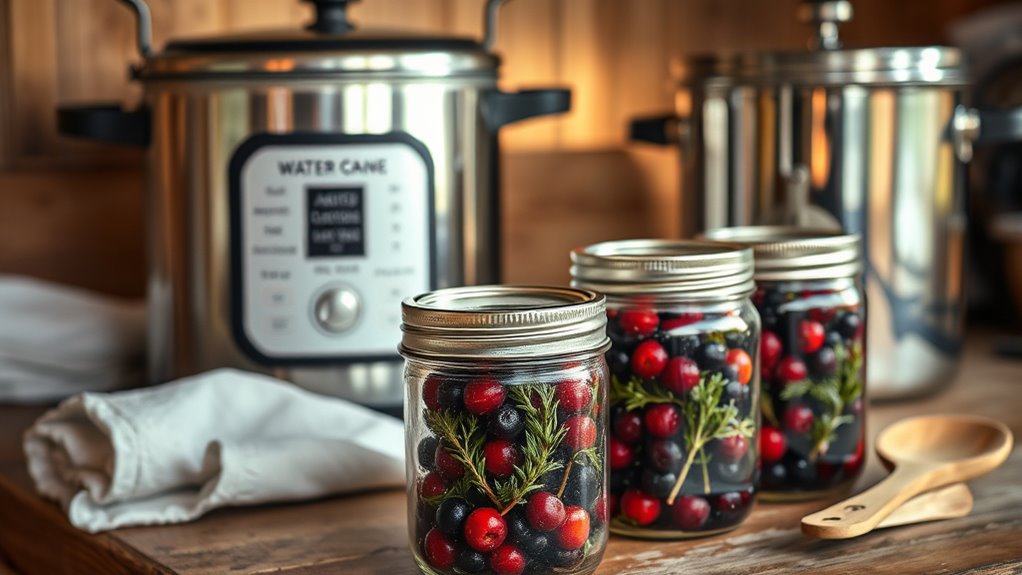
Foraging for wild foods is a rewarding way to connect with nature and expand your pantry, but ensuring these foods are safely preserved is essential. When you’re on a mission to preserve your foraged bounty, understanding the importance of proper canning methods becomes your key to liberation from store-bought goods. The choice between acid and pressure canning hinges on what you’ve gathered, and mastering this distinction empowers you to preserve foods safely and confidently.
The first step is botanical identification—knowing exactly what you’re harvesting is crucial because many wild plants and fungi can look similar but vary greatly in safety. Misidentification can lead to dangerous consequences, so take the time to learn the characteristics of edible versus toxic species. Once you’ve identified your bounty, you’ll want to consider fermentation techniques if you’re interested in creating shelf-stable, probiotic-rich foods like sauerkraut or fermented peppers. These methods are often simpler and require less equipment, but they’re not suitable for all foraged items, especially those that are low in acidity or have a risk of botulinum bacteria growth.
Identify wild plants carefully; fermentation offers simple, probiotic preservation but isn’t suitable for all foraged foods.
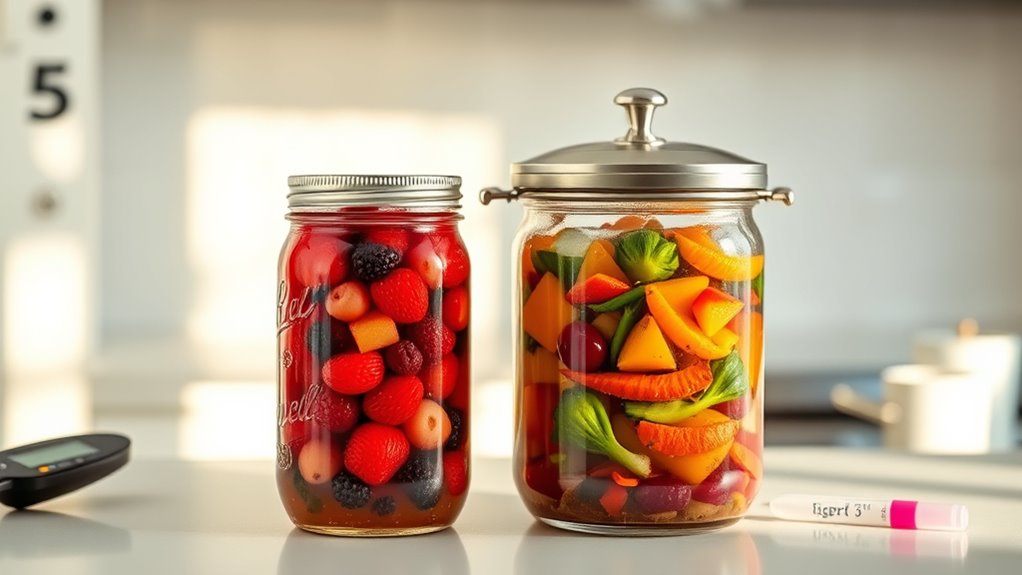
When it comes to canning, acidity is your guiding principle. High-acid foods such as berries, tomatoes, and certain fruits can be safely processed using water bath canning—an accessible method that relies on acid to prevent bacterial growth. Properly acidified foods inhibit the growth of harmful microbes, making fermentation techniques a natural ally here. If you’re fermenting, you’re essentially creating an environment hostile to pathogens, which is a form of safe preservation through controlled fermentation. Keep in mind, though, that fermentation is a different preservation process from canning; it’s more about fostering beneficial bacteria than sealing foods in jars for long-term storage.
For low-acid foods like green beans, carrots, or meats, pressure canning is your safest bet. This method involves high temperatures that destroy bacteria, including the deadly botulinum toxin producer. It’s essential to use a pressure canner for these foods, as water bath methods won’t reach the necessary temperatures. This ensures your preserved foods stay safe from spoilage and bacteria that can cause serious illness.
In your quest for liberation through foraging and preservation, understanding the nuances of acid versus pressure canning is empowering. It allows you to confidently process different types of wild foods, knowing you’re safeguarding yourself and others. Whether you’re fermenting a batch of vegetables or pressure canning wild game, your knowledge of botanical identification and preservation techniques becomes your tool for freedom—free from reliance on commercial foods and full of the satisfaction that comes with truly homegrown, safe, and nourishing sustenance.

Ball EasyCanner Electric Water Bath Canner
- Automated Processing Technology: Press & Forget for easy preheating
- Precise Temperature Control: Internal heat sensors ensure consistent results
- Countertop Design: Freestanding canner saves stovetop space
As an affiliate, we earn on qualifying purchases.
As an affiliate, we earn on qualifying purchases.
Frequently Asked Questions
Can I Use Alternative Acids for Canning?
You can’t just swap in alternative acids for canning, as safety depends on proper acidity. Natural preservatives like lemon juice or vinegar work because they reliably lower pH, but other acids might not provide consistent results. Using the wrong acid risks bacteria growth or spoilage. For safe, effective canning, stick to tested recipes with approved acids, ensuring your preserved foods stay safe and delicious.
How Do I Identify Safe-For-Canning Wild Foods?
Knowing your wild foods is key to safe canning—don’t put all your eggs in one basket. Start with wild food identification guides and focus on edible plant markers like leaf shape, flower color, and smell. Always double-check with reputable resources or local foraging groups. When in doubt, it’s better to leave it out. You’re free to explore, but safety always comes first—trust your instincts and learn well.
Are There Specific Containers Recommended for Foraged Foods?
You should choose jar selection carefully for foraged foods; use only high-quality, food-safe glass jars like Mason or Ball jars. Opt for container types that seal tightly to prevent spoilage, such as screw-top jars or canning jars with rubber gaskets. Avoid plastic containers, which may not withstand the heat and can leach chemicals. This way, you’ll keep your wild treasures safe and enjoy the freedom of home-canned goodness.
What Are Signs of Spoilage in Canned Foraged Foods?
You’ll notice spoilage in canned foraged foods if you see bulging lids, leaks, or foul odors, which indicate potential Botulinum risk. Discoloration, mold, or a cloudy liquid also signal spoilage indicators. Always check for these signs before consuming, as ignoring them can be dangerous. Trust your senses—if something seems off, it’s best to discard the jar and enjoy the freedom of safe, delicious preserved foods.
How Long Can Canned Foraged Foods Be Stored Safely?
You can store canned foraged foods safely for 1 to 2 years if you maintain proper storage conditions. Keep your jars in a cool, dark, and dry place, avoiding temperature fluctuations that can shorten shelf life. Regularly check seals and look for signs of spoilage. Properly canned and stored, your foraged treasures will stay delicious and safe, giving you the freedom to enjoy nature’s bounty anytime.
Conclusion
Just like steering a busy street safely requires the right tools and awareness, so does home canning. I once tried pressure canning wild mushrooms without proper equipment—luckily, I caught the mistake before it was too late. Remember, understanding the difference between acid and pressure canning isn’t just about following recipes; it’s about protecting yourself and your loved ones. When in doubt, always choose safety first, so your foraged treasures can be enjoyed for years to come.