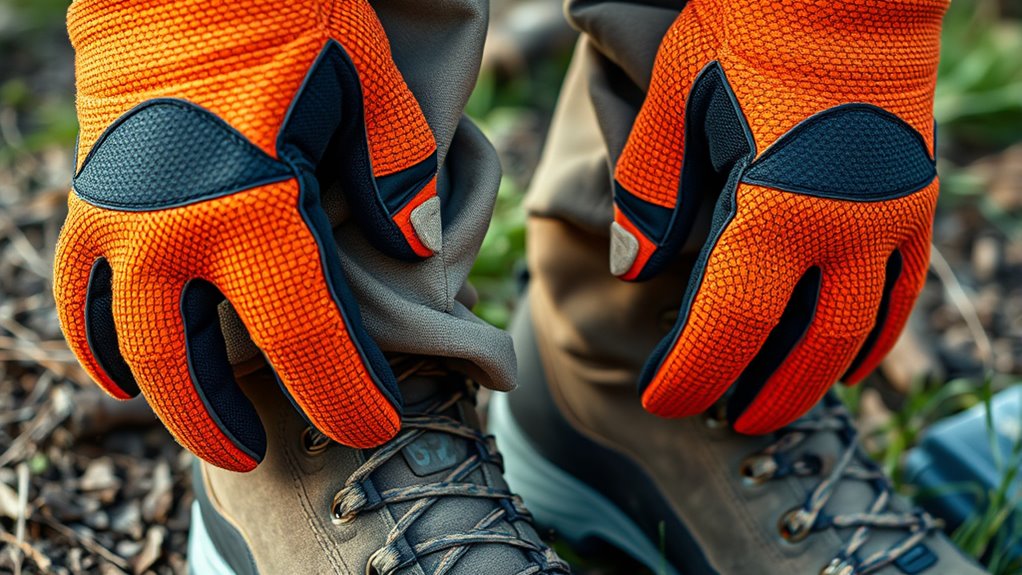

Wearing gloves and gaiters creates a barrier that protects your skin and clothing from ticks and insects, reducing the chance of bites. Make sure to perform regular tick checks during and after outdoor activities, paying close attention to common hiding spots like behind knees, underarms, and scalp. Proper removal of any attached ticks with tweezers is essential to prevent disease transmission. Keep exploring to discover more proven strategies for staying safe in nature’s environment.
Key Takeaways
- Wear gloves and gaiters to add extra barriers against ticks and insects on hands and lower legs.
- Use light-colored gaiters for increased visibility and easier inspection of ticks.
- Perform thorough tick checks after outdoor activities, paying attention to legs, ankles, and gloves.
- Remove ticks promptly with tweezers, grasping close to skin, and applying steady, even pressure.
- Combine protective clothing, gloves, gaiters, and vigilant tick checks to maximize personal safety in insect-prone areas.
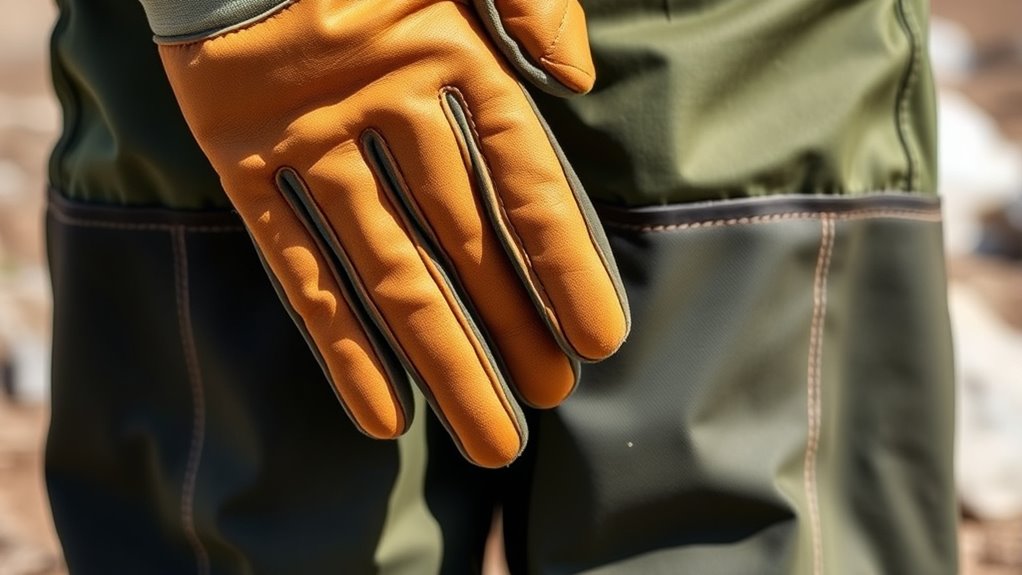
Have you ever wondered how to stay safe in unpredictable situations? When you’re venturing into the wild or even unfamiliar outdoor areas, your primary goal is to protect yourself without feeling restricted. One of the most effective ways to do this is by paying close attention to your clothing choices and using insect repellent strategically. Clothing choices aren’t just about style or comfort—they’re your first line of defense. Opt for long sleeves, pants, and high socks to cover as much skin as possible. Light-colored clothing makes it easier to spot any creeping insects, and treated garments with permethrin offer extra protection by repelling ticks and mosquitoes. Insect repellent is essential, but it’s just one piece of the puzzle. Apply it generously on exposed skin and over clothing, especially during peak insect activity. Remember, your goal is to stay free and unfettered, not weighed down or confined, so choose lightweight, breathable fabrics that allow movement while still offering protection.
Your clothing choices serve as a barrier, but you also need to be proactive with tick checks. After every outdoor activity, take a moment to thoroughly examine your body—pay close attention to areas like behind the knees, underarms, groin, and scalp. Ticks are stealthy and latch onto skin quickly, so early detection is critical. The sooner you find and remove a tick, the less chance it has to transmit disease. Carry a pair of fine-tipped tweezers to remove ticks carefully, grabbing the head close to the skin and pulling upward with steady, even pressure. Avoid twisting or squeezing, which can cause parts to break off and remain embedded. Remember, your body is your sanctuary, and maintaining awareness of these small invaders empowers you to stay in control.
Insect repellent and clothing choices aren’t just about prevention—they’re about reclaiming your freedom to explore without fear. By selecting protective clothing and applying insect repellent wisely, you create a personal shield that allows you to move confidently through nature’s unpredictable terrain. Regular tick checks are your way of staying vigilant, maintaining your independence, and ensuring that no tiny threat can undermine your sense of liberation. When you take these simple, deliberate steps, you not only protect yourself but also affirm your right to explore freely and fearlessly.

Schwer ProGuard High Level Cut Resistant Work Gloves for Extreme Protection, ANSI A9 Cut Gloves with Reinforced Thumb, Non Slip, Breathable, Durable, Touch-screen, Black 1 Pair(L 3326
- High Cut Resistance: ANSI A9 level protection for extreme cuts
- Durable Abrasion Resistance: Sandy nitrile coating for grip and longevity
- Reinforced Thumb Crotches: Enhanced durability for tough tasks
As an affiliate, we earn on qualifying purchases.
As an affiliate, we earn on qualifying purchases.
Frequently Asked Questions
Are There Specific Glove Materials Recommended for Different Environments?
You should choose environment-specific gloves based on the hazards you face. For chemical exposure, opt for nitrile or latex gloves, offering flexibility and protection. In rugged outdoor settings, leather or reinforced synthetic gloves provide durability. If you’re dealing with biohazards, consider gloves with high barrier protection, like polyethylene. Always match glove material recommendations to your environment to stay safe and comfortable, ensuring maximum protection without sacrificing mobility or ease of use.
How Often Should Gaiters Be Replaced or Cleaned?
Your gaiters need cleaning after every adventure, like a hero shedding their armor. Regular gaiter maintenance is key to staying protected and comfortable. Wash them after each use, especially if they’ve been in muddy or sweaty environments. Replace gaiters when they show excessive wear or damage, usually every few seasons. Keeping up with cleaning frequency and timely replacements guarantees you stay liberated from ticks, dirt, and discomfort on your wild journeys.
Can Personal Protection Protocols Vary by Region or Season?
Yes, personal protection protocols vary by region and season. You should adjust your gear and checks based on regional variation, like tick activity or local hazards, and seasonal changes such as increased insect presence or weather conditions. This flexibility allows you to stay protected while enjoying your outdoor adventures, giving you the freedom to explore confidently and comfortably, knowing you’re prepared for whatever nature throws your way.
What Are the Signs of Tick-Borne Diseases After Exposure?
The symptoms of tick-borne diseases can hit you like a freight train, so stay alert. Look out for Lyme disease signs such as a bull’s-eye rash, fever, fatigue, or joint pain. Tick-borne illness indicators also include headache and muscle aches. If you notice any of these after exposure, don’t ignore them—early detection frees you from suffering long-term. Trust your instincts and seek medical advice promptly to protect your health.
Are There Any Tips for Effectively Removing Ticks Without Injury?
To effectively remove ticks without injury, use proper tick removal techniques like fine-tipped tweezers, grasping the tick close to your skin. Pull upward steadily and gently, avoiding twisting or squeezing to prevent injury and tick parts from remaining. After removal, disinfect the area and wash your hands. This approach guarantees safe removal, reduces the risk of infection, and helps you feel liberated from worry about tick-borne diseases.
Conclusion
By following these simple protocols—wearing gloves and gaiters, performing thorough tick checks—you protect yourself from ticks and other dangers. Think of it as your personal armor, like a knight’s suit in a modern-day quest. Don’t forget, even in today’s fast-paced world, a little old-fashioned caution goes a long way. Stay vigilant, stay safe, and remember: prevention is your best weapon. Now, go out there and enjoy your adventure, fully prepared and tick-free!