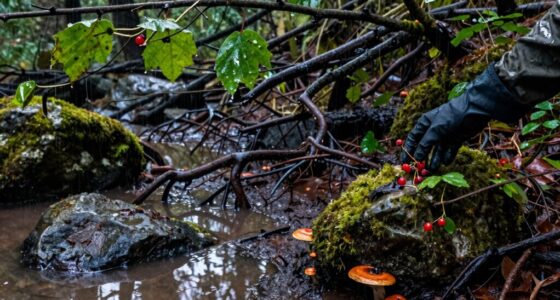

In an emergency, you can find valuable starches from wild plants like cattails, bulrush, and arrowhead. Dig for cattail rhizomes in wetland soil, carefully extract smaller bulrush rhizomes, and harvest arrowhead tubers from shallow waters in ponds or marshes. Proper cleaning, drying, and storing these wild foods guarantee you get the most nutrition and shelf life. If you keep exploring, you’ll discover all the best techniques to survive using these natural resources.
Key Takeaways
- Identify and harvest edible rhizomes from cattails, bulrush, and arrowhead in pollutant-free wetlands.
- Carefully dig bulrush rhizomes and underwater arrowhead tubers for safe collection.
- Clean, slice, and dehydrate the harvested starches for long-term storage and preservation.
- Store dried starches in cool, dark, airtight containers or vacuum-sealed bags to extend shelf life.
- Using wild food sources like cattail, bulrush, and arrowhead boosts self-reliance during food shortages.
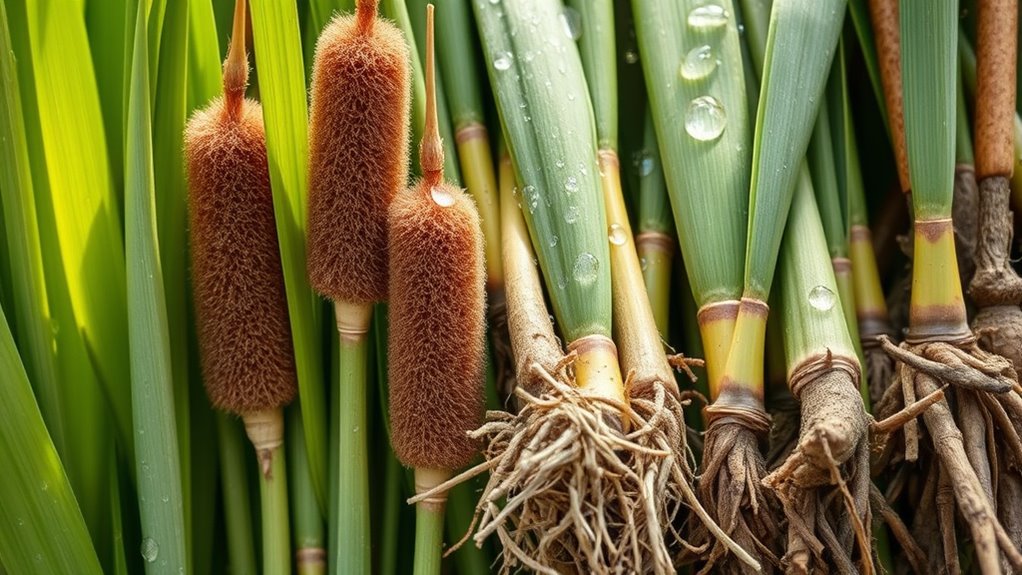
When a sudden food shortage hits, having a stash of emergency starches can be a lifesaver. It’s about reclaiming your freedom from reliance on fragile supply chains and overpriced groceries. Nature offers powerful resources, like cattails, bulrush, and arrowhead, that can sustain you when conventional food sources disappear. To make the most of these wild foods, mastering foraging tips is essential. You need to identify the right plants safely and efficiently, focusing on their edible parts. For cattails, look for the starchy rhizomes beneath the water or soil, usually found in wetland areas. Bulrush also has edible rhizomes, but they’re smaller and require careful digging. Arrowhead or duck potato’s tubers grow underwater, often in shallow waters of ponds and marshes, and are prized for their high carbohydrate content. When foraging, ensure you’re picking plants in clean environments free from pollutants, pesticides, or industrial runoff. Knowledge protects you from accidental poisoning and helps build confidence in wild harvesting. Additionally, understanding the importance of proper processing techniques can greatly enhance the shelf life and nutritional value of your harvested starches.
Once you’ve gathered these starch-rich parts, proper storage methods become critical. Freshly dug rhizomes and tubers can spoil quickly if left exposed or in warm conditions. To extend their shelf life, clean them thoroughly to remove dirt and debris, then dry them in the shade or a cool, ventilated space. For longer-term storage, you can preserve these starches by freezing or dehydrating. Freezing them in airtight containers prevents spoilage and retains nutritional value. Dehydrating involves slicing the rhizomes thinly and drying them thoroughly—either in a dehydrator, oven at low heat, or by air-drying. Once dried, store the starches in vacuum-sealed bags or airtight jars in a cool, dark place. Proper storage methods keep these emergency foods viable for months or even years, ensuring you always have a reliable source of calories when supply lines are cut.
Knowing these foraging tips and storage methods empowers you to harvest wild starches confidently, liberating yourself from dependence on the commercial food system. It’s about taking control of your survival toolkit with the natural abundance around you. You don’t need to wait for disaster to start gathering these resources; get familiar with the plants in your environment now. Practice safe foraging, learn the right storage techniques, and build resilience. When you’re prepared, you can face any food shortage head-on, with the knowledge that nature’s hidden treasures are within your reach. This kind of self-reliance isn’t just survival—it’s a statement of independence, a way to reclaim your power over your food sources. Developing processing techniques can further optimize your preservation efforts and ensure your preparedness.
dehydrator for wild food preservation
As an affiliate, we earn on qualifying purchases.
As an affiliate, we earn on qualifying purchases.
Frequently Asked Questions
Are Cattails Safe to Eat Raw or Only Cooked?
You should avoid eating cattails raw because they can contain bacteria or parasites. Cooking methods like boiling or steaming make them safer and more digestible, releasing their starches and nutrients. If you’re seeking liberation from conventional food rules, try experimenting with different cooking techniques to uncover their full potential. Remember, properly cooked cattails provide a safe, nourishing emergency starch, freeing you from dependency on processed foods in survival situations.
How Do I Identify Bulrush in the Wild?
You can identify bulrush in the wild by observing its habitat—it’s commonly found in wetlands and shallow water. Look for tall, grass-like plants with round, hollow stems and soft, feathery flower clusters at the top. Use plant identification tips: check leaf shape, stem texture, and flower structure. Feel free to explore the wildlife habitat, but always confirm your plant species before harvesting to guarantee safety and liberation in your foraging adventures.
Can Arrowhead Tubers Be Stored for Long-Term Emergency Use?
Yes, arrowhead tubers can be stored long-term for emergencies. After harvesting using careful techniques, clean and dry the tubers thoroughly. You can preserve them by dehydrating or freezing, which extends their shelf life. Store them in airtight containers in a cool, dark place to prevent spoilage. Proper preservation methods guarantee you have a reliable food source during tough times, giving you the freedom to rely on natural resources confidently.
What Are the Nutritional Benefits of These Emergency Starches?
Think of these emergency starches as nature’s secret treasures, packed with essential nutrients. Arrowhead tubers, cattail rhizomes, and bulrush bulbs offer rich nutritional content, including carbohydrates, fiber, vitamins, and minerals. They fuel your body, boost immunity, and promote sustained energy, giving you the power to reclaim your independence. Incorporating these wild foods into your diet supports your health benefits, turning survival into a path toward strength and resilience.
Are There Any Poisonous Look-Alikes for These Plants?
You should be aware of poisonous look-alike risks when foraging for cattail, bulrush, and arrowhead. Misidentification can lead to consuming toxic plants like sweet flag or certain sedges, which resemble these edibles. Plant identification tips include checking the shape of leaves, the presence of flowering spikes, and habitat. Stay vigilant, and don’t consume anything unless you’re absolutely sure, ensuring your foraging remains safe and liberating.
Conclusion
When times get tough, these emergency starches are your secret weapon, like hidden treasures waiting to be uncovered. Cattail, bulrush, and arrowhead can turn a bleak situation into a feast if you know how to spot and prepare them. Think of them as nature’s backup pantry—reliable and ready to serve when you need them most. Keep these skills in your toolkit; they’re your lifeline in the wild, shining like beacons in the darkness.