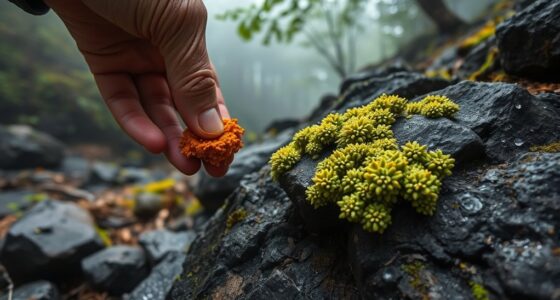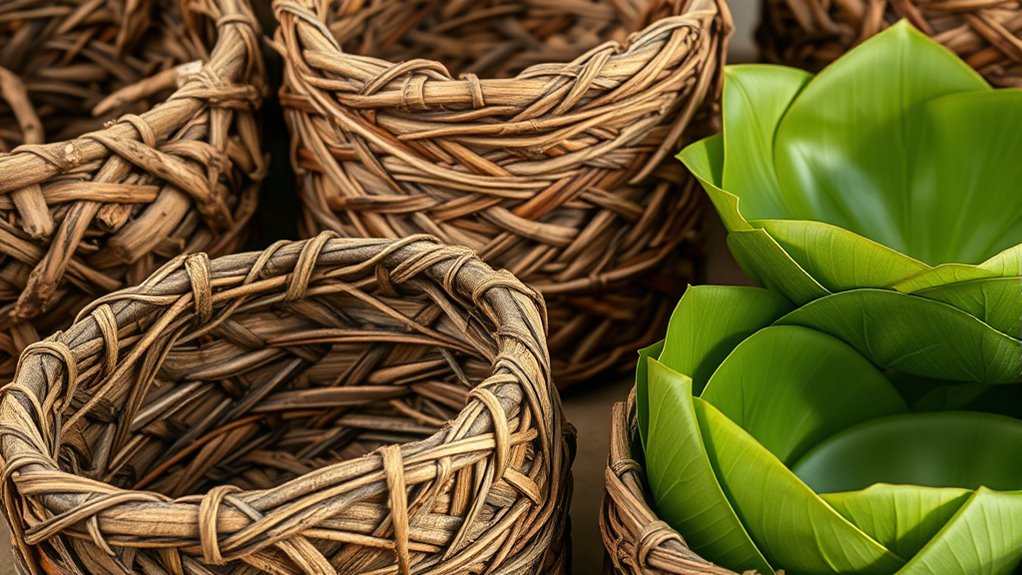

Impromptu containers like bark baskets and folded leaves highlight your resourcefulness by turning readily available natural materials into functional, eco-friendly storage solutions. You can craft bark baskets from tree bark, respecting the environment and preserving cultural traditions that have been passed down through generations. Folding large leaves such as banana or palm leaves creates lightweight, biodegradable containers perfect for everyday use. If you keep exploring, you’ll discover more about these sustainable practices rooted in cultural heritage.

Get garden gear delivered free — and shop member deals
- Fast, free delivery on millions of items
- Access to Prime Big Deal Days deals on October 6–7
- Prime Video, Amazon Music and more included
Key Takeaways
- Bark baskets are crafted from sustainable tree bark, serving as durable, culturally significant containers for storage and carrying.
- Folded leaves, such as banana or palm leaves, create lightweight, biodegradable containers used in daily life and cultural ceremonies.
- Both methods exemplify resourcefulness and environmental sustainability by utilizing natural, readily available materials.
- These improvised containers reflect cultural heritage, often passed down through generations, and promote traditional craftsmanship.
- Using natural materials reduces reliance on synthetic containers, supporting eco-friendly lifestyles and fostering a connection to nature.
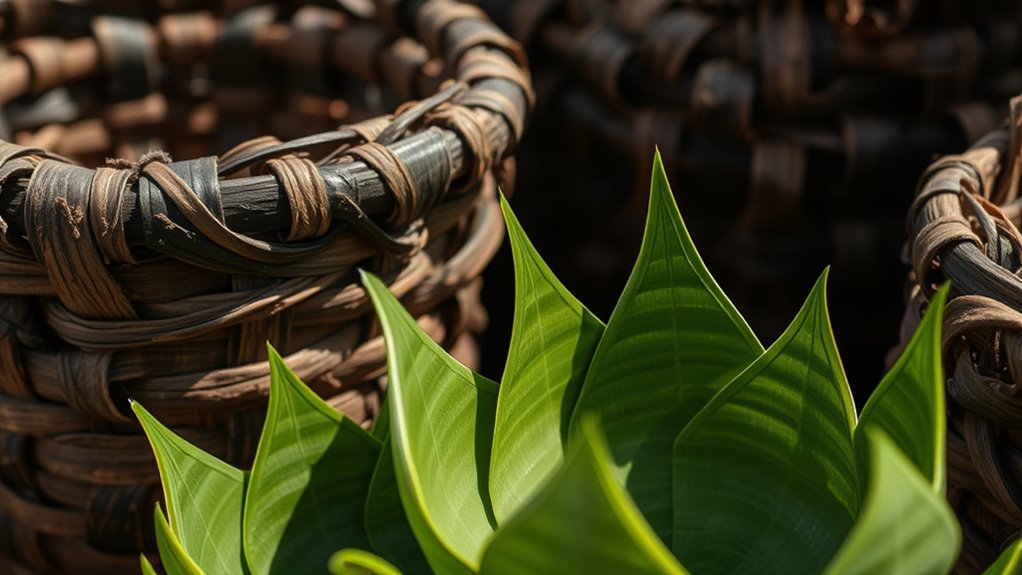
When you need a quick solution for carrying or storing items, improvised containers can be invaluable. They’re a testament to human ingenuity, crafted from what’s readily available and rooted in tradition. These containers, like bark baskets and folded leaves, symbolize more than practicality; they embody a connection to nature and cultural heritage. By using natural materials, you’re embracing a method of natural preservation that keeps your belongings safe without relying on manufactured goods. This approach isn’t just about convenience—it’s about reclaiming a sense of freedom from consumerism, recognizing that resourcefulness can be a form of liberation.
Bark baskets, for instance, are often made from tree bark, carefully harvested to ensure the tree’s health while creating a sturdy vessel. This practice respects the environment and highlights a deep understanding of the natural preservation of resources, allowing communities to sustain themselves without depleting their surroundings. These baskets carry cultural significance, often passed down through generations, each design and technique telling a story or marking a tradition. When you choose a bark basket, you’re not only selecting a functional container but also connecting with centuries of cultural identity and history. It’s a reminder that crafting from nature’s offerings can be both practical and meaningful, fostering a sense of independence from mass-produced storage solutions.
Making bark baskets respects nature, preserves cultural traditions, and fosters sustainable, meaningful craftsmanship that connects us to centuries of heritage.
Folded leaves, another simple yet effective improvised container, exemplify the beauty of adaptability. By folding and weaving large leaves—like banana or palm leaves—you create lightweight, biodegradable containers suitable for a variety of items. This method is a lesson in resourcefulness, showing that comfort and utility don’t have to come at the expense of nature. When you employ folded leaves, you participate in a tradition that values natural preservation, ensuring that waste decomposes naturally and doesn’t contribute to environmental harm. It’s a way to live more freely, without the burden of excess or dependency on manufactured containers. These leaf containers often carry cultural significance as well, used in ceremonies, markets, or everyday life, connecting you to communal practices and ancestral knowledge.
Using natural materials like bark and leaves also reduces dependence on synthetic storage options, supporting a more sustainable lifestyle. In embracing improvised containers like bark baskets and folded leaves, you’re choosing a path of liberation—free from reliance on synthetic materials and consumerism. You tap into the wisdom of natural preservation and cultural significance, honoring traditions that sustain both community and environment. These simple yet powerful tools remind us that resourcefulness is a form of freedom, a way to live in harmony with the world around us while fulfilling immediate needs. They empower you to craft with intention, respect the natural world, and carry forward cultural stories that enrich your sense of independence and connection.
As an affiliate, we earn on qualifying purchases.
Frequently Asked Questions
How Durable Are Bark Baskets Compared to Modern Containers?
Bark baskets often have impressive bark basket strength, making them surprisingly durable for traditional containers. However, compared to modern containers, their leaf container resilience may fall short, especially against water or rough handling. You’ll find that while they offer a natural, freeing option, they might not withstand the same level of stress as synthetic or metal containers. Still, their eco-friendly charm offers a liberating alternative for lightweight, temporary storage.
Can Folded Leaves Hold Liquids Without Leaking?
No, folded leaves can’t reliably hold liquids without leaking. Their leaf waterproofing isn’t always perfect, especially when exposed to prolonged moisture or rough handling. While their container flexibility makes them easy to fold and use, it also means they lack the sealing strength needed for liquids. If you’re seeking liberation from rigid containers, you might enjoy their lightweight, adaptable nature, but remember—they aren’t designed for long-term liquid storage without leakage.
What Natural Materials Are Best for Making Improvised Containers?
You can make effective improvised containers using plant fibers like banana leaves or coconut husks, which naturally resist water. These materials are flexible, durable, and provide good water resistance when crafted properly. By weaving or folding them tightly, you create containers that hold liquids securely, giving you the freedom to gather, store, or transport water and other liquids without relying on synthetic materials. Embrace nature’s solutions and reclaim your independence.
How Do Different Climates Affect the Longevity of These Containers?
Imagine your containers as brave explorers facing different terrains. In humid climates, they struggle, quickly rotting or moldy, risking their mission. In dry, hot environments, they endure longer, their environmental durability tested but resilient. Understanding climate impact helps you choose materials that thrive wherever you go, freeing you from fragile limits. You can craft containers that stand strong, embracing nature’s diversity and your desire for sustainable independence.
Are There Cultural Variations in Using Bark Baskets and Leaf Folding Techniques?
You’ll find that cultural practices deeply influence how bark baskets and leaf folding techniques are used. Different communities see these traditional crafts as expressions of identity, often passing them down through generations. In some cultures, these crafts symbolize connection to nature, while others adapt them for modern uses. Embracing these variations allows you to appreciate how diverse traditions create unique, meaningful ways to use simple materials, empowering your own creative freedom.
Conclusion
Just like a skilled artist transforms raw materials into a masterpiece, you can turn simple bark and folded leaves into functional containers. These improvised creations aren’t just practical—they’re a affirmation to your resourcefulness and connection to nature. When you craft with your hands, you’re weaving a story of resilience and ingenuity. Remember, in the tapestry of life, even the humblest materials can hold the weight of your creativity and spirit.
Fall yard work Picks
leaf blowers
As an affiliate, we earn on qualifying purchases.