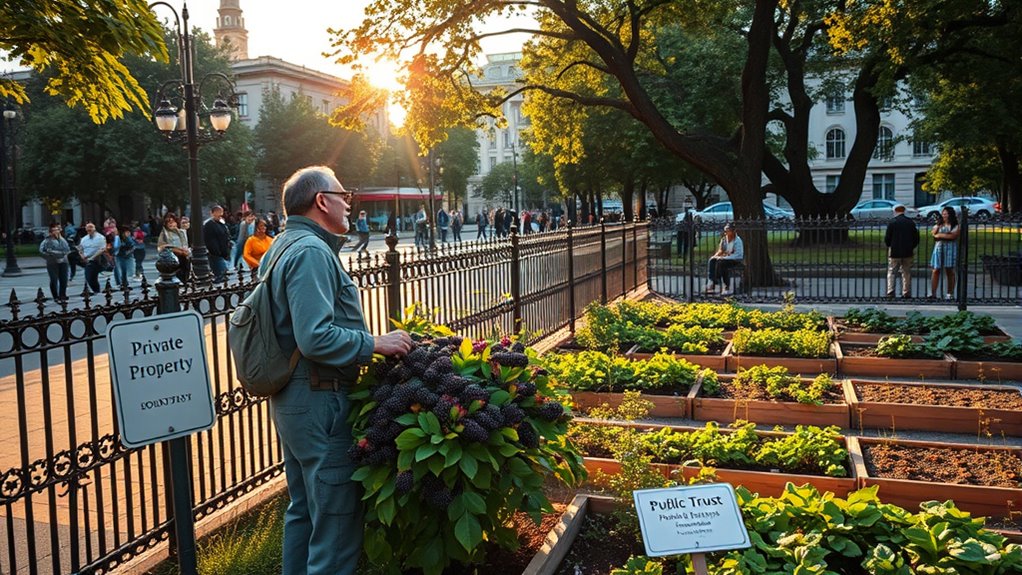

When urban foraging, always respect private property rights and public space regulations. Obtain permission before entering private land, and stick to designated public areas where foraging is allowed. Practice sustainable harvesting by taking only what you need and leaving enough for others and wildlife. Build trust with landowners and community groups through responsible behavior and respectful sharing. Curious about more tips on ethical foraging? Keep exploring to learn how to do it responsibly.
Key Takeaways
- Respect private property boundaries and seek permission before foraging on private land.
- Follow local regulations and guidelines to ensure legal and responsible foraging in public spaces.
- Harvest sustainably by taking only what is needed and leaving enough for wildlife and future foragers.
- Share knowledge and resources with community members to promote collective stewardship and trust.
- Avoid damaging plants or ecosystems to support ecological health and long-term urban biodiversity.

Urban foraging offers a rewarding way to connect with city nature, but it’s important to do so responsibly. As you explore parks, vacant lots, and streetside greenspaces, remember that understanding legal boundaries isn’t just about following rules — it’s about respecting the land and those around you. Many public spaces are open for gathering and foraging, but some areas have restrictions designed to protect ecosystems and private property. Before you start harvesting, familiarize yourself with local regulations to avoid trouble. Trespassing on private property without permission isn’t just illegal; it’s a barrier to community sharing and mutual respect. Instead, seek out parks, community gardens, or other public spaces where foraging is permitted or encouraged. When in doubt, ask local authorities or community groups; they often support sustainable foraging practices and can point you toward legal zones. By respecting legal boundaries, you not only stay within the law but also foster a sense of trust and cooperation with your neighbors and city officials. Additionally, understanding the role of conservation in urban ecosystems helps ensure your foraging practices support ecological health and sustainability.
Community sharing plays a crucial role in urban foraging. This isn’t just about taking what you want; it’s about creating a culture of collective abundance and respect. Share your knowledge of edible plants with neighbors, and be mindful of how much you harvest. Overharvesting depletes resources and can hurt the very ecosystems you’re trying to enjoy. Practice sustainable foraging by only taking what you need and leaving enough for others and wildlife. When you do harvest, consider sharing your bounty with friends, community groups, or even local food banks. This spirit of sharing transforms foraging from a solo act into a movement rooted in community liberation. It’s about breaking down barriers to fresh, wild food and fostering a sense of collective ownership over urban nature.

Foraging Washington (Foraging Series)
As an affiliate, we earn on qualifying purchases.
As an affiliate, we earn on qualifying purchases.
Frequently Asked Questions
Can I Forage on School or Hospital Grounds Without Permission?
You shouldn’t forage on school or hospital grounds without explicit permission, as access permissions are typically restricted and property boundaries are clear. Even if it seems tempting, you risk trespassing and legal trouble. Instead, seek out public parks or designated areas where foraging is allowed. Respect property owners’ rights and trust, and you’ll enjoy your foraging adventures freely and responsibly, embracing your desire for liberation without causing conflict.
Are There Specific Permits Required for Commercial Foraging?
Imagine breaking free into a lush orchard, but before you harvest, you need the keys—permitting requirements and commercial licenses. Without them, you’re trespassing on legal ground. For commercial foraging, you must obtain specific permits to access public lands or private property legally. These licenses protect your freedom to forage responsibly while respecting the land’s trust. Embrace the rules, open your foraging potential, and turn your passion into a legitimate, liberating pursuit.
How Do I Identify Invasive vs. Edible Plants Safely?
To identify invasive vs. edible plants safely, you need sharp plant identification skills. Use reliable field guides, apps, and local expert advice to distinguish invasive species from edible ones. Always double-check before foraging, as misidentification can be dangerous. Embrace your curiosity, trust your research, and stay vigilant—your foraging safety depends on it. Liberation comes through knowledge, so keep learning and exploring responsibly.
What Should I Do if I Find Protected Species During Foraging?
If you stumble upon protected species while foraging, embrace your role as a guardian of nature’s balance. Ethically, you should report these findings to local authorities or conservation groups. This act of responsible foraging not only safeguards the environment but also liberates the land’s true potential. By reporting protected species, you help ensure future generations can continue exploring and enjoying urban wilds freely and sustainably.
Are There Legal Consequences for Overharvesting in Public Parks?
Yes, overharvesting in public parks can lead to legal penalties. Conservation laws are in place to safeguard plant and animal populations, and violating them can result in fines or other consequences. You’re encouraged to forage responsibly, respecting park regulations and sustainable practices. Staying informed about local laws ensures you enjoy foraging freely without risking legal issues, helping preserve these natural spaces for everyone’s benefit.
Conclusion
Remember, urban foraging is like tending a shared garden—you thrive when everyone respects the boundaries. I once watched a forager happily share her finds with neighbors, turning a simple act into community magic. Just as a single seed can grow into a thriving plant, your mindful foraging fosters trust and sustainability. By honoring private property and public trust, you guarantee that this vibrant practice blossoms for generations to come.