Foraging in wildfire recovery areas can be beneficial if you do it responsibly and with awareness of the environment’s needs. Picking fallen fruits, nuts, or herbs helps support ecosystem healing, plant growth, and wildlife habitats. However, you should only harvest what’s necessary, avoid overharvesting, and respect regrowth zones to prevent disruption. Continuing to explore these practices will help you understand how to foraging sustainably and become a true land steward.
Key Takeaways
- Foraging in wildfire recovery areas can support ecosystem renewal if done sustainably and responsibly.
- It helps promote native plant regrowth and stabilize soil, aiding overall landscape recovery.
- Mindful harvesting of fallen fruits, nuts, and herbs benefits wildlife and does not harm regrowth.
- It’s essential to avoid overharvesting and respect regrowth zones to protect recovering vegetation.
- Being aware of ecosystem signs and practicing stewardship ensures foraging aids rather than harms post-fire recovery.
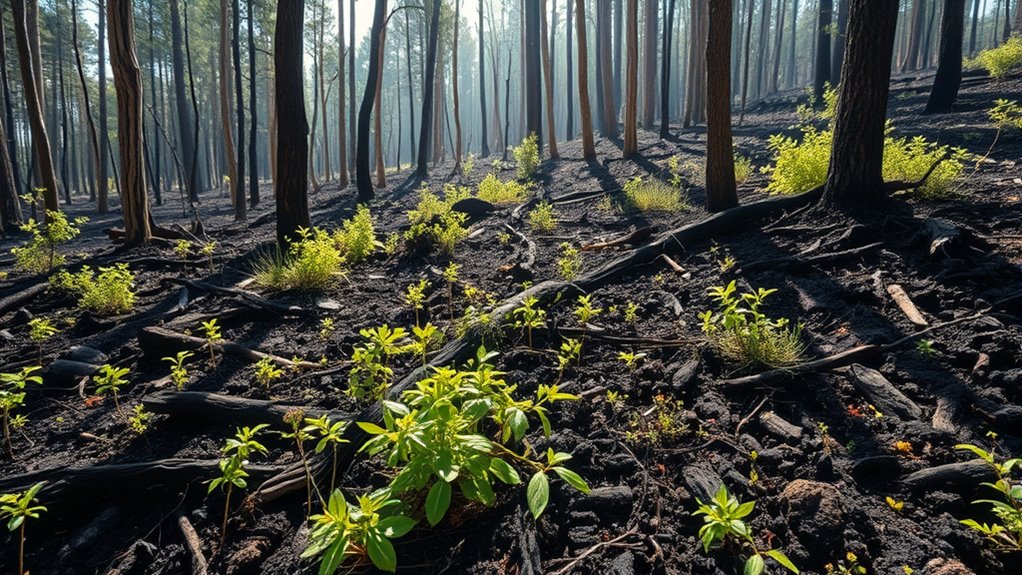
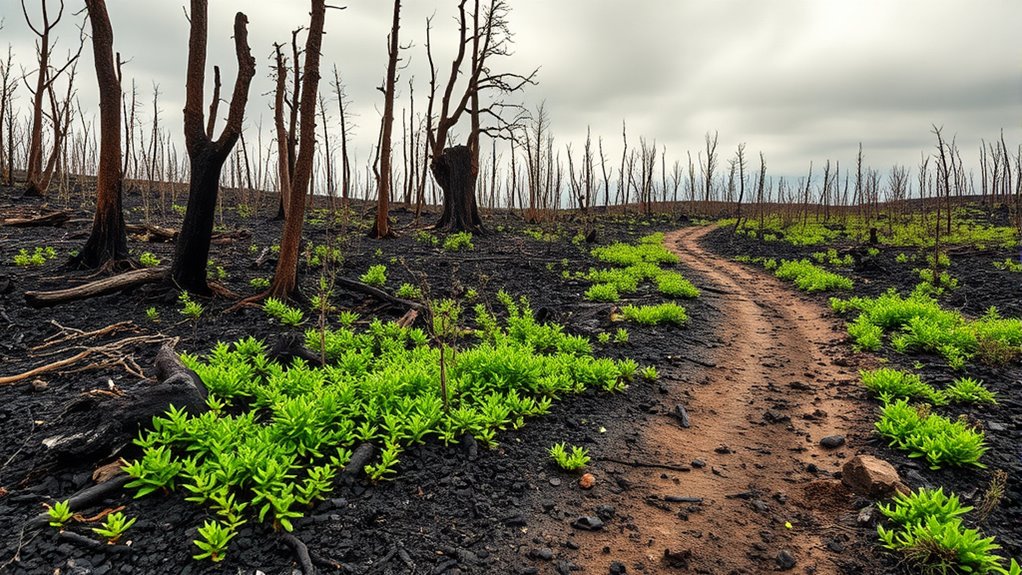
After a wildfire passes through an area, foraging can be a pivotal step in supporting ecosystem recovery. When you gather wild edibles from recently burned lands, you’re actively participating in the renewal process, helping to foster plant regeneration and restore wildlife habitat. Fire often clears the way for new growth, and your foraging can encourage this natural rebirth by promoting healthy, diverse plant life. By carefully selecting what to harvest and when, you can avoid disrupting fragile regrowth while simultaneously benefiting from the abundance of resilient species that thrive after a fire.
Harvesting wild edibles after a wildfire supports natural regeneration and restores healthy, resilient ecosystems.
Wildfires open up the landscape, making space for pioneering plants—those hardy species that quickly take hold and push back against invasive growth. These plants are essential for plant regeneration because they stabilize the soil, prevent erosion, and serve as the foundation for future plant communities. Your foraging helps maintain this delicate balance, ensuring that the ecosystem doesn’t become overrun by unchecked invasive species or suffer from stagnation. When you respect the recovery process, you’re helping to sustain a vibrant, resilient environment where native plants can flourish and wildlife can thrive.
As you explore burned areas, you’ll notice that wildlife habitat begins to re-emerge alongside plant regeneration. Animals rely on the diversity of plants and insects that return after a fire. By harvesting responsibly, you support the natural cycles that keep these habitats healthy and productive. For example, collecting fallen fruits, nuts, or herbs that are abundant after a fire can provide nourishment to local wildlife, aiding their survival and encouraging their return. Your mindful foraging ensures that you’re not depleting resources but rather contributing to a balanced ecosystem where all species can coexist and flourish.
It’s fundamental to approach foraging in wildfire recovery areas with a liberating mindset—understanding that you’re part of a larger process of renewal. Your actions can accelerate recovery or hinder it, depending on how thoughtfully you proceed. Always prioritize sustainable practices: harvest only what’s necessary, avoid overharvesting, and respect the regrowth zones. Doing so allows you to enjoy the bounty of these resilient landscapes while actively supporting plant regeneration and wildlife habitat restoration.
Additionally, being aware of suitable plant species and their recovery stages helps ensure that your foraging efforts are beneficial rather than destructive. Ultimately, your foraging journey in wildfire-affected areas is about embracing your role as a steward of the land. You can participate in the recovery process, whether by harvesting nutritious wild foods or simply observing the vibrant signs of renewal. In doing so, you reclaim your connection to nature’s cycles, helping to heal the land and ensure that future generations witness thriving ecosystems full of life and possibility.
wildfire recovery foraging guide
As an affiliate, we earn on qualifying purchases.
As an affiliate, we earn on qualifying purchases.
Frequently Asked Questions
Are There Specific Plants to Avoid After a Wildfire?
You should avoid foraging certain plants after a wildfire because of potential plant toxicity and soil contamination. Fire can release toxins, making some plants unsafe to eat. Stay away from plants that show signs of damage or unusual growth, and prioritize native, resilient species. Always research specific plants beforehand, and consider testing soil and plant safety to protect yourself while enjoying the wild, recovering landscape.
How Long Should I Wait Before Foraging Post-Fire?
You should wait at least one to two years before foraging after a fire, allowing fireweed regrowth to stabilize and soil contamination to diminish. Fires can cause toxins to linger, making premature foraging a potential trap, but patience frees you from danger’s grip. During this time, nature’s resilience reveals itself, and you can confidently harvest, knowing the land has healed enough to nourish your body without risking your health or the ecosystem.
Is It Safe to Forage Near Ash or Burned Debris?
You shouldn’t forage near ash or burned debris because soil contamination and plant residue can carry harmful toxins. These residues may contain heavy metals or chemicals from the fire, risking your health. Instead, give the area time to recover, allowing plants to clear toxins naturally. By waiting and avoiding contaminated sites, you protect yourself and help the ecosystem heal, embracing safe, responsible foraging that supports your wellbeing and environmental restoration.
Can Wildfire Ash Affect Edible Plant Safety?
Yes, wildfire ash can affect edible plant safety because it may contain soil contamination and heavy metals. When you forage in affected areas, you risk consuming harmful substances that settle in plants. To protect your health, avoid harvesting from ash-covered soil, and consider testing the soil or waiting until it’s been thoroughly rehabilitated. Your desire for natural food shouldn’t come at the cost of your well-being.
Are There Legal Restrictions on Foraging in Wildfire Areas?
Think of wildfires as nature’s tough love—sometimes, they come with rules. Yes, there are legal restrictions on foraging in wildfire areas, designed to protect recovery efforts and public safety. You might need foraging permits to gather plants legally. Don’t let restrictions cage your spirit; instead, seek out authorized areas, respect the regulations, and embrace the freedom to forage responsibly, contributing to the healing of these vibrant landscapes.
Conclusion
As you explore recovery zones, remember that Mother Nature’s resilience echoes the phoenix rising from ashes. While foraging might seem tempting, tread carefully—what’s reborn isn’t always safe, much like Icarus’s flight. Respect the land’s slow renewal, honoring its silent rebirth. By doing so, you become part of the ongoing story—one of caution, reverence, and hope—trusting that, like mythic tales, nature’s recovery holds lessons worth listening to, even amid new beginnings.