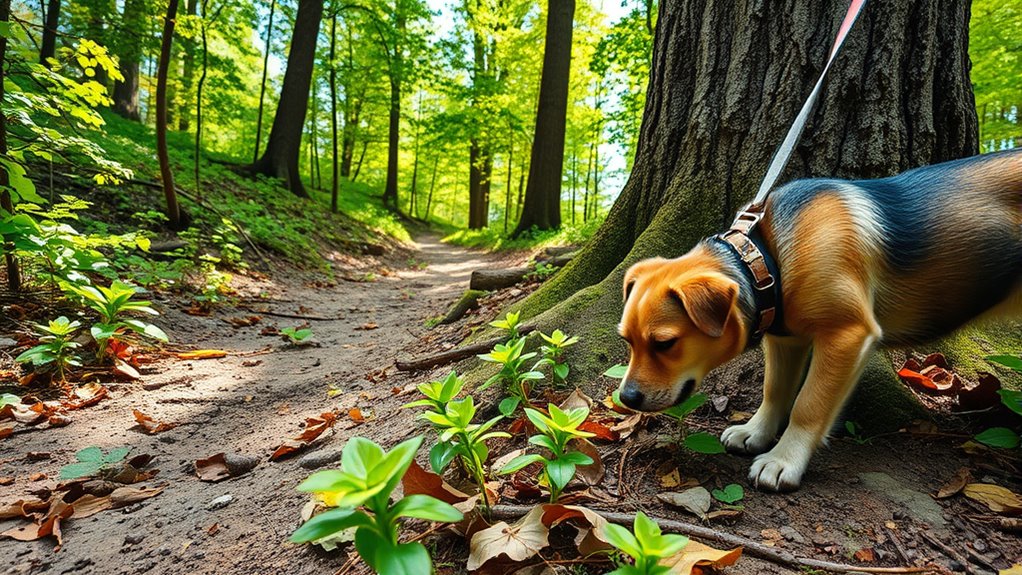

Keeping your dog on a leash helps protect local plants from trampling and damage. It also prevents wildlife disturbances and keeps your furry friend safe from hazards like thorny bushes or steep drops. Using proper leash etiquette shows respect for other trail users and preserves the natural beauty of the area. By following best practices, you can enjoy the outdoors responsibly. Want to learn more about how to minimize plant damage while out on the trail?
Key Takeaways
- Keep dogs on designated trails and avoid off-trail wandering to prevent trampling native plants.
- Use a leash at all times to control dog movements near delicate vegetation and wildlife habitats.
- Clean up dog waste promptly to prevent plant damage and maintain ecosystem health.
- Monitor your dog to prevent digging or scratching that can harm plant roots or disturb ground cover.
- Follow local leash regulations and trail signs to protect sensitive ecosystems from unnecessary disturbance.
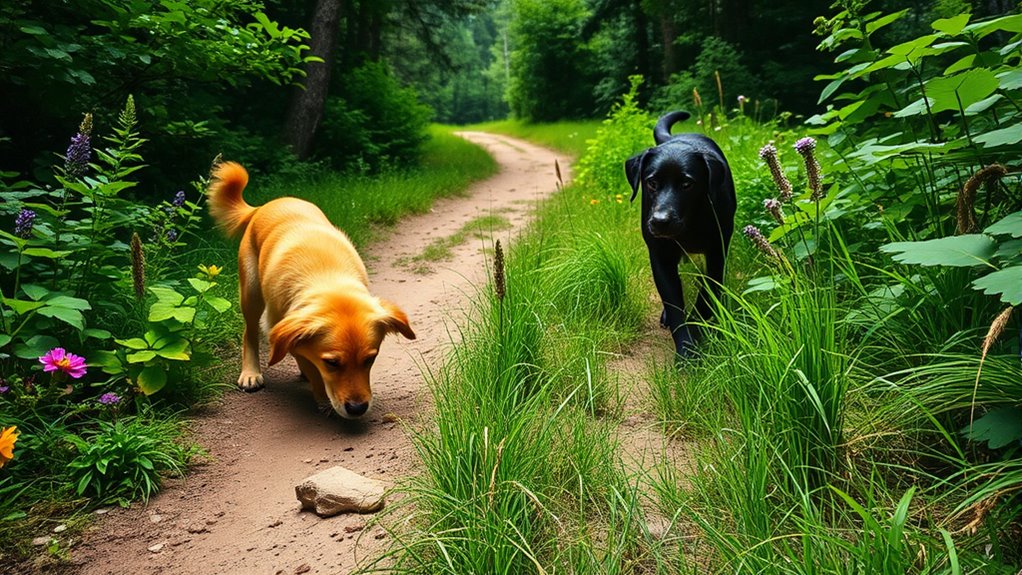
Taking your dog on the trail can be a rewarding experience, but it requires preparation and awareness to guarantee safety for both you and your furry companion. One of the most critical aspects of trail safety is practicing good leash etiquette. When your dog is leashed, you control their movements, prevent unwanted encounters with wildlife or other hikers, and protect delicate plant life. Keep your dog close enough to manage easily, especially when approaching narrow paths, steep drops, or areas with dense vegetation. A well-fitted leash ensures your dog won’t suddenly dart into thorny bushes or chase after wildlife, which can cause injury or damage to the environment. Remember, leash etiquette isn’t just about safety; it’s about respecting fellow trail users and the natural surroundings. Not everyone is comfortable around dogs, and some plants are easily trampled or damaged by off-leash pets. Maintaining control through proper leash use helps preserve the trail’s pristine condition and keeps everyone safe. Additionally, understanding dog behavior and environmental impact can help you make more informed decisions while on the trail.
Being attentive to trail safety starts with understanding your dog’s limits and the terrain. Always keep your dog on a leash where regulations require it, and double-check local rules before heading out. Even if your dog is well-behaved off-leash, certain areas—like wildlife zones or fragile ecosystems—may prohibit it. Knowing when and where to leash up is essential to avoid conflicts with wildlife, other hikers, or park authorities. Also, watch for trail hazards such as loose rocks, roots, or sudden drops that could cause your dog to trip or get injured. Carry essentials like water, a first aid kit, and waste bags, so you’re prepared for any situation. By doing so, you foster a safer environment for your dog and others on the trail.
Keeping your dog’s safety in mind isn’t just about avoiding accidents; it’s also about minimizing their impact on the environment. Dogs can unintentionally trample native plants, disturb wildlife, or spread invasive species if not kept on designated paths and under control. Leash etiquette directly supports trail safety by reducing these risks and ensuring your dog respects the trail’s boundaries. Be vigilant about your dog’s behavior, and always clean up after them to prevent plant damage and protect the ecosystem. When you’re mindful of these practices, you not only safeguard your furry friend but also help maintain the trail’s natural beauty for everyone’s enjoyment. Embracing responsible trail habits empowers you to fully experience the liberation of the outdoors while respecting the delicate balance of nature.

iYoShop Hands Free Dog Leash with Zipper Pouch, Dual Padded Handles and Durable Bungee for Walking, Jogging and Running Your Dog (Large, 25-120 lbs, Black)
- Removable Zipper Pouch: Store smartphone, keys, treats, and more
- Double Shock Absorbers: Reduce tugging during walks and runs
- Heavy Duty Clip: Secure attachment with D-ring for accessories
As an affiliate, we earn on qualifying purchases.
As an affiliate, we earn on qualifying purchases.
Frequently Asked Questions
Can Dogs Help Prevent Plant Damage on Trails?
Yes, dogs can help prevent plant damage on trails if you follow leash regulations and trail etiquette. When your dog stays leashed, it keeps them from trampling sensitive plants and causing erosion. By practicing responsible trail etiquette, you guarantee your dog’s protection and preserve the environment. Your active role in managing your dog’s behavior promotes a respectful, liberating experience for both of you while safeguarding the trail’s natural beauty.
Are There Specific Plants Dogs Should Avoid?
You should avoid letting your dog near native plants like lilies, azaleas, and rhododendrons, as they can be toxic or cause damage, hindering native plant preservation. Keep your dog on the trail to prevent invasive species spread and protect delicate ecosystems. By doing so, you help maintain trail liberation, ensuring natural beauty thrives without interference. Always be vigilant and respectful of local flora to support healthy, resilient trails for everyone.
How Do Dogs Impact Local Wildlife on Trails?
Imagine a trail where your dog chases a squirrel, causing wildlife disturbance and increasing trail erosion. Dogs can scare off sensitive animals, disrupting their natural behaviors, and their movement compacts soil, worsening erosion. To keep trails vibrant and wildlife safe, keep your dog on a leash, stay on designated paths, and avoid high-traffic areas. Your responsible choices help preserve the wildness you love to explore and enjoy freely.
What Signs Indicate a Dog Is Harming the Environment?
If your dog’s off-leash behavior causes trail damage or disrupts wildlife, you’ll notice signs like trampled plants or disturbed trail marking. Your dog may chase or scare animals, leaving footprints or scent marks that harm the ecosystem. These signs indicate your dog’s actions are impacting the environment. To protect nature, keep your dog leashed, respect trail rules, and stay aware of how your pet’s behavior influences the trail’s health.
Do Certain Dog Breeds Cause Less Plant Damage?
Certain dog breeds, especially smaller ones with calmer breed behavior, tend to cause less plant damage. You’ll find that small, well-behaved dogs are easier to manage, less likely to trample delicate plants, and more compatible with trail environments. You feel free to explore, unrestrained by worries about destruction. Choose breeds that match your active lifestyle and respect nature; let your bond with your dog enhance your outdoor adventures, not hinder them.
Conclusion
You now know how dogs can unintentionally harm trail plants—up to 70% of native vegetation can be impacted by off-leash dogs. By keeping your pup leashed and sticking to designated paths, you safeguard delicate ecosystems and ensure everyone can enjoy the outdoors. Remember, responsible pet ownership isn’t just good for your dog; it helps preserve the natural beauty for future hikers and wildlife alike. Let’s keep our trails healthy and welcoming for all!