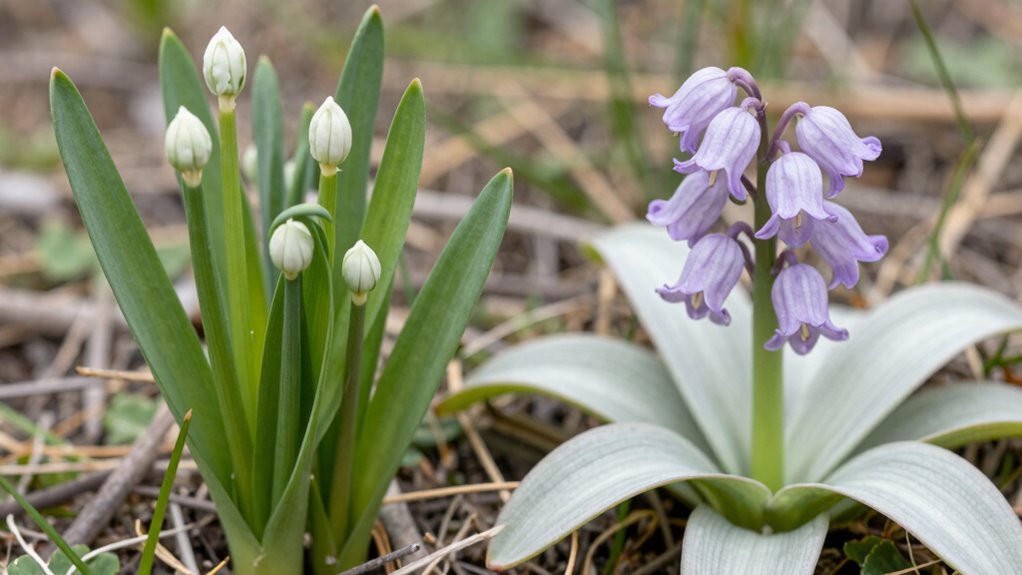

To tell wild onions apart from deadly death camas, pay close attention to their appearance, smell, and habitat. Wild onions have hollow, tubular leaves, a strong onion scent, and grow in clusters from bulbs. Death camas, on the other hand, has fibrous leaves, a foul smell, and features star-shaped white flowers. Because they grow in similar areas and look alike at first glance, knowing these differences is essential. Continue exploring to learn more details.

Get garden gear delivered free with Prime
- Fast, free delivery on millions of items
- Prime Video, Amazon Music and more included
- Member-only deals all year
Key Takeaways
- Wild onions have a strong onion or garlic smell, unlike the odorless death camas.
- Wild onion leaves are flat, hollow, and have a bluish-green hue; death camas has smooth, waxy, and strap-shaped leaves.
- The bulbs of wild onions are small and elongated, whereas death camas produces large, bulbous, and toxic bulbs.
- Wild onion flowers are typically white to pinkish with a spherical cluster; death camas has star-shaped white flowers in a flat-topped cluster.
- Habitat overlap requires careful inspection of plant features and scent to reliably differentiate safe wild onions from deadly death camas.
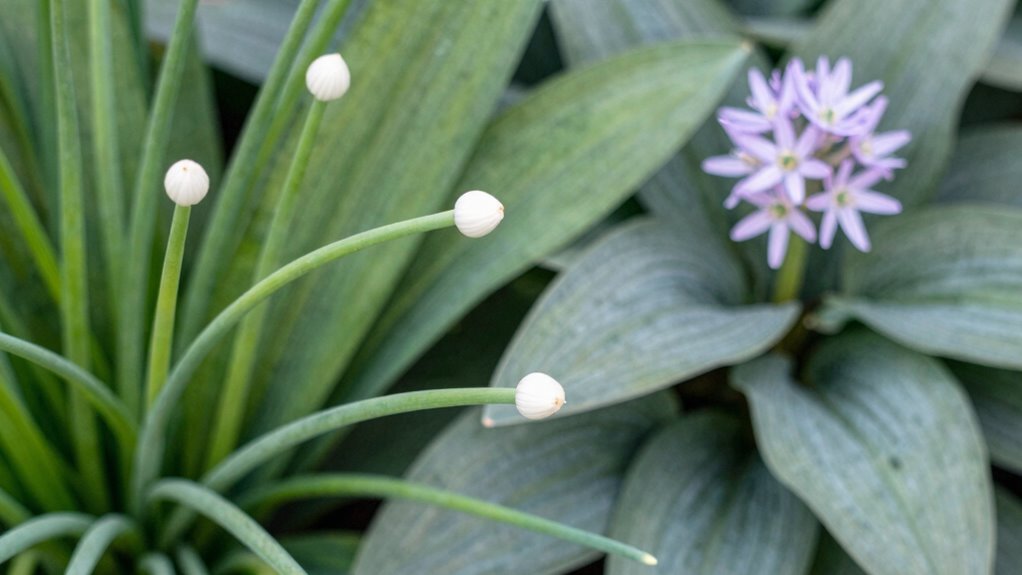
When foraging in the wild, it’s crucial to know the difference between edible wild onions and their toxic look-alikes, such as death camas. This knowledge is critical for foraging safety, as confusing the two can have deadly consequences. Wild onions and death camas often grow in similar environments and can look alike at a glance, so accurate plant identification becomes your best tool for safe foraging. Before harvesting any plant, take the time to scrutinize its features carefully. Don’t rely solely on appearance; smell and habitat are also key clues that help distinguish edible from dangerous plants. Foraging safety hinges on your ability to distinguish between these plants accurately. Cultivating good plant identification habits, such as inspecting leaves, bulbs, flowers, and scent, minimizes the risk of accidental poisoning. Recognizing plant characteristics like leaf shape and growth pattern is essential for correct identification. Never harvest wild plants based solely on appearance—use multiple identification criteria to confirm. If you’re new to foraging, consider going with experienced foragers or taking a class. Ultimately, the goal is to enjoy the bounty of nature safely, respecting its power and understanding its plants thoroughly. Knowing the difference between wild onion and death camas isn’t just about a good meal; it’s about protecting yourself every step of the way. Paying close attention to habitat and plant identification techniques can greatly reduce the risk of misidentification. Developing a foraging safety mindset is essential in preventing accidental poisoning and ensuring a positive experience with wild plants. Practicing thorough toxic plant feature recognition can help you avoid dangerous mistakes during foraging.
As an affiliate, we earn on qualifying purchases.
Frequently Asked Questions
Are Wild Onions Safe to Eat if Mistaken for Death Camas?
If you mistake wild onions for death camas, they’re not safe to eat. Foraging safety is essential because death camas is highly toxic and can cause serious poisoning or death. Always double-check your identification and avoid consuming plants unless you’re absolutely sure they’re edible. To prevent poisoning, learn the key differences and use reliable guides. When in doubt, it’s better to skip the plant than risk poisoning.
How Can I Distinguish Wild Onion From Death Camas Visually?
It’s a coincidence, but closely examining plant morphology helps you distinguish wild onion from death camas. Look at leaf structure: wild onions have flat, hollow, tubular leaves, whereas death camas features broad, smooth, and often waxy leaves. Focus on the bulbs too—wild onions have small, bulbous bases, while death camas’s bulbs are larger and more rounded. By observing these details, you can identify them confidently and avoid dangerous mix-ups.
What Are the Long-Term Health Effects of Poisoning From Death Camas?
Poisoning from death camas can cause long-term health issues like liver and kidney damage or neurological problems. Plant toxicity from misidentifying edible plants risks serious health consequences, so foraging safety is essential. If you suspect poisoning, seek immediate medical attention. Chronic effects may include ongoing organ damage, but early treatment can improve outcomes. Always double-check plant identification before consuming wild plants to avoid these dangerous long-term health effects.
Is Death Camas Found Only in Specific Regions or Habitats?
Death camas primarily populates specific regions and prefers particular habitats. You’ll find it thriving in the Pacific Northwest, Great Basin, and parts of California. Its habitat preferences include moist meadows, marshes, and open woodlands. While it’s not everywhere, its regional distribution is quite focused. If you’re exploring these areas, be cautious, because death camas’s habitat preferences make it a hazardous plant to recognize and avoid.
Can Cooking or Processing Eliminate the Toxins in Death Camas?
Cooking or processing doesn’t eliminate the toxins in death camas, so foraging safety is vital. You can’t rely on heat or methods like drying to detoxify this plant. Proper toxic plant identification is essential—mistaking death camas for edible wild onions can be deadly. Always double-check your plants before harvesting, and when in doubt, avoid consuming unknown species to prevent poisoning.
Conclusion
So, next time you’re foraging, don’t let wild onion and death camas pull a sneaky switch on you—mistaking one for the other could turn your day from a peaceful hike into a full-blown emergency! Remember, a tiny misstep could release chaos as wild onion is your tasty ally, while death camas is a deadly villain lurking in the shadows. Stay sharp, stay safe, and keep your foraging game stronger than a superhero’s shield!
Halloween Picks
halloween
As an affiliate, we earn on qualifying purchases.