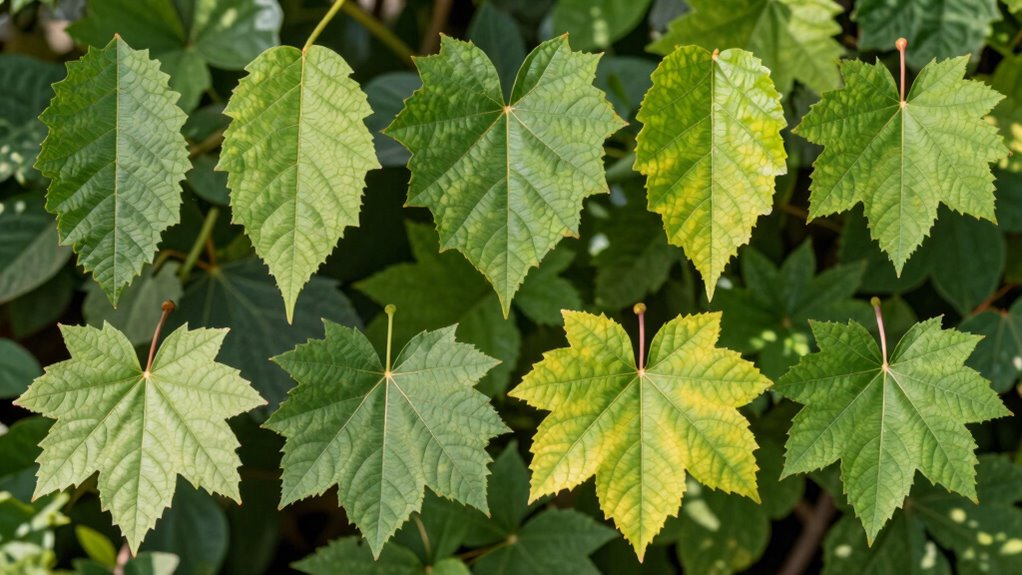

Learning leaf shapes speeds up plant identification because it helps you recognize key features quickly. When you understand different leaf forms, you can narrow down plant options faster, saving time and effort. Leaf shapes act as biological fingerprints, revealing a plant’s environment and adaptations. By mastering these visual clues, you improve your ability to distinguish species even when they’re young or unusual. Keep exploring, and you’ll be surprised how much easier identifying plants becomes.
Key Takeaways
- Recognizing leaf shapes quickly narrows down potential plant species or genera.
- Leaf structure serves as a visual fingerprint for accurate plant differentiation.
- Understanding leaf adaptations helps identify plants even in juvenile or unusual stages.
- Familiarity with leaf diversity accelerates the identification process in various environments.
- Leaf shape clues reveal ecological and environmental information, aiding faster classification.
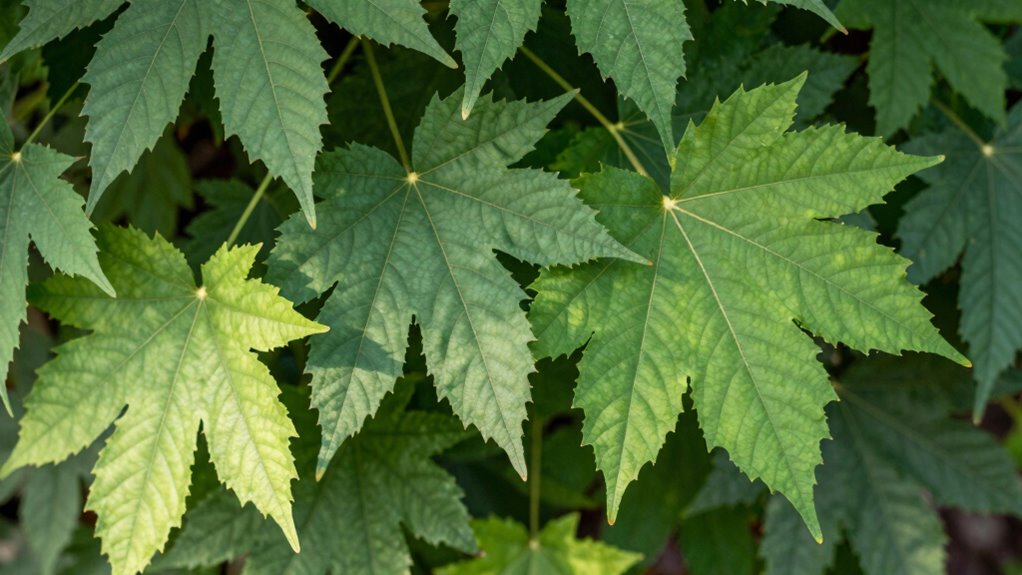
Identifying plants accurately can be challenging, but learning to recognize leaf shapes makes it much easier. When you focus on leaf shapes, you tap into a fundamental aspect of plant identification that’s rooted in plant evolutionary history. Over millions of years, plants have developed a variety of leaf adaptations that help them survive in different environments. These adaptations aren’t random; they’re shaped by natural selection and are key to understanding a plant’s identity. By recognizing these variations, you gain insight into a plant’s evolutionary journey and its ecological niche.
Recognizing leaf shapes reveals a plant’s evolutionary history and ecological adaptations, simplifying identification and deepening understanding.
The shape of a leaf reveals a lot about a plant’s evolutionary background. For example, some plants have broad, flat leaves to maximize photosynthesis in shaded areas, while others feature needle-like leaves to conserve water in dry environments. These differences are not merely superficial—they’re the result of plant evolution responding to environmental pressures. When you learn to distinguish between these shapes, you’re effectively decoding a plant’s evolutionary story. You see the telltale signs of adaptation that reveal how the plant has evolved to thrive in specific habitats. This knowledge accelerates your ability to identify plants because you’re not just memorizing names; you’re understanding why certain plants look the way they do.
Leaf adaptation is a central concept in plant evolution and makes leaf shape recognition a powerful tool. For instance, compound leaves, with their multiple leaflets, often appear in plants that need to shed excess heat or reduce water loss. Conversely, thick, leathery leaves indicate plants that have adapted to arid conditions, conserving moisture in harsh environments. Recognizing these traits allows you to quickly narrow down the species or genus of a plant, saving you time and effort. It’s like reading a plant’s survival strategy written in its leaf structure. This approach turns leaf shape into a biological fingerprint, helping you distinguish between plants that might otherwise look similar at first glance. Additionally, understanding leaf shape diversity provides a deeper appreciation of how plants have evolved their unique forms in response to environmental challenges. Recognizing the evolutionary adaptations behind leaf shapes can also enhance your overall understanding of plant ecology and biodiversity. Moreover, focusing on adaptive traits can help you identify plants even when they are young or have unusual features, broadening your identification skills.
In essence, understanding leaf shapes streamlines the plant identification process because it taps into the deep-rooted, evolutionary reasons behind their forms. It’s more than just a visual cue; it’s a window into the plant’s past and its ongoing adaptation to its environment. When you master leaf shapes, you develop a more intuitive grasp of plant diversity, which speeds up your identification skills. This knowledge not only makes your plant hunting more efficient but also deepens your appreciation of how plants have evolved over time through subtle yet significant leaf adaptations. Additionally, leaf shape evolution exemplifies how environmental pressures shape plant morphology, providing clues about their habitats and survival strategies. Moreover, environmental pressures have played a significant role in shaping the diversity of leaf forms we see today.

As an affiliate, we earn on qualifying purchases.
Frequently Asked Questions
Can Leaf Shape Vary Within the Same Plant Species?
Yes, leaf shape can vary within the same plant species due to genetic variation and evolutionary adaptation. You’ll notice differences because some plants adapt their leaf shapes to better suit environmental conditions like sunlight, water, or wind. These variations help the plant survive and thrive, illustrating how evolution shapes plant features over time. Recognizing these differences makes plant identification easier and more accurate, especially when you understand the underlying biological reasons.
How Does Leaf Shape Influence a Plant’s Environment Adaptation?
You see, leaf shape directly influences a plant’s environment adaptation by affecting photosynthesis efficiency and pest resistance. For example, broad leaves maximize sunlight capture in shady areas, boosting photosynthesis. Conversely, narrow or tough leaves help prevent water loss and resist pests in dry or harsh environments. By learning leaf shapes, you can better understand how plants adapt to their surroundings, making plant identification faster and more accurate.
Are There Tools to Help Identify Leaf Shapes Accurately?
Yes, there are tools to help identify leaf shapes accurately. Digital imaging devices capture detailed leaf images, while shape recognition software analyzes leaf contours and patterns. These tools streamline plant identification by providing precise, quick comparisons to vast plant databases. With just a smartphone or camera, you can snap a leaf and let the technology do the work, making plant identification easier, faster, and more reliable for enthusiasts and experts alike.
Does Leaf Shape Change as a Plant Matures?
Yes, leaf shape can change as a plant matures due to leaf shape evolution and genetic influences. As plants grow, their genetic makeup directs development, sometimes altering leaf size, margin, or overall shape. These changes help the plant adapt to environmental conditions and improve survival. Recognizing these variations is essential for accurate plant identification, especially when using leaf shape as a key characteristic, even in mature stages.
Can Leaf Shape Help Identify Plants in the Winter?
You can often identify plants in winter because, despite seasonal leaf variations, leaf shape evolution still offers clues. While many plants shed their leaves, evergreens keep their needles, which have distinct shapes. Recognizing these shapes helps you see past the winter’s bare branches. Even in colder months, understanding leaf shape helps you piece together the plant’s identity, like a puzzle waiting to be solved.
Conclusion
Imagine holding a leaf, its shape telling a story you’ve just begun to understand. As you learn to recognize these subtle differences, you reveal secrets hidden in plain sight—each shape a clue to a plant’s identity. The more you observe, the clearer the picture becomes, drawing you deeper into nature’s intricate puzzle. Soon, you’ll see patterns others miss, and the mystery of plant identification will feel like a discovery waiting just around the corner.