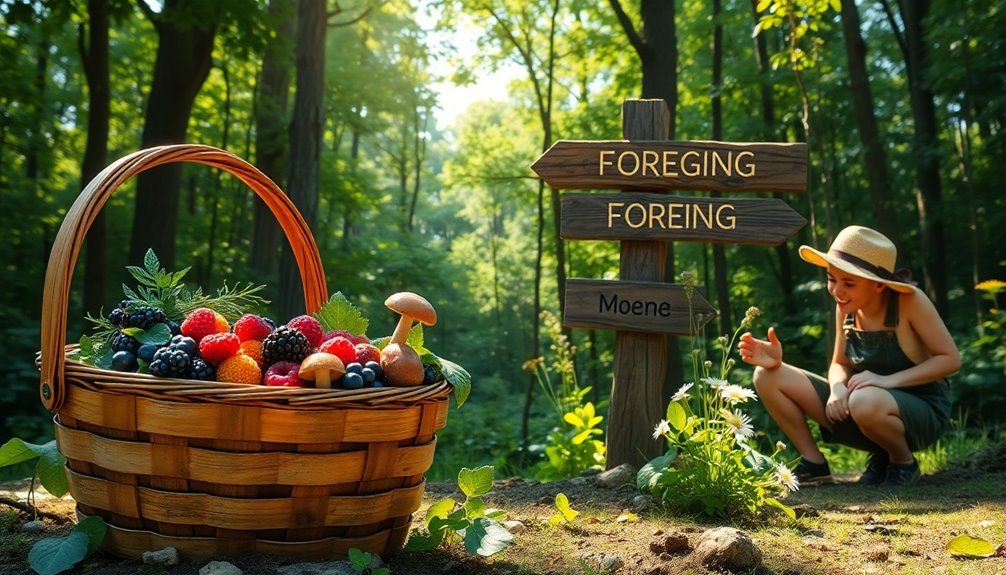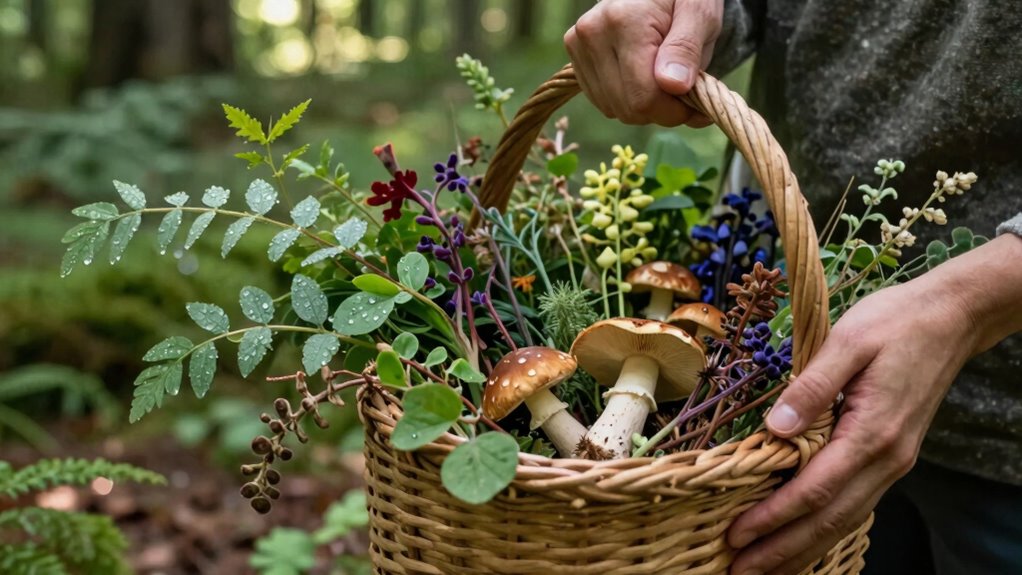
When you forage, you develop better attention skills by carefully observing plant details, environmental cues, and natural patterns. You learn to identify edible species while avoiding toxic look-alikes, sharpening your focus. Orienteering landscapes using the sun or landmarks improves your spatial awareness, and slowing down fosters mindfulness. This activity engages your problem-solving abilities and enhances concentration. Keep exploring to discover more ways foraging can boost your attention and deepen your connection to nature.
Key Takeaways
- Foraging requires careful observation of plants, sharpening focus on details like shape, color, and texture.
- It enhances spatial awareness by reading natural cues, improving navigation and environmental perception.
- The activity promotes mindfulness, encouraging full presence and detailed examination of surroundings.
- Foraging involves problem-solving, assessing plant safety, ripeness, and sustainable harvesting strategies.
- It develops pattern recognition and ecological understanding, strengthening attention through environmental learning.
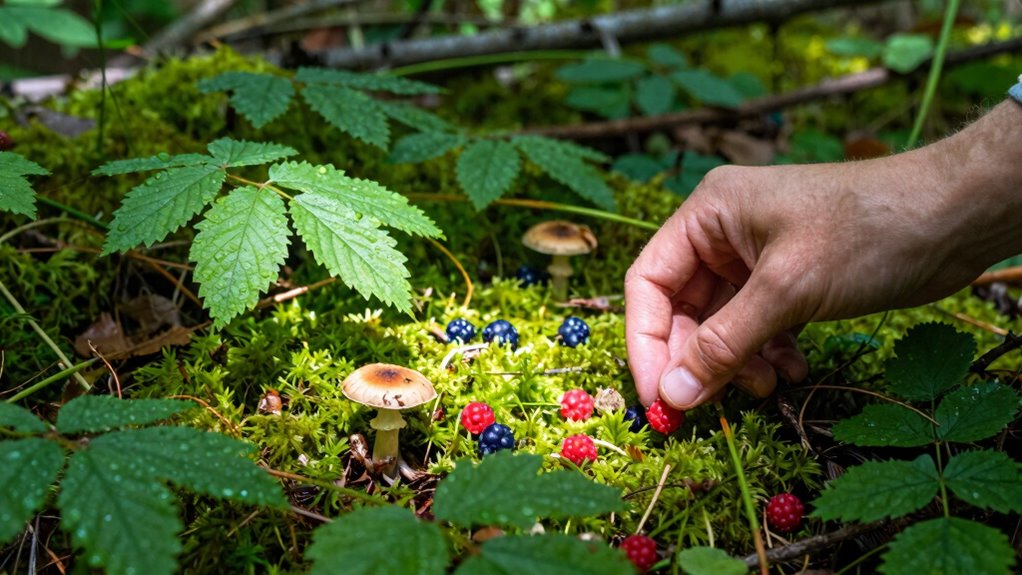
Foraging isn’t just about collecting food—it’s a powerful way to sharpen your attention skills. When you venture into nature to gather wild edibles, you engage in a practice that demands focus and keen observation. Wild plant identification becomes your primary task, requiring you to carefully examine each plant’s shape, color, and texture. You learn to distinguish edible species from their toxic look-alikes, which sharpens your ability to notice subtle differences in your environment. This process trains your mind to pay close attention to detail, heightening your awareness of your surroundings.
As you search for edible plants, navigation techniques become essential. You develop an intuitive sense of direction, learning to read natural cues like the sun’s position, the growth patterns of plants, and landmarks in the landscape. These skills improve your spatial awareness, making you more attentive to your environment as a whole. You start to notice small changes in the terrain, such as a new trail or an unusual plant that could signal a good foraging spot. This constant awareness nurtures your capacity to stay focused over extended periods, honing your attention span as you scan the area carefully. Additionally, understanding environmental cues can enhance your ability to adapt to different foraging settings, making your skills more versatile.
The act of foraging also encourages you to slow down and become fully present in the moment. Instead of rushing through the woods, you practice patience, examining each plant thoroughly before deciding to harvest it. This mindfulness enhances your ability to concentrate, reducing distractions and fostering a more attentive mindset. As you become more experienced, your brain begins to recognize patterns—such as the typical habitat of certain edible plants or how specific plants grow in relation to others. This pattern recognition further sharpens your focus, making your searches more efficient and precise. Recognizing these patterns is similar to understanding the behavior of drone bees in their hive, where each bee’s role contributes to the overall stability and efficiency of the colony.
Furthermore, foraging often involves problem-solving. When you find a plant, you might need to determine if it’s ripe or if it’s safe to eat. You might have to figure out the best way to reach or harvest it without damaging the surrounding environment. These challenges require you to stay alert and think critically, which in turn trains your attention to detail and improves your overall cognitive flexibility. Additionally, engaging in emerging trends like sustainable foraging practices can deepen your understanding of ecological balance and environmental stewardship. Incorporating knowledge of native plant species can also help you make better decisions and avoid invasive or harmful plants. Over time, you’ll notice that your ability to concentrate on complex tasks outside of foraging also improves, as your brain adapts to the heightened demands of the activity.
In essence, foraging is a dynamic exercise that sharpens your attention through the combined tasks of wild plant identification, navigation techniques, mindfulness, and problem-solving. It’s a holistic way to boost your focus while reconnecting with nature, making your attention skills stronger and more resilient in everyday life.

Peterson Field Guide To Medicinal Plants & Herbs Of Eastern & Central N. America: Third Edition―A Field Guide to Discovering Nature's Remedies in Eastern and Central North America
- Comprehensive guide to medicinal plants: Eastern and Central North America
As an affiliate, we earn on qualifying purchases.
As an affiliate, we earn on qualifying purchases.
Frequently Asked Questions
How Long Should a Typical Foraging Session Last?
A typical foraging session should last about 30 to 60 minutes. During this time, you can practice foraging mindfulness, focusing on sensory engagement with your environment. This helps sharpen your attention skills by encouraging you to notice subtle changes and details in nature. Keep your session manageable, so you stay engaged without feeling overwhelmed. Longer periods might lead to fatigue, so listen to your body and enjoy the process.
What Safety Precautions Are Necessary for Foraging?
When foraging, you should prioritize safety by wearing proper safety gear like gloves and sturdy shoes to protect against cuts and insects. Always learn to identify poisonous plants to avoid ingestion or contact, and carry a field guide or app for reference. Stay aware of your surroundings, forage in known areas, and avoid risky spots like dense underbrush or near water, ensuring a safe and enjoyable experience.
Can Foraging Improve Attention in Children?
Yes, foraging can improve children’s attention by engaging their senses and encouraging outdoor exploration. When you take children for foraging, they practice sensory engagement with plants, textures, and sounds, which sharpens their focus. Outdoor exploration also stimulates curiosity and observation skills, helping them stay attentive to their surroundings. As they learn to identify edible items and navigate nature, their attention span naturally increases through active participation and hands-on experiences.
What Are Common Mistakes Beginners Make While Foraging?
You might stumble like a lost sailor if you ignore plant identification and habitat awareness while foraging. Common mistakes include rushing without checking plants carefully, picking unknown species, or ignoring the environment where plants thrive. Always take your time to confidently identify plants and understand their habitat. This guarantees safety and success, helping you develop sharper attention skills as you learn to notice details and stay attentive to your surroundings.
How Does Foraging Compare to Other Attention-Building Activities?
Foraging stands out because it deepens your nature connection while boosting cognitive enhancement, unlike many other attention-building activities. You actively engage all your senses, which sharpens focus and mindfulness. While activities like puzzles or meditation also improve attention, foraging combines physical movement with nature immersion, making it more holistic. This active interaction with the environment helps you develop sustained attention and mindfulness, ultimately enhancing your overall mental clarity and emotional well-being.
Conclusion
So, when you head out foraging, you’re not just gathering food—you’re sharpening your attention skills. It’s a practice that keeps you present and alert, much like the old saying, “A watched pot never boils.” By paying close attention to your surroundings, you train your mind to focus better in all areas of life. Next time you’re outdoors, remember: the more you observe, the sharper your mind becomes.