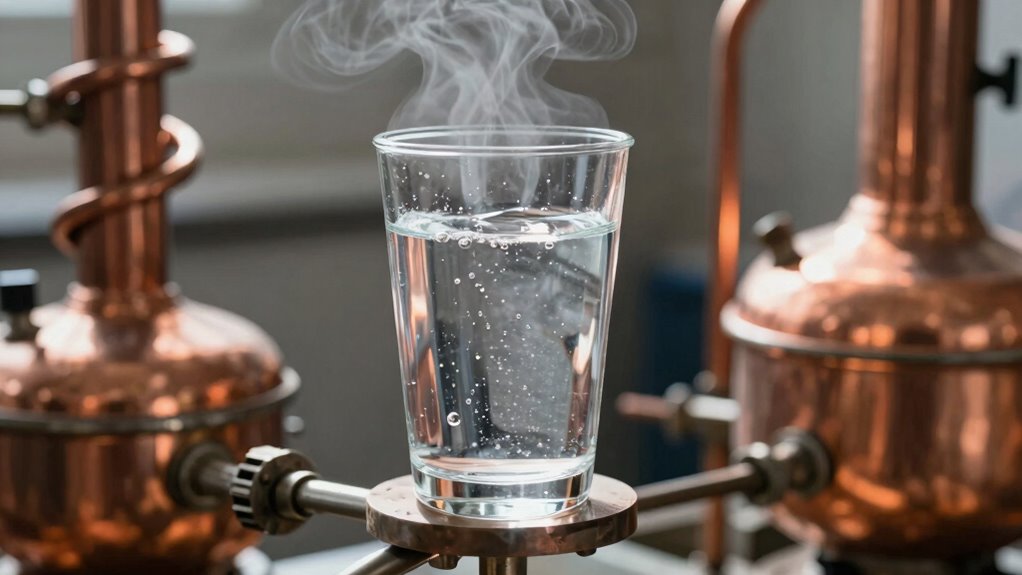

Water distillation removes bacteria, viruses, heavy metals, and salts, making it highly effective for purification. However, it can’t eliminate all chemical contaminants, especially volatile organic compounds (VOCs) and low-boiling chemicals that vaporize with water. This means some impurities may remain, affecting water safety and taste. To understand its full capabilities and limitations, you’ll discover how combining methods improves water quality and addresses chemical concerns.
Key Takeaways
- Can effectively remove bacteria, viruses, heavy metals, and salts, producing highly purified water.
- Cannot fully eliminate low-boiling chemical contaminants like volatile organic compounds (VOCs).
- Requires significant energy input, making it costly and less sustainable at large scales.
- May leave residual impurities and minerals that affect taste and safety.
- Is most effective when combined with other filtration methods to ensure comprehensive purification.
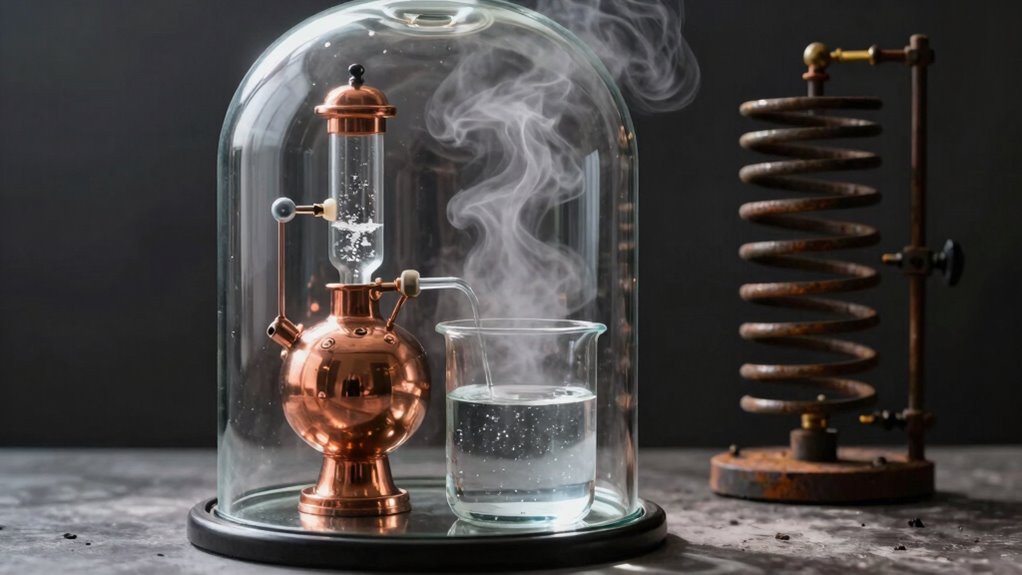
Have you ever wondered whether water distillation is the ultimate solution for clean drinking water? It’s a process that’s been around for ages, praised for its ability to produce pure water by boiling out impurities. But despite its reputation, water distillation isn’t flawless. One key aspect to contemplate is its purification limitations. While it effectively removes many contaminants like bacteria, viruses, heavy metals, and salts, it doesn’t catch everything. Volatile organic compounds (VOCs) and certain chemicals with low boiling points can vaporize alongside water, slipping through the distillation process. This means, if your water source has chemical pollutants, distillation alone might not guarantee complete safety.
Water distillation removes many contaminants but may let VOCs and low-boiling chemicals slip through.
Another challenge of water distillation is its energy consumption. The process requires heating large volumes of water to boiling point, which can be energy-intensive and costly, especially for large-scale applications. If you’re relying on traditional methods without energy-efficient systems, the ongoing energy costs can become a significant drawback. This high energy demand makes distillation less practical in areas where electricity or fuel is scarce or expensive. It also raises environmental concerns, as increased energy use often correlates with higher carbon emissions, depending on how the energy is generated. Furthermore, the heating process can sometimes lead to the concentration of certain impurities, like minerals, which may affect water taste and quality. Incorporating energy-efficient systems can help mitigate some of these issues, but they may require additional investment.
Additionally, the byproducts of distillation can include residual impurities that are not vaporized, which might require further treatment to ensure water safety. The presence of minerals and other non-volatile substances may also impact the overall purity and taste of the water. Despite these limitations, water distillation does excel at producing highly purified water, which is particularly beneficial in laboratory settings or for specific industrial uses. But if you’re contemplating it for everyday drinking water, you need to weigh the costs and benefits carefully. It’s not a one-size-fits-all solution. For example, in regions with contaminated water sources loaded with chemicals that volatilize easily, distillation might leave you with incomplete purification. Similarly, if energy costs or environmental impact are concerns, exploring alternative filtration methods or combined systems could be more practical.
Ultimately, water distillation can be a valuable part of your water purification toolkit, especially when you need very high purity. However, it’s crucial to recognize that it may not eliminate all chemical contaminants, especially those with low boiling points. Relying solely on distillation might not always be the most efficient or sustainable choice. In addition, understanding the regulatory standards for drinking water can help you determine if distillation meets safety requirements. Relying on it alone without considering other filtration methods may not provide comprehensive protection. Instead, combining it with other filtration techniques, like activated carbon or reverse osmosis, can help address its shortcomings, providing safer and more economical drinking water. So, while distillation is powerful, it’s not the ultimate, catch-all solution—knowing its limits helps you make smarter decisions about your water quality.

VEVOR 1.1 Gallon Water Distiller, 750W, BPA Free Container Countertop
- High Capacity Water Distiller: Distills 6 gallons daily
- Safe and Certified Materials: BPA-free, stainless steel construction
- User-Friendly Operation: One-button start with auto-shutdown
As an affiliate, we earn on qualifying purchases.
As an affiliate, we earn on qualifying purchases.
Frequently Asked Questions
How Does Water Distillation Compare to Other Purification Methods?
Water distillation effectively removes chemical residues and bacteria, providing pure drinking water. Compared to filtration, distillation eliminates more contaminants, including heavy metals and microbes, but it also retains some minerals essential for health. Unlike reverse osmosis, which can waste water, distillation is energy-intensive. You should consider your needs—if mineral retention is important, distillation might not be ideal, but for maximum purity, it’s highly effective.
Can Distillation Remove All Types of Contaminants?
Yes, distillation can remove many contaminants, including minerals and chemicals, through mineral removal and chemical separation. However, it may not eliminate all pollutants, like volatile organic compounds or certain gases, which can vaporize alongside water. You’ll find distillation effective for most mineral and chemical issues, but for specific or industrial contaminants, additional purification methods might be necessary to guarantee water quality.
Is Distilled Water Safe to Drink Long-Term?
Drinking distilled water long-term is like sipping from a clear mountain spring—it’s generally safe but may lack essential minerals your body needs. While it offers health benefits like purity and taste improvement, it can also leach minerals from your body if consumed exclusively. To stay balanced, consider supplementing with mineral-rich foods or drinks. Moderation is key, and consulting a healthcare professional helps guarantee you meet your nutritional needs.
What Equipment Is Needed for Home Water Distillation?
To set up home water distillation, you’ll need a distillation unit, which typically includes a boiling chamber, condenser, and collection container. Make certain your home setup is secure and properly insulated. Regular equipment maintenance is essential—clean the boiling chamber and replace filters as needed to guarantee pure water. With proper care, your home distillation system can provide safe, high-quality drinking water consistently.
How Energy-Efficient Is the Distillation Process?
The distillation process isn’t very energy-efficient, as it consumes significant energy for boiling water and condensing vapor. Your energy consumption is high compared to other purification methods. To improve efficiency, you can use insulation around the still or opt for solar-powered distillation units. While it’s effective at removing contaminants, expect higher energy costs unless you implement efficiency improvements like better insulation or renewable energy sources.
Conclusion
Remember, while water distillation can effectively remove many impurities and provide you with cleaner water, it’s not a cure-all. It won’t eliminate minerals that you might need or remove certain volatile chemicals. As the saying goes, “Don’t put all your eggs in one basket.” Use distillation as part of a broader water treatment plan, and you’ll guarantee your water is safe without depending solely on this method.