TL;DR
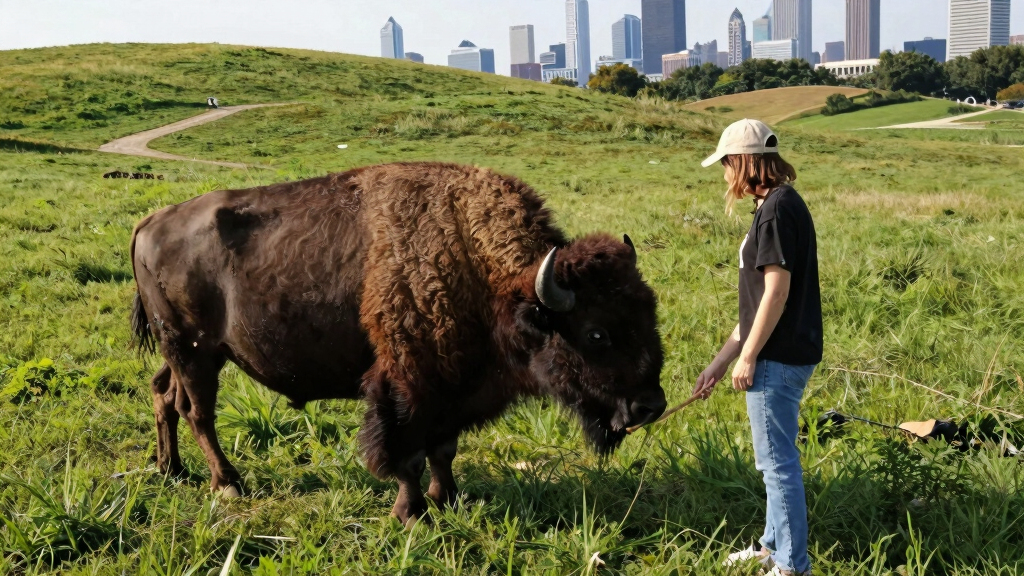
For the first time in over 200 years, wild bison have been reintroduced to the outskirts of Chicago at Burlington Prairie. The herd of seven bison is part of a conservation and cultural project involving local Indigenous groups and public land management. This marks a significant ecological and cultural milestone for Illinois.
A herd of seven bison was introduced to Burlington Prairie, 60 miles northwest of Chicago, on December 5, 2025, marking their return to native Illinois prairie lands after more than 200 years. This event is significant because it restores a keystone species to the region, with ecological and cultural implications for local Indigenous communities and conservation efforts.
The bison were transported from an Illinois herd with heritage tracing back to the last remaining bison on the Great Plains. They now occupy a 38-acre fenced enclosure on Burlington Prairie, managed by the Forest Preserve District of Kane County in partnership with the American Indian Center of Chicago (AIC) and Ruhter Bison. The project aims to reconnect Indigenous communities with their land and restore ecological balance through natural grazing and habitat creation.
The herd’s arrival is part of a broader initiative to re-establish native prairie ecosystems, which have been reduced to less than 0.1% of Illinois’ original grasslands. The bison’s ecological role includes maintaining healthy grasslands, promoting native wildflowers, and creating microhabitats through wallows and grazing patterns. Early observations suggest positive impacts, such as increased bird activity and healthier grassland conditions.
Why It Matters
This event is significant because it represents a cultural and ecological restoration. Reintroducing bison, a keystone species, helps revive native prairie ecosystems and reconnects Indigenous communities with their ancestral lands. It also provides a rare opportunity for the public to observe bison in a naturalistic setting without the crowds of national parks, fostering awareness and appreciation for prairie conservation.

15×55 UHD Binoculars for Adults High Powered with Phone Adapter – Large View, BAK4 Prism, Waterproof, Lightweight for Bird Watching, Hunting, Cruise, Travel, Camping (Blue)
【 High-Powered & Wide View】Enjoy 15x magnification with an 8° wide-angle field, delivering a crystal-clear 367ft/1000yds view. Perfect…
As an affiliate, we earn on qualifying purchases.
As an affiliate, we earn on qualifying purchases.
Background
Bison once roamed the Great Plains in herds of 30-60 million, but mass slaughter in the 1800s led to near-extinction. Their decline was intertwined with westward expansion and colonization, displacing Indigenous peoples and eroding native foodways. The last Illinois bison herd was lost decades ago, making this reintroduction a historic event. The project aligns with broader conservation efforts and Indigenous-led land stewardship initiatives in the Midwest.
“Having the bison on the prairie is a way for us to connect with that piece of our indigeneity that’s nearby.”
— Jessica Pamonicutt, President of AIC
“We have bison on the prairie, rather than on a paddock. It’s open to the public in a multi-purpose facility.”
— Benjamin Haberthur, Kane County Forest Preserve Director

KJK Trail Camera 4K 64MP WiFi Bluetooth Game Camera, Night Vision Wildlife Hunting Camera, 0.1s Trigger Motion Activated, IP67 Waterproof, 130° Wide Angle for Deer & Farm Security
【WiFi Connectivity & App Control】 Connect this WiFi trail camera via Bluetooth and the TrailCam GO app to…
As an affiliate, we earn on qualifying purchases.
As an affiliate, we earn on qualifying purchases.
What Remains Unclear
It is still early in the project, and scientists are waiting a full season to gather reliable ecological data. The long-term impacts on the prairie ecosystem and the herd’s adaptation are still uncertain, as is how the project will influence local biodiversity and Indigenous cultural practices over time.
prairie conservation educational kits
As an affiliate, we earn on qualifying purchases.
As an affiliate, we earn on qualifying purchases.
What’s Next
Next steps include monitoring the herd’s ecological impact, conducting scientific surveys of soil and plant health, and engaging the public through educational programs. The project aims to expand the herd and potentially replicate similar efforts in other parts of Illinois.

Safari Ltd. Bison Figurine – Detailed 8.25" Plastic Model Figure – Fun Educational Wildlife Play Toy for Boys, Girls & Kids Ages 3+
From the enchanting Safari range of miniatures
As an affiliate, we earn on qualifying purchases.
As an affiliate, we earn on qualifying purchases.
Key Questions
Why were bison reintroduced to Illinois after 200 years?
The reintroduction aims to restore native prairie ecosystems and reconnect Indigenous communities with their cultural heritage, as bison are a keystone species integral to native landscapes and history.
How many bison are in the herd?
The herd currently consists of seven bison, with plans to monitor and potentially expand in the future.
Can the public visit the bison?
Yes, the bison are housed in a publicly accessible area at Burlington Prairie, where visitors can observe them from a respectful distance behind a fence.
What ecological benefits do bison provide?
Bison help maintain healthy grasslands through natural grazing, create microhabitats via wallows, and contribute nutrients to the soil through their dung, supporting biodiversity.
Source: Outside