TL;DR

Get garden gear delivered free — and shop member deals
- Fast, free delivery on millions of items
- Access to Prime Big Deal Days deals on October 6–7
- Prime Video, Amazon Music and more included
Gardening Know How describes three ways to reuse plastic storage totes: as a mini greenhouse, a seed starting tray or a small raised bed. The ideas require little expense, but the trays and beds need drainage holes, and greenhouse totes need regular ventilation to prevent overheating.
Gardening Know How has outlined three ways to reuse plastic storage totes as garden equipment: a mini greenhouse, a seed starting tray and a small raised bed. The suggestions offer gardeners ways to put unused bins to work, though the report says some uses require drainage holes and the greenhouse needs ventilation to keep plants from overheating.
For a mini greenhouse, the report recommends turning a clear tote upside down over seedlings or tender plants. A brick or rock under one side can let air circulate and heat escape. The tote can be closed at night to shield plants from cold and opened during the day. Its lid can hold water for bottom watering, or serve as a base for seedlings.
Smaller bins can become seed starting trays after drainage holes are made in the bottom. The article recommends using a drill or hot metal skewer and cautions against making holes with a knife or scissors, which it says can increase the chance of injury or cracking the plastic. A lid placed underneath can catch runoff; a larger tote placed over the tray can provide a cover.
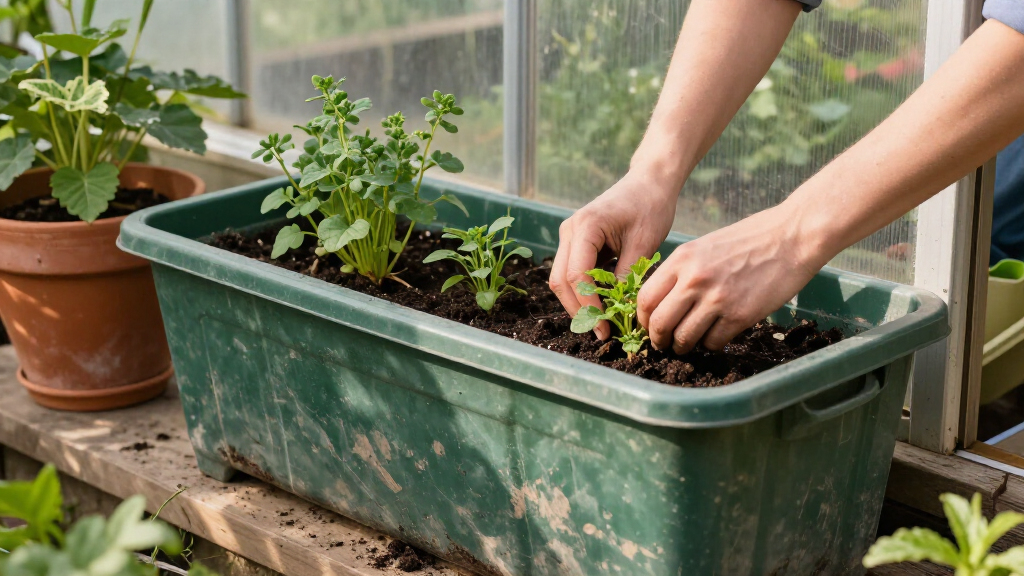
A large tote can also serve as a compact raised bed. The guide says to add drainage holes, fill it with a growing mix and plant vegetables. It singles out potatoes as a suitable crop and recommends a container around 15 inches deep or more for root growth. The article cautions that plastic totes exposed to outdoor sun may last only a few years.
Low-Cost Uses for Spare Bins
The ideas may help gardeners reuse items they already own instead of buying dedicated seed trays or raised beds. They also make container growing possible on porches, patios and balconies, where space can be limited. The report presents these as practical suggestions, not as tested guarantees of savings or yields.
Each use has limits. Only a clear tote lets light reach plants in the greenhouse setup, while bins used as trays or beds need drainage. Ventilation matters: the author recounts that a tote left closed in strong sun overheated plants. That example underlines the need to monitor covered seedlings as conditions change.
Three Projects, Different Totes
The advice appears in Gardening Know How’s Dirt Cheap Gardening series, which focuses on lower-cost alternatives for garden tools and supplies. The report says spare totes can be used even if their lids are missing or the containers have cracks, although the mini greenhouse setup calls for a clear bin and a lid can be useful for catching water.
The projects vary in preparation: the greenhouse requires no changes to the tote, while the seed tray and raised bed need holes drilled in their bases. The source does not give a publication date, product testing data or comparative costs for these options.
““One of my favorite low-cost swaps is a plastic storage tote.””
— Gardening Know How article author
Durability and Results Vary
The report does not quantify how much gardeners might save, how many seedlings or plants each tote can support, or how tote performance varies by material and climate. Its estimate that outdoor bins may last a few years is not accompanied by a testing method. The source also does not specify a precise hole count for every tray or bed size, advising instead that gardeners make several holes for drainage.
Monitor Plants as They Grow
Gardeners adapting the suggestions will need to check moisture, drainage and temperature as plants develop. For a tote greenhouse, the article advises opening the cover in the morning and venting it so heat can escape; seedlings can later be carried outside in the tote. For bins converted into trays or beds, the next steps are to provide drainage, add an appropriate growing mix and choose plants suited to the container’s size.
Key Questions
What are the three suggested uses for plastic storage totes?
Gardening Know How suggests using totes as a mini greenhouse, seed starting tray or small raised bed.
Does a mini greenhouse tote need to be clear?
Yes. The report says to use a clear tote so light can reach plants. It also recommends raising one side to vent the cover and opening it during the day to release heat.
Do totes need holes for every garden use?
The article’s seed tray and raised bed projects require drainage holes in the bottom. Its mini greenhouse method does not require modifying the tote.
How deep should a tote be for growing vegetables?
The report recommends a tote around 15 inches deep or more to give roots room, and says potatoes can grow well in totes.
How long will a plastic tote last outdoors?
The article says totes exposed to outdoor sun may last only a few years, but it does not provide test data or a more precise lifespan.
Source: rss
Fall Picks
fall essentials
As an affiliate, we earn on qualifying purchases.