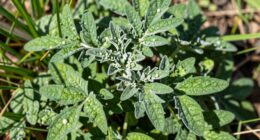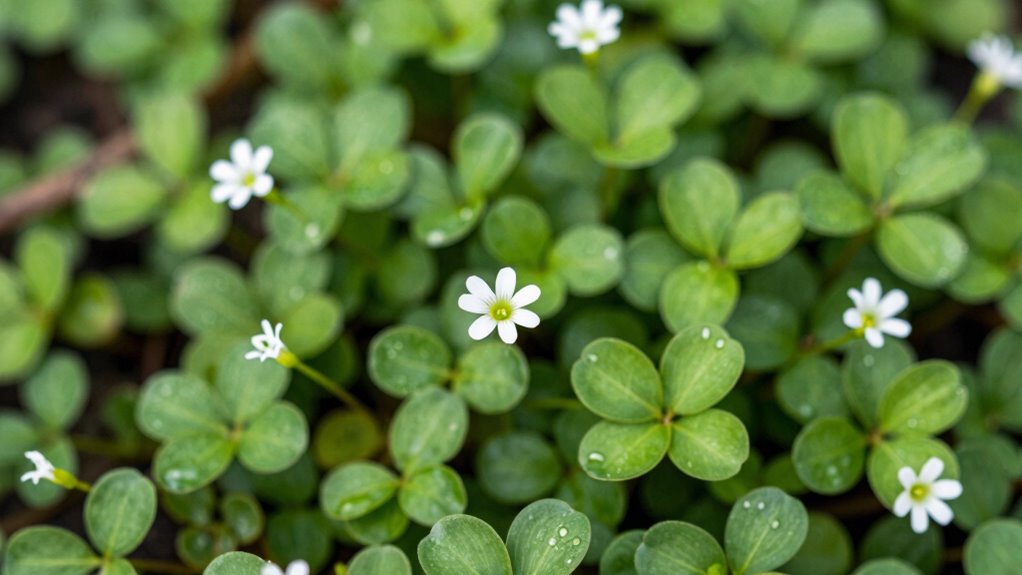
To spot chickweed before it flowers, look for low, sprawling stems that stay close to the ground, forming dense mats. Check for small, oval leaves about ¼ to ½ inch long, arranged opposite each other, with a slightly pointed tip and smooth or hairy texture. These patches will appear as vibrant green clusters in moist, shaded areas. Recognizing these early signs helps you manage or harvest efficiently—keep exploring to learn more about its unique features.
Key Takeaways
- Look for low, sprawling stems that form dense mats across moist, shaded soil.
- Identify small, opposite oval leaves about ¼ to ½ inch long with a slightly pointed tip.
- Notice dense patches of green before tiny white star-shaped flowers develop.
- Differentiate from upright weeds by its low, creeping growth habit and leaf arrangement.
- Recognize growth in shaded, moist areas early for effective harvesting and weed management.
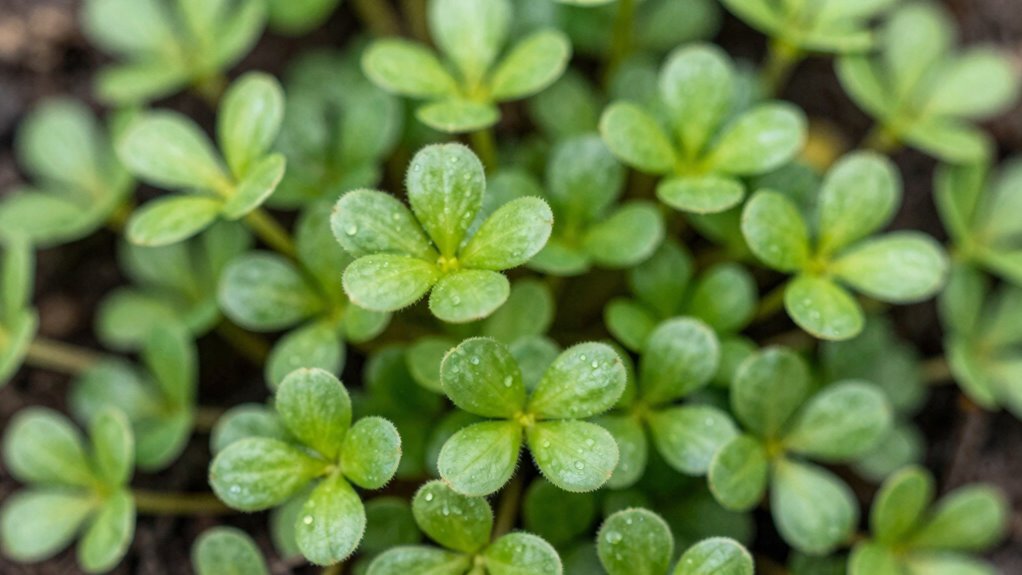
Are you having trouble distinguishing chickweed from other garden plants? It can be tricky before it flowers because its small, green leaves and sprawling growth can resemble several weeds. To identify chickweed early, pay attention to its common growth patterns. It tends to spread low across the soil, forming dense mats that can quickly cover patches of ground. Its stems are thin, often sprawling or creeping, and they tend to be smooth or slightly hairy. The plant usually grows in clusters, especially in moist, shaded areas, making it easy to spot once you know what to look for. Understanding its growth habits can help you differentiate chickweed from similar plants. Unlike many weeds that grow upright or have a singular stalk, chickweed’s sprawling stems stay close to the ground. The leaves are small, oval-shaped, and arranged opposite each other along the stem. These leaves are typically about a quarter to half an inch long and have a slightly pointed tip. As the plant matures, it produces tiny white star-shaped flowers, but before flowering, the plant is mostly just a dense patch of green. Recognizing this pattern early allows you to manage or harvest it before it flowers, which is especially useful if you’re interested in its nutritional benefits. Since chickweed’s growth habits help distinguish it from other plants, understanding these patterns is key to proper identification. Additionally, chickweed’s chemical composition includes beneficial compounds that contribute to its medicinal properties. Being familiar with its growth cycles can aid in harvesting at the optimal time for maximum nutritional value. Recognizing the plant’s distinctive features early can also prevent confusion with similar-looking weeds, saving you time and effort. A deeper understanding of its growth environment can further improve your ability to identify and harvest chickweed effectively. Knowing how to spot it before it flowers ensures you can enjoy its full nutritional profile at its peak flavor and tenderness.

Medicinal Plants of the Pacific Northwest: A Visual Guide to Harvesting and Healing with 35 Common Species
As an affiliate, we earn on qualifying purchases.
As an affiliate, we earn on qualifying purchases.
Frequently Asked Questions
Does Chickweed Have Any Medicinal Uses?
Yes, chickweed has medicinal properties you can use in herbal remedies. You might find it helpful for soothing skin irritations, reducing inflammation, or easing coughs and colds. When you harvest chickweed, you can make teas, poultices, or salves to harness its healing qualities. Its gentle, natural benefits make it a versatile herb for supporting your health, especially when used fresh or dried in various herbal preparations.
Can Chickweed Be Confused With Similar Weeds?
Imagine a puzzle where each piece looks alike—plant identification can be tricky, and chickweed may be confused with similar weeds like knotweed or spurge. You need keen eyes for weed differentiation, spotting subtle differences in leaf shape, stem structure, and growth habits. Pay attention to chickweed’s small, oval leaves and low, sprawling growth. Recognizing these signs guarantees you don’t mistake it for other weeds, helping you maintain a healthy garden.
What Soil Conditions Favor Chickweed Growth?
Chickweed thrives in moist, nutrient-rich soils with a neutral to slightly acidic pH, around 6.0 to 7.0. You’ll notice it prefers areas with good drainage and consistent moisture. To support its growth, guarantee your soil has ample nutrients, especially nitrogen. Avoid overly dry or compacted soils, as these conditions hinder chickweed development. Regular watering and adding organic matter can help create ideal conditions for this weed to flourish.
Is Chickweed Harmful to Lawns or Crops?
Chickweed isn’t typically harmful to your lawns or crops, but it can be a pesky weed that competes for nutrients, water, and space. Think of it as an uninvited guest at your garden party, subtly taking over. Proper weed control is essential to maintain lawn health, preventing chickweed from spreading and crowding out your desired plants. Stay vigilant, and you’ll keep your yard lush and thriving.
How Long Does Chickweed Take to Flower After Sprouting?
Chickweed typically takes about 2 to 3 weeks to flower after sprouting, depending on growing conditions. Its growth timeline from sprouting to flowering is quite quick, so you’ll notice small white flowers emerging within this period. To manage it effectively, monitor young plants closely. The faster you identify and control chickweed early, the easier it is to prevent it from spreading and forming dense mats that can choke out your desired plants.

FullChea – Chickweed Tea, 50 Teabags – Premium Natural Chickweed Herb – Non-GMO – Caffeine-Free Herbal Tea – Soothe Skin & Support Respiratory Comfort
Pure & Simple Ingredients: Our tea contains only 100% premium, natural chickweed herb—with no artificial additives, fillers, or…
As an affiliate, we earn on qualifying purchases.
As an affiliate, we earn on qualifying purchases.
Conclusion
Spotting chickweed early isn’t just about avoiding weeds; it’s a reminder to pay attention to the small details in nature. Sometimes, the tiniest signs—like those subtle, oval leaves—can reveal the truth before it blooms. Keep your eyes open, and you might realize that what seems insignificant often holds the greatest potential. After all, in nature’s quiet moments, there’s wisdom waiting to be discovered—just like in your own journey.

Tenusrnop® Hoe 60" Long Handle Heavy Duty Manual Weeder Gardening Hand Tools for Weeding, Digging, Loosening Soil, Triangle Shape Hoe Gardening Weeding Tool
DURABLE CONSTRUCTION: Heavy-duty garden hoe features a robust steel head and solid wooden handle for long-lasting performance in…
As an affiliate, we earn on qualifying purchases.
As an affiliate, we earn on qualifying purchases.

Mixrug 1000 Pcs Mixed Astilbe Seeds Perennial-Shade Tolerant Flower Seeds for Planting Vibrant Blooms in Moist Areas & Pollinator-Garden Borders Friendly with High Germination Rate
VIBRANT, POLLINATOR-FRIENDLY BLOOMS: Expect a stunning mix of pink, red, cream, and white blooms with dark green, serrated…
As an affiliate, we earn on qualifying purchases.
As an affiliate, we earn on qualifying purchases.