Lamb’s quarters provide excellent late-season options for harvesting nutritious leaves and seeds. You can gather tender leaves in spring and summer, then switch to mature leaves for fall. Seeds, which become more abundant as the plant matures, can be collected in late summer and used toasted or ground into flour. These parts boost your diet’s nutrients and can be preserved for extended use. Keep exploring to discover more ways to utilize this resilient plant.
Key Takeaways
- Harvest young leaves in spring and summer, and mature leaves later for nutritional use.
- Collect seeds in late summer to extend foraging and utilize as flour or cereal ingredients.
- Leaves are rich in vitamins A, C, K, and minerals, suitable for salads, soups, and sautéed dishes.
- Seeds can be toasted and ground into flour, adding nutritional value to baked goods and cereals.
- Late-season harvesting supports self-sufficiency, food sovereignty, and connects foragers to land and natural abundance.
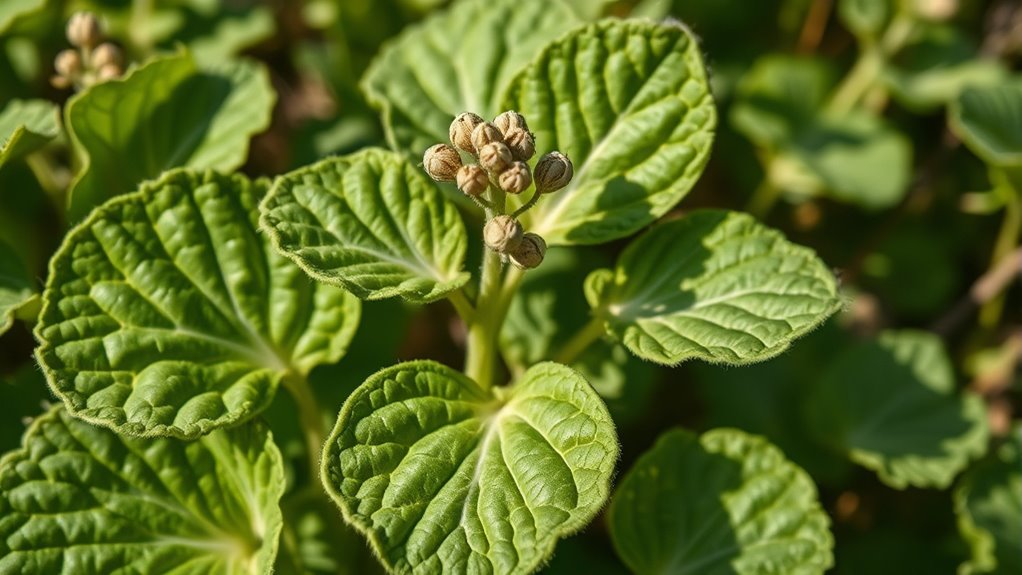
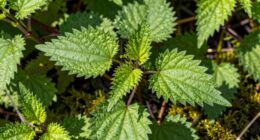
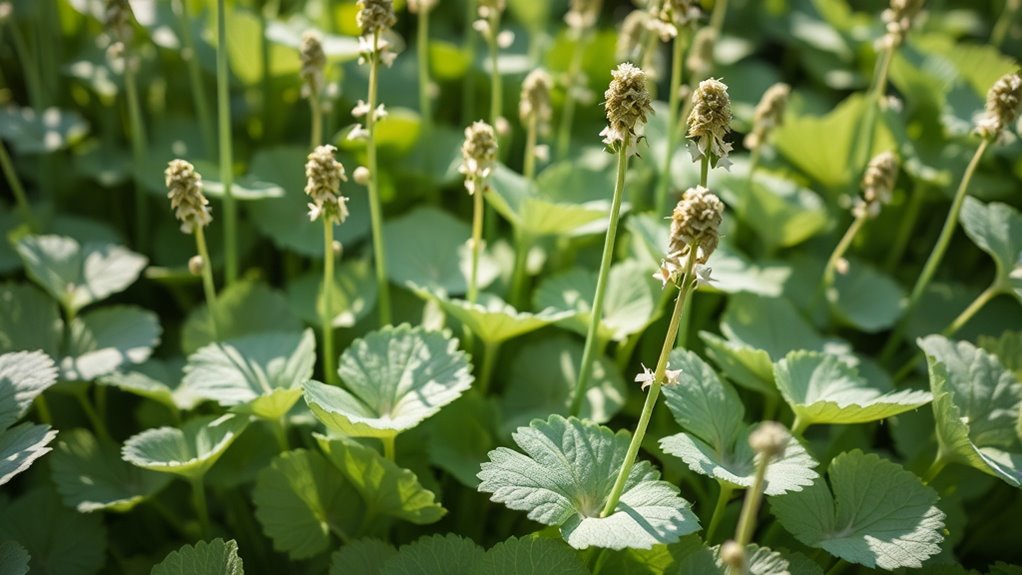
Have you ever come across Lamb’s Quarters and wondered if it’s edible? If so, you’re not alone. This resilient plant often grows unnoticed in gardens, vacant lots, and along roadside edges, yet it holds a powerful secret—its leaves and seeds are a nutritional goldmine. Discovering how to utilize Lamb’s Quarters can be a true act of liberation, reclaiming wild foods as your own healthy, sustainable resources. When foraging for this plant, it’s vital to follow simple foraging tips: always identify it correctly, ensure it’s free from pesticides or pollutants, and harvest only what you need. Its broad, triangular leaves with a slightly dusty appearance are distinctive, and avoiding plants near busy roads or contaminated areas keeps your foraging safe. Once identified, you can harvest the tender young leaves in the spring and summer, while the mature leaves are suitable for late-season gathering. The seeds, which form in late summer, are also highly nutritious and can be collected for future use. Additionally, understanding the plant’s nutritional benefits can help you maximize its health potential. Lamb’s Quarters boasts impressive nutritional benefits that make it a standout wild food. It’s packed with vitamins A, C, and K, essential for boosting your immune system, maintaining healthy skin, and supporting blood clotting. Its mineral content is equally compelling—rich in calcium, iron, magnesium, and potassium—elements that fortify bones, improve blood circulation, and help you stay energized. Compared to cultivated greens, Lamb’s Quarters often has higher concentrations of these nutrients, making it an underrated powerhouse. Incorporating its leaves into salads, soups, or sautéed dishes is a straightforward way to boost your diet’s nutrient density. The seeds can be toasted and ground into flour or added to cereals and baked goods, adding a nutty flavor while providing additional health benefits. Using these parts of the plant shifts your relationship with food from dependency on commercial sources to a more liberated, self-sufficient approach rooted in nature’s abundance. Late-season harvesting of Lamb’s Quarters allows you to extend your foraging and wild food utilization. As the plant matures, its seeds become more abundant, offering a concentrated source of nutrition that can sustain you through leaner times. This practice embodies the spirit of liberation—taking control of your food sources, trusting your knowledge, and connecting deeply with the land. By learning to identify, harvest, and prepare Lamb’s Quarters, you unlock a versatile, nourishing resource that’s been right under your nose all along. It’s more than just a wild plant; it’s a symbol of resilience and independence. Embracing it empowers you to reclaim your food sovereignty and enjoy the rich, natural bounty that nature freely provides.
Top picks for "lamb quarter late"
Open Amazon search results for this keyword.
As an affiliate, we earn on qualifying purchases.
Frequently Asked Questions
Can Lamb’s Quarters Be Cultivated Commercially for Late-Season Harvests?
Yes, you can cultivate lamb’s quarters commercially for late-season harvests. You’ll want to plan your planting schedule carefully to align with ideal harvest timing, ensuring you get the most out of the late-season growth. This plant thrives in diverse conditions, giving you flexibility. By focusing on commercial cultivation strategies, you can enjoy a steady supply of leaves and seeds, taking control of your food sources and embracing your freedom to grow your own nutritious bounty.
Are There Any Health Risks Associated With Consuming Lamb’s Quarters?
You should be aware of potential toxicity concerns and contamination risks when consuming lamb’s quarters. While it’s generally safe, eating leaves or seeds from plants grown near contaminated soil or pollutants could pose health issues. To stay safe, wash thoroughly and source from clean, organic areas. If you’re cautious and informed, you can enjoy lamb’s quarters’s benefits without risking your health.
How Do Flavor Profiles of Lamb’s Quarters Change Throughout the Season?
You’ll notice lamb’s quarters develop a richer, earthier flavor as the season progresses. Early on, its leaves are mild and tender, perfect for fresh salads. As the season impacts flavor evolution, the leaves become more robust and slightly bitter, adding depth to cooked dishes. The seed’s flavor intensifies too, offering a nutty taste later in the season. Embrace this seasonality impact to freely experiment and elevate your culinary adventures.
What Are Traditional Cultural Uses of Lamb’s Quarters in Different Regions?
You’ll find that in many regions, lamb’s quarters hold deep cultural significance, often used in traditional medicinal practices and cultural recipes. In Native American communities, it’s valued for detoxifying and healing, while in parts of Africa and Asia, it’s incorporated into staple dishes that honor ancestral traditions. Embrace these diverse uses to connect with heritage, celebrating the plant’s role in empowering and nourishing your cultural identity.
How Can I Identify Lamb’s Quarters in Wild Foraging Safely?
To identify lamb’s quarters safely during foraging, focus on weed identification details: look for square, green leaves with a pale, powdery coating, and pointed, slightly toothed edges. Check for its tall, upright growth and clusters of tiny, greenish flowers. Always double-check your plant with a reliable guide to guarantee foraging safety. Remember, confident identification liberates you to enjoy wild foods without risk, so take your time and trust your senses.
Conclusion
As you harvest lamb’s quarters, you’re tapping into a green treasure chest that’s bursting with late-season flavor and nutrients. Think of it as nature’s goodbyes—offering a final burst of energy before winter’s hush. With every leaf and seed, you’re weaving health and tradition into your meals, like a gentle song that lingers in your memory. Embrace this humble herb, for it’s a quiet hero ready to nourish and inspire you long after summer fades.