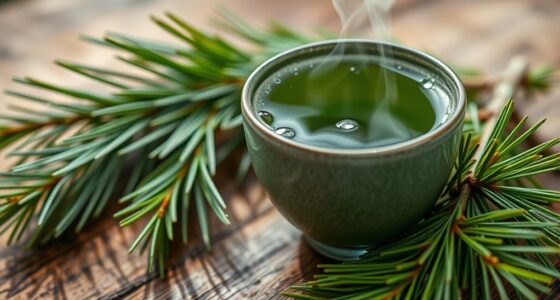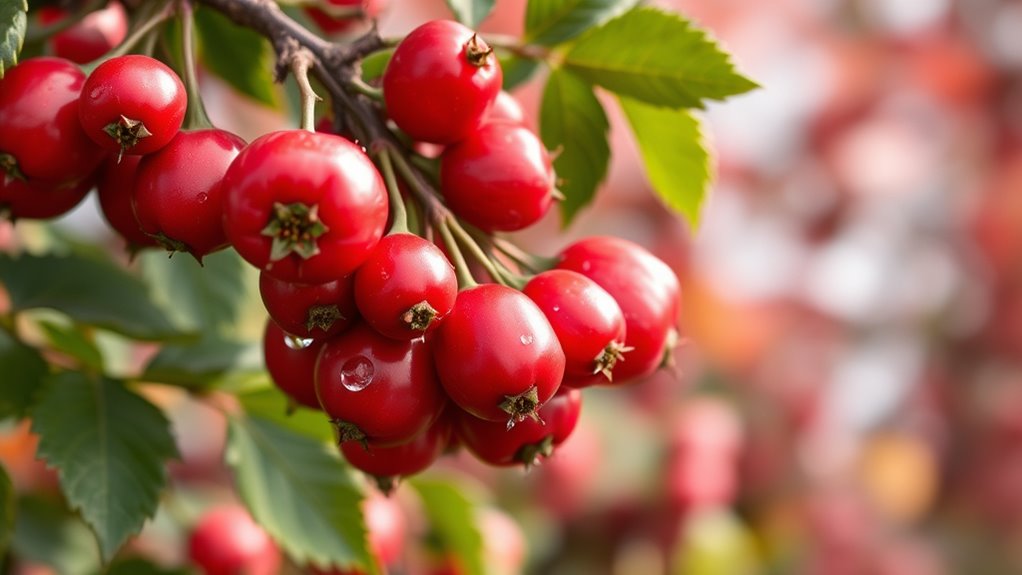

Rosehips are bright red, bulbous fruits that grow on wild rose bushes, usually after flowering. You can identify them by their vibrant color and distinctive shape. Harvest them when fully ripe, typically in late summer or fall, making sure to pick only healthy, clean fruits. These nutrient-packed fruits are rich in vitamin C and antioxidants, making them great for teas, jams, or supplements. Keep exploring to discover more tips on harvesting and using rosehips effectively.
Key Takeaways
- Identify bright crimson, bulbous fruits growing on wild rose bushes after flowering.
- Harvest rosehips when fully ripe, typically in late summer or fall, ensuring they are bright and firm.
- Rich in vitamin C, antioxidants, and nutrients, making them excellent for boosting immunity and overall health.
- Use harvested rosehips to prepare teas, jams, syrups, and baked goods for nutritious, natural remedies.
- Forage responsibly by accurately identifying wild rose bushes to promote self-sufficiency and sustainable harvesting.
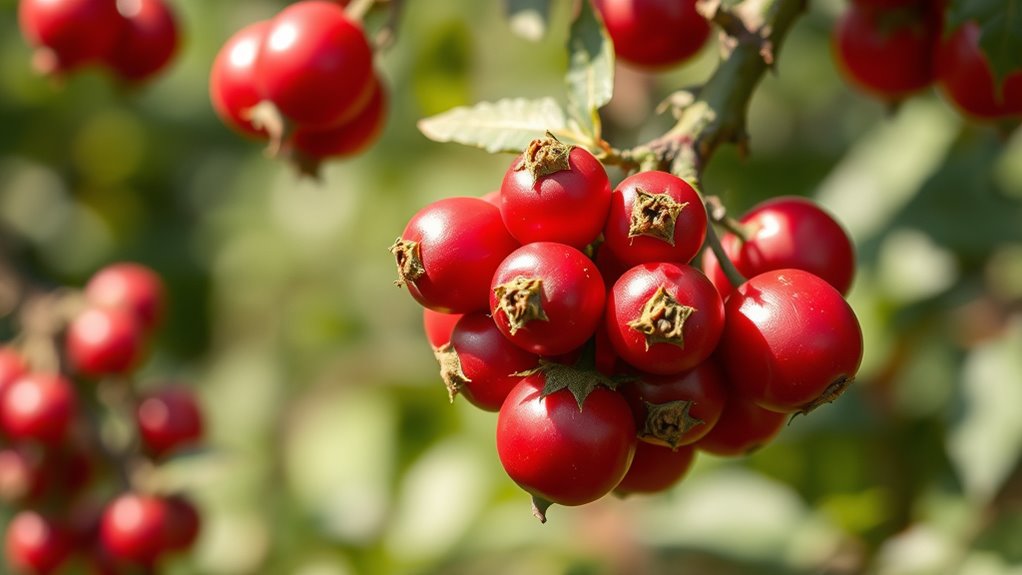
Have you ever wondered about the vibrant red fruits that grow on wild rose bushes? These are rosehips, and they hold a world of potential for those seeking natural remedies and flavorful treasures. When you see these small, bulbous fruits with a bright crimson hue, know that they’re more than just pretty berries—they’re packed with medicinal properties that can boost your health and offer a sense of liberation from conventional medicine. Rosehips are rich in vitamin C, antioxidants, and other nutrients that support your immune system, fight inflammation, and improve skin health. By harnessing their medicinal properties, you can empower yourself to take control of your well-being naturally. Foraging for rosehips can be a rewarding activity that connects you with nature and promotes self-sufficiency.
But the appeal of rosehips extends beyond their health benefits. Their culinary uses are equally compelling. You can incorporate them into teas, jams, jellies, syrups, and even baked goods. Imagine sipping a warm cup of rosehip tea, feeling revitalized as the tangy, slightly sweet flavor awakens your senses. Or consider making a homemade jam that captures the vibrant essence of these fruits, adding depth and brightness to your breakfast spread. Using rosehips in your culinary creations allows you to connect with nature’s bounty in a way that’s both nourishing and liberating. It’s empowering to transform these wild fruits into delicious, health-boosting treats, bypassing processed foods and synthetic supplements.
Frequently Asked Questions
When Is the Best Time to Harvest Rosehips?
You should harvest rosehips in late summer to early fall, when their timing considerations align with seasonal variations. Look for bright red or orange berries that feel firm but give slightly under gentle pressure. This is when their vitamin content peaks, giving you the most health benefits. Don’t wait too long, or they may become overripe or lose nutrients. Harvesting at the right moment lets you enjoy the full potential of these vibrant, nutrient-rich fruits.
Are There Any Poisonous Look-Alikes to Rosehips?
While exploring plant identification, be aware that some poisonous berries mimic rosehips, tempting you with their charm. These deceptive look-alikes can cause harm if mistaken for the real thing. Trust your senses and detailed guides to differentiate healthy rosehips from dangerous counterparts. Embrace your desire for liberation by confidently identifying safe plants, avoiding risky berries, and enjoying nature’s bounty with knowledge and respect.
How Do I Store Rosehips for Long-Term Use?
You should store your rosehips in airtight storage containers, preferably glass jars or vacuum-sealed bags, to keep them fresh long-term. Keep them in a cool, dark, and dry place to prevent spoilage. For ideal preservation techniques, consider freezing or drying them. This way, you maintain their nutrients and flavor, giving you the freedom to enjoy rosehip benefits anytime without worry.
Can Rosehips Be Eaten Raw or Only Cooked?
You can eat rosehips raw or cooked, but be aware of potential rosehip toxicity if eaten in large quantities raw. Raw rosehips are juicy and tart, perfect for snacking or adding to smoothies, giving you a fresh burst of vitamin C. Cooking them reduces toxicity risks and enhances flavor, making them great for teas, jams, or desserts. Choose your method based on your taste and health preferences, embracing the freedom to enjoy them your way.
Are There Any Health Risks Associated With Consuming Rosehips?
Did you know that about 1 in 50 people might experience allergic reactions to rosehips? While generally safe, consuming them can pose risks if you’re allergic or exposed to pesticides. Always wash thoroughly and consider organic options. Be cautious if you have sensitive skin or asthma, as reactions can occur. By staying informed, you free yourself to enjoy rosehips’ benefits safely and confidently.
Conclusion
Now that you know how to spot and harvest rosehips, you’re holding nature’s little treasure chest. These vibrant, jewel-like berries are bursting with healthful goodness, ready to fuel your body like a sunbeam piercing through a cloudy sky. By incorporating rosehips into your routine, you’re nurturing your well-being with a gift from the earth—vital, radiant, and full of life. Embrace their magic, and let your health bloom like a garden in full springtime flourish.