

Wintergreen (Teaberry) offers leaves, berries, and oil of Gaultheria, each packed with natural flavor and health benefits. The leaves provide invigorating, minty notes and contain methyl salicylate, a compound similar to aspirin that helps reduce pain and inflammation. Berries add a sweet tartness perfect for culinary uses, while the oil is used for soothing remedies. Exploring these natural ingredients reveal both flavor and wellness, with many secrets waiting to be discovered further.
Key Takeaways
- Wintergreen, also known as Teaberry, features aromatic leaves and berries used for flavoring and medicinal purposes.
- The Oil of Gaultheria, extracted from wintergreen leaves, contains methyl salicylate, a natural pain reliever.
- Leaves are prepared into teas or infusions to reduce inflammation and alleviate aches.
- Berries offer a sweet-tart flavor, suitable for culinary uses like jams, desserts, and beverages.
- Harvesting and using wintergreen components promotes natural healing, culinary creativity, and self-reliance.
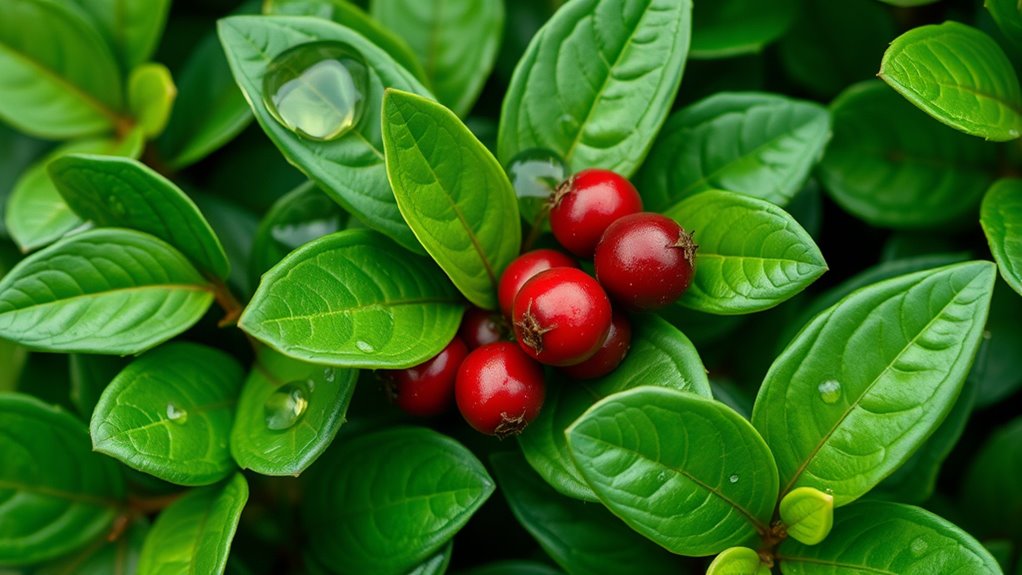
Have you ever tasted the invigorating flavor of wintergreen, also known as teaberry? That sharp, minty burst awakens your senses and invites you to explore its many secrets. This plant isn’t just a flavor; it’s a symbol of natural power and healing potential. When you discover the health benefits of wintergreen, you’ll realize it’s more than just a refreshing taste. Traditionally, the oil of Gaultheria is used to relieve pain, reduce inflammation, and boost your overall well-being. Its analgesic properties make it a natural alternative to synthetic medicines, giving you a sense of liberation from chemical dependencies. Incorporating wintergreen into your life isn’t just about taste; it’s about reclaiming control over your health through nature’s gifts.
The leaves of the wintergreen plant are packed with compounds that can invigorate your body and soothe your aches. When properly prepared, they provide a concentrated source of methyl salicylate, which acts much like aspirin but with fewer side effects. You can use these leaves to make teas or infusions that help alleviate headaches, muscle pain, or joint stiffness—empowering you to take charge of your health without relying solely on pharmaceuticals. The berries, though less potent medicinally, offer a sweet, tart flavor that enhances culinary experiences. They can be added to desserts, jams, or beverages, infusing your culinary creations with the plant’s vibrant essence. This dual role—offering both medicinal benefits and culinary delights—embodies the freedom to enjoy natural solutions in everyday life. Additionally, understanding the distinctive features of golden dachshunds can inspire a broader appreciation for unique natural traits and adaptations.
Culinary uses of wintergreen are diverse and accessible. Its flavor pairs beautifully with various ingredients, lending a fresh, minty note to baked goods, candies, and beverages. Imagine adding a splash of wintergreen oil to homemade chocolates or infusing teas with its aromatic leaves. These uses allow you to craft unique, flavorful dishes that celebrate natural ingredients, giving you autonomy from processed, artificial flavors. Furthermore, harvesting and preparing wintergreen at home connects you to a tradition of self-reliance, where you determine what enters your body and how it benefits you. It’s about reclaiming your culinary independence and exploring the plant’s versatile uses.
In the end, embracing wintergreen means more than tasting its invigorating flavor; it’s about harnessing its health benefits and culinary potential to live freely and consciously. Whether you’re seeking natural pain relief, aromatic ingredients, or simply a way to connect with nature’s bounty, wintergreen offers a pathway to liberation from dependency—empowering you to take control of your wellness and your palate.
Frequently Asked Questions
Is Wintergreen Safe for Children and Pregnant Women?
Wintergreen isn’t recommended for children and pregnant women because of safety concerns. You should prioritize child safety and pregnancy precautions by avoiding products with wintergreen oil. Its strong compounds can cause adverse effects like toxicity or skin irritation. Always consult a healthcare provider before using wintergreen-based products during pregnancy or around kids. Protect your loved ones by choosing safer alternatives and staying informed about potential risks.
How Is Wintergreen Oil Extracted and Purified?
Extract wintergreen oil through careful steam distillation, selecting leaves or berries to start. You’ll then undergo purification processes—like filtration and fractional distillation—that strip away impurities, leaving pure, potent oil. This process transforms raw plant material into a fragrant, finely refined essence, freeing you from impurities and delivering the true, therapeutic power of wintergreen. With these methods, you harness nature’s nectar, gaining control and clarity in every drop.
Can Wintergreen Be Used to Treat Respiratory Conditions?
Yes, wintergreen can be used for respiratory relief through herbal therapy. Its active oil, methyl salicylate, helps soothe coughs and congestion, providing a natural way to breathe easier. You’re empowered to embrace this traditional remedy, liberating yourself from synthetic medications. Incorporate wintergreen safely into your herbal routine to support your respiratory health, but always consult a professional to ensure proper use and avoid any adverse effects.
What Are the Environmental Impacts of Harvesting Wintergreen?
You might think harvesting wintergreen is just picking leaves and berries, but it’s a delicate dance with nature. Ironically, overharvesting can threaten habitats and disrupt sustainable harvesting. You have the power to choose practices that preserve these ecosystems, ensuring future generations can enjoy wintergreen’s benefits. Embrace habitat preservation and responsible gathering, freeing yourself from environmental guilt while supporting a balance that keeps wintergreen thriving.
Are There Any Known Drug Interactions With Wintergreen Oil?
You should be aware that wintergreen oil can interact with certain medications, leading to drug synergy or toxicity concerns. It may enhance blood thinning effects or irritate the stomach, especially if taken in high doses. Always consult with a healthcare provider before using wintergreen oil, as it can amplify effects or cause unwanted reactions. Your desire for natural remedies doesn’t mean you should ignore potential interactions—stay informed and stay safe.
Conclusion
Just like the tiny teaberry berries that pack a surprising punch, embracing wintergreen’s leaves, berries, and oil can refresh your senses and soothe your body. Imagine discovering a hidden gem, much like a friend once did with wintergreen’s aroma—turning an ordinary moment into something special. Next time you encounter this plant, remember its small size hides powerful benefits. Embrace wintergreen, and let its natural warmth and energy invigorate your daily routine.