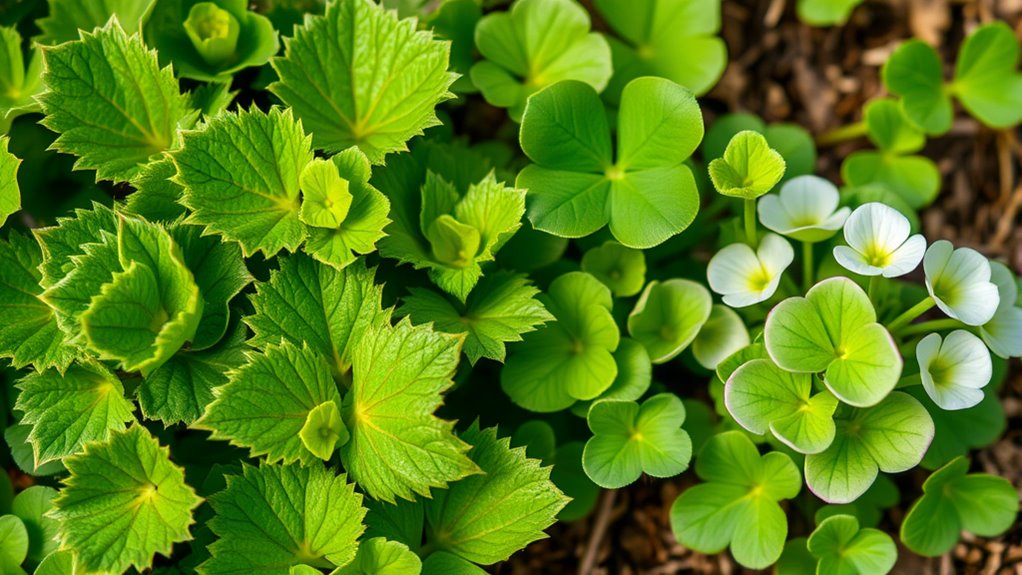

Wild sorrel and clover are both wild greens with unique flavors and nutritional benefits. Wild sorrel has a tangy, lemony taste that adds brightness to dishes, while clover offers a mild, slightly sweet flavor perfect for salads or teas. Sorrel is rich in vitamin C and antioxidants, boosting your immunity, while clover provides essential minerals like calcium and iron. Recognizing these differences allows you to harness their natural power—exploring more uncovers even greater culinary and health treasures.
Key Takeaways
- Wild sorrel has a tangy, lemony flavor, while clover is mildly sweet, offering distinct taste profiles.
- Nutritionally, wild sorrel provides high vitamin C and antioxidants; clover is rich in protein, calcium, and iron.
- Wild sorrel’s acidity enhances dishes and teas; clover adds subtle sweetness and can be used in salads or soups.
- Both plants symbolize resilience and self-sufficiency, supporting natural, sustainable foraging practices.
- Recognizing these greens boosts preparedness, empowering natural nourishment and reducing reliance on commercial produce.

When it comes to identifying common ground cover plants, wild sorrel and clover often stand out, but they have distinct characteristics that can help you tell them apart. Both are abundant in wild spaces and easy to harvest, making them accessible resources for those seeking natural, nourishing food sources. Recognizing their differences empowers you to harness their unique qualities and take control of your diet, reconnecting with the land and your roots. Wild sorrel, with its tangy, lemony flavor, offers more than just a bright taste; it’s packed with nutritional benefits that can invigorate your body. Rich in vitamin C, antioxidants, and minerals like magnesium and potassium, wild sorrel boosts your immune system and supports overall health. Its revitalizing acidity can also aid digestion, making it a valuable addition to your diet when you’re looking to feel more alive and energetic. You can incorporate wild sorrel into salads, pestos, or teas, using its zesty flavor to elevate simple dishes and reclaim your culinary independence from processed foods. On the other hand, clover, especially red and white varieties, is often overlooked but holds its own nutritional treasures. Clover is a good source of protein, vitamins A and C, and minerals such as calcium and iron. Its mild, slightly sweet flavor makes it versatile for culinary uses; you can add young clover leaves to salads, soups, or even make a nutritious tea. When you embrace clover, you’re tapping into a plant that’s not only nourishing but also resilient, capable of thriving in various environments. Both plants serve as powerful symbols of self-sufficiency, offering you options to forage and prepare healthy, natural meals. Wild sorrel’s tangy punch can awaken your palate and challenge your culinary boundaries, while clover’s subtle sweetness provides a gentle, nourishing alternative. Recognizing the distinct qualities of each plant allows you to liberate yourself from reliance on commercial produce and embrace a more sustainable, connected way of eating. Their nutritional benefits support your desire for vitality and well-being, and their culinary uses invite you to experiment with flavors rooted in nature. Additionally, understanding the self-sufficiency benefits of these greens can enhance your preparedness for emergency situations where natural food sources become essential. Recognizing the distinct qualities of each plant allows you to liberate yourself from reliance on commercial produce and embrace a more sustainable, connected way of eating. Their nutritional benefits support your desire for vitality and well-being, and their culinary uses invite you to experiment with flavors rooted in nature. As you explore these greens, you’re not just gathering ingredients—you’re reclaiming your freedom to nourish yourself on your terms. Wild sorrel and clover are more than ground cover; they’re tools of empowerment, helping you take control of your health and culinary journey. So, learn to tell them apart, use them wisely, and enjoy the liberating experience of eating what grows freely around you.
Seed Needs Large Leaf Sorrel Seeds for Planting – Heirloom Non-GMO & Untreated Medicinal or Culinary Herb – Grow a Home Grown Outdoor Garden (1 Pack)
Appearance: Features arrow-shaped, bright green leaves with a slightly tangy, lemon-like flavor, producing small, reddish-green flowers in late…
As an affiliate, we earn on qualifying purchases.
As an affiliate, we earn on qualifying purchases.
Frequently Asked Questions
Can Wild Sorrel and Clover Be Eaten Raw or Cooked?
You can eat wild sorrel and clover raw or cooked, depending on your flavor preferences. When harvesting, pick young leaves for a tangy, lemony flavor from sorrel and delicate, mild-tasting clover. For a bolder taste, try cooking them; it mellows the sourness and enhances their natural flavors. Experiment with both methods to discover what truly satisfies your craving for wild greens, embracing your liberation through fresh, vibrant greens.
Which Plant Is More Nutritious: Sorrel or Clover?
You’ll find that wild sorrel packs a stronger nutritional punch than clover, offering higher vitamin C and antioxidants that energize your body. In a nutritional comparison, sorrel’s sour greens provide plant benefits like improved digestion and immune support, making it the more nutritious choice. Embrace the freedom to choose wild greens that fuel your vitality, revealing nature’s power and nourishing your body with every vibrant bite.
Are There Any Health Risks Associated With Consuming Wild Sorrel or Clover?
You should be aware of potential toxicity concerns and allergy risks when consuming wild sorrel or clover. Wild sorrel contains oxalates, which can cause health issues if eaten in large quantities, especially for those prone to kidney stones. Clover may carry pesticide residues or mold if not properly identified or cleaned. Always forage with caution, and if you’re allergic or unsure, consult a knowledgeable forager or healthcare provider to enjoy these greens safely.
How Do I Identify Wild Sorrel and Clover in the Wild?
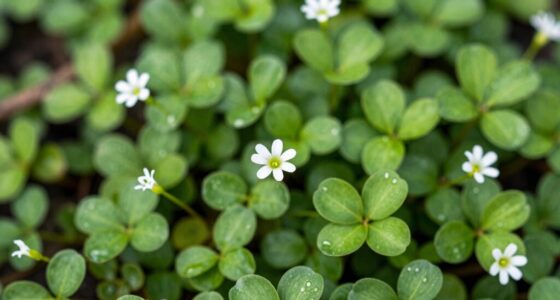
You identify wild sorrel by its arrow-shaped leaf blades and tiny, white or pinkish flowers that cluster along a stem. Clover showcases rounded, trifoliate leaves—usually with a white or pink “V” marking—and small, round flower heads that can be white, pink, or purple. Embrace your freedom by exploring these signs in nature; trust your eye to recognize their unique leaf shapes and vibrant flower colors, revealing wild greens’ secrets.
Can Wild Sorrel or Clover Be Used Medicinally?
You can definitely use wild sorrel and clover for medicinal purposes, embracing herbal remedies that promote your health. Wild sorrel is known for its vitamin C and anti-inflammatory properties, making it great for immune support. Clover offers compounds that may ease menopause symptoms and aid detoxification. By integrating these sour greens into your herbal remedies, you harness nature’s healing power, empowering your journey toward health and liberation from conventional medicine.

Frontier Co-op Organic Whole Red Clover Blossoms, 0.71oz – Fragrant, Natural and Versatile for Garnishes and Red Clover Tea – Kosher, Non-Irradiated
Premium Red Clover: Experience meticulously selected organic blossoms, ensuring the highest standards of freshness and purity Our premium…
As an affiliate, we earn on qualifying purchases.
As an affiliate, we earn on qualifying purchases.
Conclusion
So, as you’ve seen, wild sorrel and clover each bring unique flavors and benefits to your foraging basket. Like the contrasting tales of Robin Hood’s humble greens and noble herbs, these sour greens offer both simplicity and sophistication. Embrace their differences, and you’ll enrich your palate just as the wise gardener tends to both wild and cultivated treasures. In the end, exploring these greens connects you to nature’s timeless dance of abundance and variety.
SACLA Wild Garlic Pesto Sauce | Basil & Wild Garlic Italian Pesto with Parmigiano Reggiano & Pecorino Romano Cheeses | 6.7 oz Glass Jar | Non-GMO Gourmet Sauce Imported from Italy
Basil & Wild Garlic Blend: Combines fresh basil with wild garlic, chives, and aged Italian cheeses for a…
As an affiliate, we earn on qualifying purchases.
As an affiliate, we earn on qualifying purchases.
foraged greens wild sorrel and clover
As an affiliate, we earn on qualifying purchases.
As an affiliate, we earn on qualifying purchases.