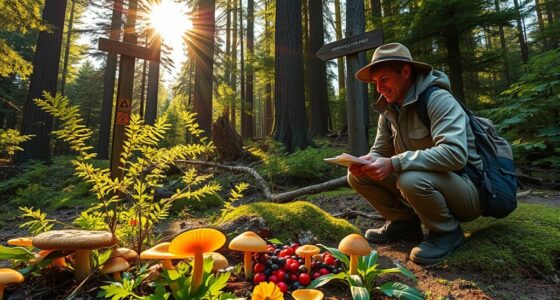
To avoid overharvesting fiddleheads, focus on selective collection by gathering only a few from each patch and leaving enough plants to reproduce. Timing is key—harvest them just as they emerge before they unfurl fully. Stay on established trails and respect the habitat to prevent damage. Embracing a conservation mindset guarantees these fragile plants thrive for future seasons. Discover how to balance foraging passions with sustainability practices and protect this valuable resource.
Key Takeaways
- Implement selective harvesting by collecting only a few fiddleheads from each patch to prevent overexploitation.
- Harvest early in the season before ferns fully unfurl, minimizing harm and allowing natural plant regeneration.
- Respect local harvest seasons and avoid overharvesting during fragile population periods.
- Stay on established trails and avoid trampling undergrowth to protect delicate habitats.
- Promote a conservation mindset, viewing sustainable harvesting as essential for long-term population health.

As fiddleheads become a popular springtime delicacy, it’s important to harvest them responsibly to guarantee they remain abundant for future seasons. You’re part of a movement that values the thrill of foraging, but with that freedom comes a duty to protect the very resource that fuels your passion. Sustainable harvesting isn’t just about taking what you need; it’s about respecting the plant’s life cycle and ensuring it can thrive year after year. By understanding and implementing conservation strategies, you can enjoy fiddleheads without risking overexploitation.
The first step in responsible harvesting is recognizing the importance of selective collection. Instead of stripping entire patches, focus on harvesting only a few fiddleheads from each area. Leave enough to allow for natural reproduction and growth. This approach helps maintain healthy populations and prevents the depletion of local plants. You’re not just taking; you’re giving back by ensuring the plants can reproduce and flourish. Remember, sustainable harvesting isn’t about quantity—it’s about quality and longevity. By practicing restraint, you preserve the environment’s delicate balance and keep the ecosystem resilient.
Conservation strategies also involve timing your harvest correctly. Fiddleheads are best picked when they’re just emerging, before they unfurl into full fern fronds. This stage is not only *essential* for flavor but also minimizes harm to the plant. Harvesting too late can weaken the plant, making it less likely to produce the following year. Be mindful of local harvest seasons and avoid overharvesting in areas where populations appear fragile. Your awareness and respect for seasonal cycles empower you to be a steward of nature, rather than a destroyer. Additionally, understanding the plant’s growth stage can help prevent overharvesting of mature plants that are crucial for reproduction.
Another *crucial* aspect of sustainable harvesting is understanding the habitat. Fiddleheads thrive in specific environments—shaded, moist woodland areas—and knowing where they grow helps prevent unnecessary disturbance. Stay on established trails and avoid trampling delicate undergrowth. By respecting the land, you’re practicing conservation strategies that protect not only fiddleheads but the entire ecosystem that sustains them. Think of yourself as a guardian rather than a conqueror, ensuring that future generations can also experience the joy of foraging.
In the end, responsible gathering is about more than just following rules; it’s about embracing a mindset of respect and reverence for nature’s abundance. You have the power to enjoy fiddleheads while ensuring they remain plentiful and vibrant. Through sustainable harvesting and conservation strategies, you preserve the wilderness’s *vitality*, giving yourself and others the freedom to forage responsibly. This liberation from overexploitation allows the wild to flourish, offering the thrill of the hunt and the bounty of nature for years to come.
Top picks for "avoid overharvest fiddlehead"
Open Amazon search results for this keyword.
As an affiliate, we earn on qualifying purchases.
Frequently Asked Questions
What Are the Best Times of Year to Harvest Fiddleheads?
You should harvest fiddleheads during their peak harvesting seasons, typically in early spring from late March to early May, depending on your region. The ideal timing is when the fiddleheads are tightly coiled and about 2 to 4 inches tall. By choosing the right time, you guarantee a sustainable harvest that allows the plant to regenerate, giving you a fresh, delicious harvest while protecting the environment for future foragers.
How Can I Identify Sustainable Fiddlehead Harvesting Areas?
To identify sustainable fiddlehead harvesting areas, look for places committed to wildlife conservation and rich in plant biodiversity. Seek zones where local regulations protect native plants and where harvesters practice responsible foraging. Trust areas that emphasize ecological balance, support conservation efforts, and promote biodiversity. By choosing these spots, you guarantee your foraging respects nature’s rhythms, safeguarding fiddlehead populations and freeing the land to thrive for generations to come.
Are There Any Legal Restrictions on Fiddlehead Harvesting?
Yes, there are legal restrictions on fiddlehead harvesting. You need to obtain harvesting permits and follow regional regulations to harvest fiddleheads responsibly. These laws are designed to protect wild populations and ensure sustainable harvesting practices. Check with local authorities or forest services before you harvest, so you can enjoy your foraging adventures freely and responsibly. Staying informed helps you contribute to conservation and keeps your harvest lawful.
What Tools Are Recommended for Harvesting Fiddleheads Responsibly?
You should use sharp scissors or pruning shears for harvesting fiddleheads, as these tools help you cut just the right amount without damaging the plant. Avoid digging or pulling, which can harm future growth. By choosing these harvesting tools and practicing sustainable methods, you free yourself from overharvesting worries, ensuring the fiddleheads thrive for others and future seasons. Embrace responsible harvesting to protect nature’s bounty and enjoy fiddleheads responsibly.
How Do Overharvesting Impacts Affect Local Ecosystems?
Like Pandora’s box, overharvesting releases chaos, harming your local ecosystem. You cause biodiversity loss, wiping out essential species that keep nature thriving. Soil erosion follows, stripping land of roots that hold it together. This unchecked exploitation silences the natural balance, trapping you in a cycle of destruction. To break free, harvest responsibly, preserving your environment’s energy and ensuring future generations can enjoy nature’s bounty.
Conclusion
By following sustainable harvesting practices, you guarantee fiddleheads remain a thriving part of the forest’s symphony. Think of responsible foraging as tending a delicate garden—you reap the rewards only if you nurture it carefully. When you harvest thoughtfully, you help preserve these springtime treasures for future generations to enjoy. Remember, your actions today plant the seeds for a resilient ecosystem tomorrow, so be a guardian of nature’s delicate balance rather than its wrecking ball.