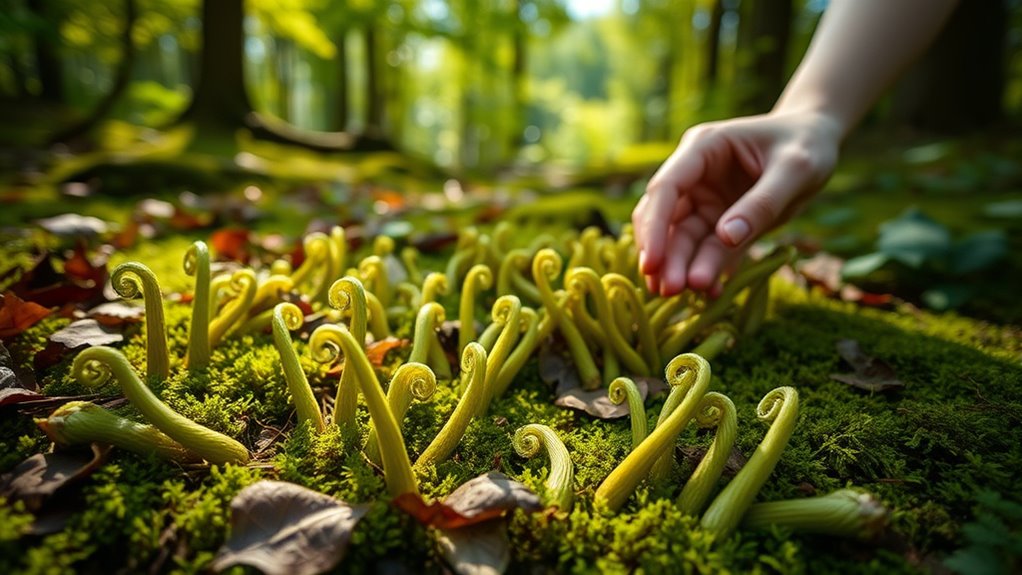

To avoid overharvesting fiddleheads, focus on sustainable practices like collecting only part of each fern and leaving enough for growth and reproduction. Spread your harvest across different sites and avoid patches showing signs of overharvesting. Harvest during the right growth cycle for minimal disruption, and never take all from one patch. By following these guidelines, you help protect fern populations and ensure the resource remains available long-term. Keep exploring for more tips on responsible harvesting.
Key Takeaways
- Implement selective harvesting by taking only a portion of fiddleheads from each patch to prevent overharvesting.
- Spread harvesting across multiple sites to allow fern populations to regenerate naturally.
- Harvest during optimal growth stages, avoiding areas showing signs of poor regeneration or overharvesting.
- Educate harvesters on sustainable practices, emphasizing the importance of ecological balance and long-term resource health.
- Use environmental indicators, such as contrast ratio, to assess the health of fern patches before harvesting.
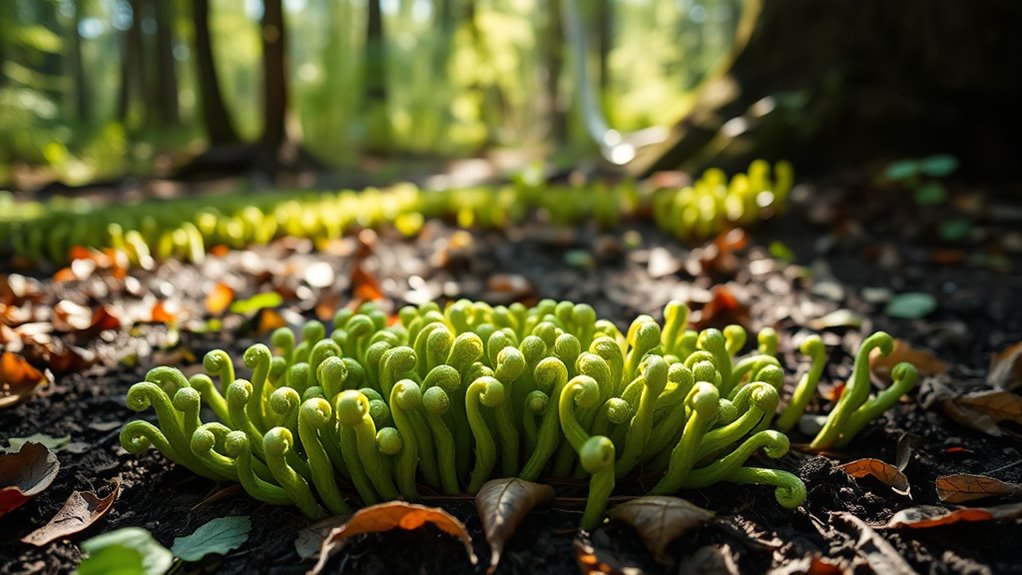
As fiddlehead harvesting becomes more popular, it’s crucial to avoid overharvesting to protect wild fern populations. You’re part of a movement that values the thrill of gathering these springtime treasures, but with that excitement comes responsibility. Sustainable harvesting isn’t just about taking what you need; it’s about ensuring these ferns thrive for generations to come. Every fiddlehead you pick affects not only the plant but the broader ecosystem around it. When overharvesting occurs, it can lead to a decline in fern populations, disturbing local biodiversity and upsetting the delicate balance of the environment.
Avoid overharvesting fiddleheads to protect fern populations and maintain ecological balance for future generations.
By practicing sustainable harvesting, you actively minimize your impact on the ecosystem. This means selecting only a portion of the fiddleheads from a patch, leaving enough behind for the plant to continue growing and reproducing. It’s about understanding that each fern plays a role in the larger ecological web—providing food and habitat for insects, birds, and other wildlife. If too many are removed, the entire community suffers. You have the power to make a difference by harvesting thoughtfully, respecting the fern’s natural cycle, and avoiding damage to the surrounding area.
Your approach should prioritize the health of the environment over quick gains. Avoid taking all the fiddleheads from a single patch, and steer clear of areas that show signs of overharvesting or poor regeneration. Instead, spread your collection across different sites, always leaving enough for the plants to regrow. This ensures that the fern population remains resilient and continues to contribute to the local ecosystem. Remember, sustainable harvesting benefits not only the environment but also your own experience—by allowing you to harvest responsibly, you gain a deeper connection to nature and a sense of liberation from destructive practices.
Overharvesting can lead to long-term declines that threaten the future of wild fern populations and the ecosystems they support. When you harvest with care, you help maintain the ecological integrity of the area. This means understanding the fern’s growth cycle and timing your harvest to avoid disrupting reproduction. It’s about conscious, respectful gathering that preserves the environment’s vitality while fulfilling your desire to connect with nature. You’re not just a gatherer; you’re a steward of the land. Through mindful, sustainable harvesting, you protect the ecosystem impact, ensuring that fiddleheads remain a sustainable resource for many seasons to come. Additionally, understanding the contrast ratio of your harvesting area can help you plan the best time for collection, ensuring minimal disturbance to the environment.

Leefasy Grape Pruning Clip Thinning Tool,Trimming Hand Pruner,Grape Bloom Tool for Patio, Farm,Harvesting Grape Fruits,Lawn Gardening
* 【Pressure Control】: The unique design allows you to control the pressure applied during thinning; pressing further back…
As an affiliate, we earn on qualifying purchases.
As an affiliate, we earn on qualifying purchases.
Frequently Asked Questions
What Are the Signs of Overharvesting in Fiddlehead Populations?
You can tell overharvesting in fiddlehead populations by noticing fewer mature plants and smaller, less vigorous shoots. If you see changes in harvesting techniques, like taking too many fiddleheads from a single spot, it’s a red flag. Regular population monitoring helps spot declines early. When these signs appear, it’s time to modify your harvesting practices to safeguard the plants and ensure they thrive for future harvests.
How Can Harvesters Identify Sustainable Fiddlehead Harvesting Spots?
Like a GPS guiding rebels, seek lush, undisturbed spots with abundant fiddleheads, avoiding areas with signs of overharvesting. Use sustainable harvesting techniques, plucking only a portion of the fronds, leaving enough for seed dispersal and future growth. Trust your instincts and observe the environment—healthy populations signal good spots. You have the power to protect these wild treasures, ensuring they thrive for generations to come.
Are There Legal Restrictions on Fiddlehead Harvesting in Certain Areas?
Yes, there are legal regulations on fiddlehead harvesting in certain areas. You need to verify local laws because some regions require harvesting permits to ensure sustainability. Ignoring these rules can lead to fines or environmental harm. By following legal regulations and obtaining the necessary permits, you empower yourself to harvest fiddleheads responsibly, protecting the environment and ensuring future abundance. Take control and harvest within the law to enjoy this natural bounty freely.
What Are the Ecological Impacts of Overharvesting Fiddleheads?
Overharvesting fiddleheads can severely disrupt plant regeneration, preventing new growth and weakening populations. You might unintentionally cause habitat disturbance, which affects not just fiddleheads but entire ecosystems. When you take too many, you risk degrading the habitat that supports diverse species. To protect these vibrant plants, it’s vital to harvest responsibly, ensuring they can flourish naturally and maintain ecological balance for future generations.
How Can Communities Promote Sustainable Fiddlehead Collection Practices?
You need to get ahead of the game by promoting sustainable fiddlehead collection practices. Start with community education to spread awareness about overharvesting’s effects, and encourage harvest monitoring to keep track of what’s gathered. By doing so, you empower your community to protect these plants, ensuring future generations can enjoy them too. It’s about taking control and working together to keep nature’s balance intact.

The Forager's Almanac: A year of sustainable gathering, growing, recipes and wildcraft
As an affiliate, we earn on qualifying purchases.
As an affiliate, we earn on qualifying purchases.
Conclusion
By embracing sustainable harvesting practices, you help guarantee fiddleheads remain a gentle presence in the landscape for generations to come. Thoughtful collection allows the delicate shoots to continue their silent growth, preserving the balance of nature’s intricate tapestry. When you harvest with care and moderation, you foster a harmony that benefits both the environment and your shared appreciation for these fleeting treasures. Ultimately, your mindful approach nurtures a future where fiddleheads can quietly thrive.
wild fern identification kit
As an affiliate, we earn on qualifying purchases.
As an affiliate, we earn on qualifying purchases.

Gardening Moon Calendar, Perpetual Lunar Cycle Calendar for Gardeners, Farmers Almanac, Determine Optimal Times for Gardening Activities. Biodynamic Calendar, Companion Planting Chart, Garden Planner
🌿PERPETUAL CALENDAR – This Moon Calendar can be used indefinitely which makes it a great investment to improve…
As an affiliate, we earn on qualifying purchases.
As an affiliate, we earn on qualifying purchases.