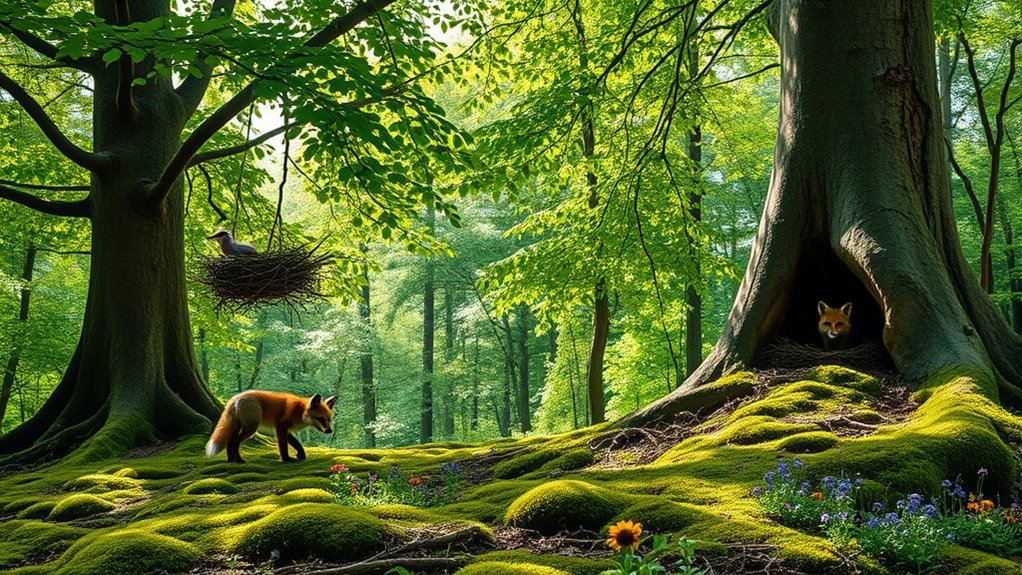
To avoid wildlife conflicts around nesting seasons and den sites, respect active breeding periods and avoid disturbing known habitats. Modify activities like construction or hiking during sensitive times to prevent stressing animals or causing abandonment. Share information through signs or community talks to raise awareness and promote responsible behavior. Protecting natural habitats and staying clear of den sites help support wildlife survival and harmony with humans. To learn how to protect local wildlife effectively, keep exploring these helpful strategies.
Key Takeaways
- Recognize and respect local nesting seasons to prevent disturbances during critical reproductive periods.
- Avoid construction or landscaping in known den sites to minimize habitat disruption.
- Use educational signage and sound warnings to inform the public about wildlife nesting and den sites.
- Support habitat preservation efforts to reduce encroachment and protect essential wildlife spaces.
- Maintain safe distances and stay informed about wildlife habitats to prevent accidental disturbances and conflicts.
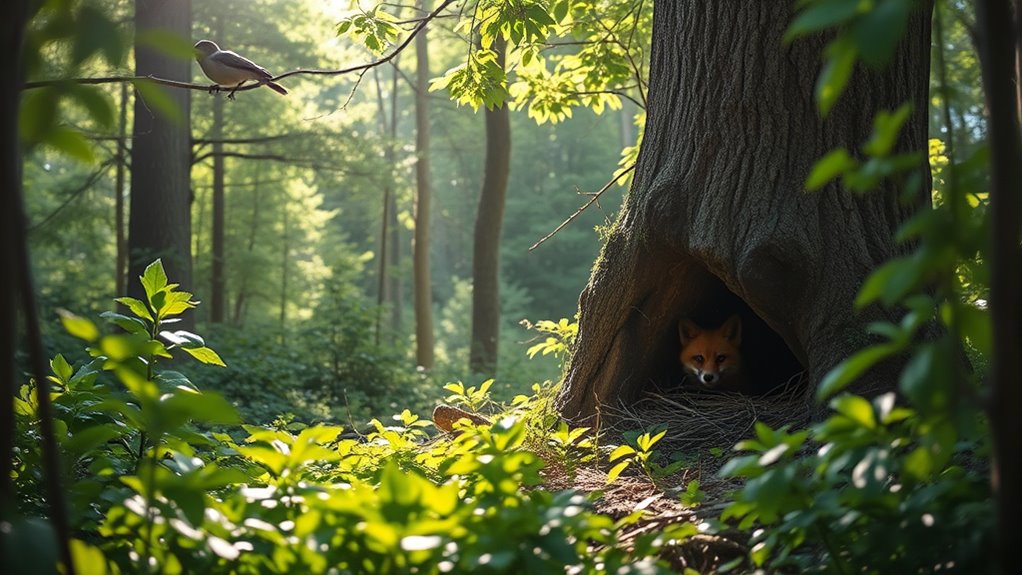
Wildlife conflict avoidance is fundamental for maintaining a balance between human activities and the natural behaviors of animals. When you take steps to prevent conflicts, you’re helping not just the animals but yourself and your community as well. One of the most effective ways to do this is by understanding and respecting nesting seasons and den sites. During nesting seasons, many animals are especially vulnerable, dedicating their energy to raising their young. Disrupting these periods can cause unnecessary stress or even abandonment of nests, which threatens their survival. By being aware of these times, you can modify your activities—like avoiding construction, landscaping, or hiking in sensitive areas—to give wildlife the space they need for habitat preservation. Incorporating sound design techniques, such as creating educational audio warnings or informative soundscapes, can also help raise awareness about wildlife sensitivities and encourage responsible behavior. Community education plays an indispensable role here. When you share knowledge about the importance of respecting nesting seasons and den sites, you empower others to act responsibly. Education fosters a collective sense of stewardship, reminding everyone that wildlife isn’t something to conquer but to coexist with. Through community workshops, signage, or informal conversations, you can highlight how simple actions—like keeping clear of den entrances or refraining from disturbing nesting areas—can make a big difference. This shared understanding helps reduce conflicts and promotes a more harmonious relationship with local ecosystems. Preserving natural habitats is another essential aspect of avoiding wildlife conflicts. When natural areas are protected and maintained, animals have the space they need to thrive without encroaching on human territory. Habitat preservation ensures that animals don’t feel the need to seek refuge in residential or urban spaces, which often leads to conflicts. As someone committed to liberation, you understand that the goal isn’t to cage or control wildlife but to guarantee they can live freely in their natural environments. Supporting conservation efforts, advocating for protected lands, and participating in habitat restoration projects all contribute to this aim. Furthermore, being proactive in recognizing and respecting den sites helps prevent accidental disturbances. If you’re exploring or working near known wildlife habitats, always stay informed about where animals are likely to nest or den. Respect the boundaries and avoid intrusive activities that could cause animals to abandon their young or defend their territory aggressively. By practicing habitat preservation and fostering community education, you help create a landscape where animals can behave naturally and safely. Your conscious choices reinforce the idea that coexistence is not only possible but indispensable for a truly free and balanced natural world.
Frequently Asked Questions
How Do I Identify Wildlife Nesting Sites on My Property?
You can identify wildlife nesting sites by observing signs of bird habitat, like clusters of nesting materials such as twigs, grass, or leaves, often in trees, shrubs, or on the ground. Look for visible nests or areas where birds seem to gather or call frequently. Pay attention to seasonal activity, and avoid disturbing these sites to support wildlife. Your awareness helps protect their natural nesting process and keeps your property harmonious with local ecosystems.
What Are the Signs of Wildlife Disturbance Near Nests?
You notice sudden silence in the birdsong patterns, a stark contrast to lively melodies. Nearby, disturbed nest material types like scattered twigs or shredded grass reveal recent activity. If you see aggressive bird chases or fluttering wings around the nest site, it’s a sign of wildlife disturbance. These signs imply the wildlife feels threatened, and you should give space to protect their nesting season and ensure their freedom to thrive.
Can I Safely Relocate a Nesting Site?
You shouldn’t relocate a nesting site yourself, as doing so can harm wildlife safety and violate nesting regulations. Instead, contact local wildlife authorities or experts who understand the proper procedures. They can evaluate the situation, guarantee the animals’ well-being, and handle the relocation safely and legally. Your goal should be to protect these creatures while respecting their natural behaviors and legal protections.
How Do Seasonal Changes Affect Wildlife Nesting Behaviors?
Seasonal changes heavily influence wildlife nesting behaviors by triggering shifts in migratory patterns and habitat preferences. As seasons change, you’ll notice animals seeking specific environments for breeding or resting, aligning with food availability and climate conditions. This natural rhythm guarantees their survival and supports ecological balance. By understanding these patterns, you can better appreciate wildlife’s freedom to adapt and thrive, respecting their seasonal needs and minimizing conflicts.
What Legal Considerations Exist for Disturbing Wildlife Nests?
You must realize that disturbing wildlife nests can have serious legal consequences. Legal protection laws strictly regulate how and when you can interfere, especially during nesting seasons. Violating nest disturbance regulations can lead to hefty fines or even criminal charges. You’re empowered to enjoy nature, but only if you respect these protections. Stay informed, act responsibly, and remember: nature’s safety is in your hands—liberate yourself by respecting wildlife laws.
Conclusion
By understanding nesting seasons and den sites, you can navigate wildlife areas like a cautious river, flowing smoothly without disturbing the flow of nature. Respecting these essential times and places helps keep both you and the animals safe, ensuring the wilderness remains vibrant and alive. Remember, a little patience and awareness go a long way—like a gentle breeze guiding you through a forest, your thoughtful actions protect the delicate balance of life around you.