To forage responsibly, you need to understand regional agencies and their rules. Start by researching local laws and designated foraging areas to avoid legal issues. Apply for necessary permits, which demonstrate your commitment to sustainable practices and can give you access to protected or private lands. Following regulations helps protect ecosystems and ensures future resources. If you want to learn how to navigate these rules effectively, continue exploring the steps involved for responsible foraging.
Key Takeaways
- Identify local agencies responsible for managing foraging permits, such as land management or environmental departments.
- Research specific regulations and zones where foraging is permitted or restricted within your region.
- Follow application procedures, which may include online forms, in-person visits, or written requests, to obtain necessary permits.
- Ensure compliance with permit conditions, including harvest limits, designated areas, and seasonal restrictions.
- Maintain communication with authorities and adhere to sustainable harvesting principles to promote responsible foraging.
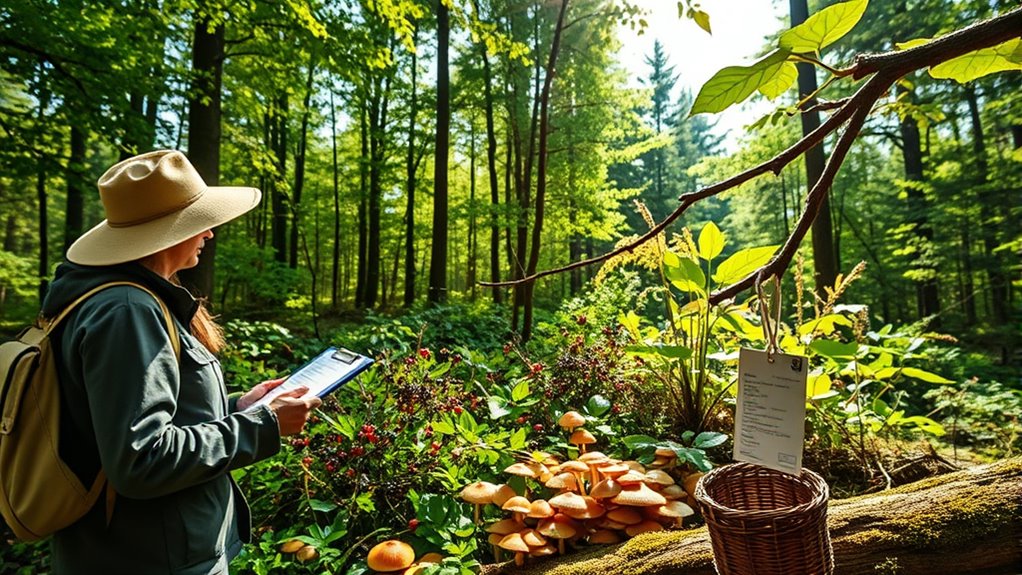
Foraging can be a rewarding way to connect with nature and gather wild foods, but it’s important to do so legally and responsibly. If you want to truly embrace the freedom of foraging, understanding the harvesting regulations in your area is essential. These rules aren’t meant to restrict your spirit—they’re there to protect the ecosystems and ensure that the wild resources you love remain abundant for future generations. Before you set out, research the specific laws that govern foraging in your region. Many places have designated areas where foraging is permitted and others where it’s strictly prohibited. Knowing these boundaries helps you avoid legal trouble and preserves the natural balance. Proper knowledge of local regulations and permits ensures that you’re engaging in sustainable harvesting practices.
Part of respecting these regulations involves the permit application process. Depending on where you are, you might need to apply for a permit before collecting certain plants or fungi. The permit application isn’t just bureaucratic red tape; it’s a way to demonstrate your commitment to responsible foraging. When applying, be clear about what you intend to harvest and how much. Authorities want to ensure that foragers like you don’t overharvest, which could harm local populations. The process can vary—some regions require online applications, others need in-person visits or written requests. Make sure to follow the instructions carefully and provide any necessary documentation to streamline the process.
Getting a permit isn’t just about legality; it’s about aligning yourself with the principles of sustainable harvesting. With a permit in hand, you show that you respect the land and its rules, which grants you more freedom to forage without fear of penalty. It also often grants access to private lands or protected areas that are otherwise off-limits. This expands your foraging opportunities, allowing you to explore new wild foods and deepen your connection with nature.
Frequently Asked Questions
Can I Forage Without a Permit on Private Land?
You can forage on private land without a permit only if the landowner grants you permission. Respect private land regulations and always obtain explicit approval before gathering anything. Trespassing laws are strict, so entering without permission can lead to fines or legal trouble. To enjoy your foraging freedom, communicate openly with landowners and make sure you’re following all rules, making your foraging experience both legal and liberating.
How Long Does It Take to Get a Foraging Permit?
Getting a foraging permit typically takes anywhere from a few days to several weeks, depending on the agency and your location. You’ll need to complete the application procedures accurately and submit any required documentation. Permit processing varies, but staying proactive and following up can speed things up. Remember, securing your permit means you’re legally empowered to forage freely, unveiling nature’s bounty while respecting regulations.
Are There Seasonal Restrictions for Foraging Permits?
You should know that seasonal restrictions often apply to foraging permits, aligning with seasonal harvests and local conservation efforts. These rules help you enjoy the freedom of foraging while respecting nature’s cycles. Permit renewal periods vary, so stay informed to keep your permission active year-round. Embrace the chance to forage freely within these guidelines, giving you the liberation to gather what you need without worry, all while honoring the environment’s natural rhythms.
What Documents Are Needed to Apply for a Permit?
Unlock your freedom by knowing what’s needed to secure your permit. When applying, you’ll need a permit application form, valid ID, and proof of your foraging plan or location. Sometimes, additional documents like landowner permission or safety certifications are required. Gather these required documentation pieces early, and you’ll clear the way to harvest wild treasures legally, empowering your journey into nature’s bounty while respecting the rules that protect it.
Can I Forgo Permits if I’M Just Collecting for Personal Use?
You can’t skip permits even if you’re just collecting for personal use, as permitting exemptions are rare and legal considerations still apply. Ignoring permits risks fines or confiscation, so it’s better to follow the rules and obtain the necessary documentation. Embrace the process for a liberated foraging experience, knowing you’re respecting laws and protecting natural resources. Staying informed and compliant guarantees you can sustainably enjoy foraging without legal worries.
Conclusion
Exploring foraging permits is like steering a boat through choppy waters—you need to stay alert and follow the rules to stay afloat. By understanding agency guidelines and securing the right permits, you keep your foraging journey smooth sailing. Remember, respecting the rules isn’t just about avoiding trouble; it’s about protecting the treasures of nature for future adventures. Keep your course clear, and enjoy the bounty of the wild responsibly.