Effective record-keeping involves capturing detailed field notes, dropping GPS pins, and taking photos to organize and preserve your data. This combination helps you create a clear activity map, pinpoint exact locations, and add visual context. By combining these elements into a digital archive, you guarantee quick access, easy sharing, and long-term preservation. Mastering this approach builds confidence and control over your projects; keep exploring to discover how to optimize your data management even further.
Key Takeaways
- Combining handwritten field notes, GPS pins, and photos creates comprehensive records for accurate location and activity documentation.
- Digital archives organize and store field data, making it easy to search, access, and share collected information.
- GPS pins precisely mark locations, while photos provide visual context, enhancing understanding of field observations.
- Integrating multiple data elements reduces errors, improves clarity, and supports long-term data management and analysis.
- Effective record-keeping fosters confidence, reduces confusion, and facilitates purposeful progress in field activities.
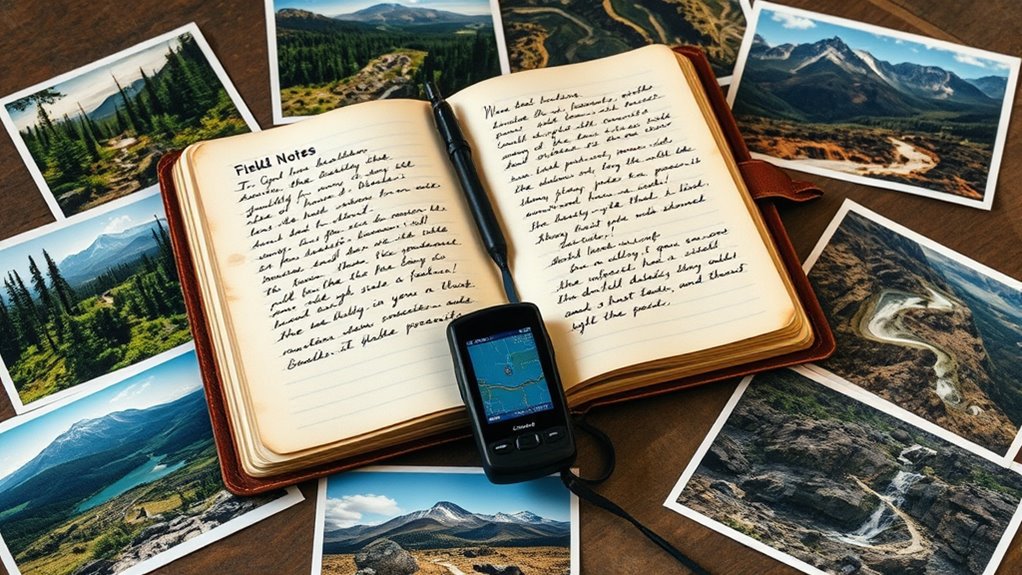
Good record-keeping is essential for staying organized and ensuring accuracy in both personal and professional settings. When you master the art of documenting your experiences and data, you free yourself from chaos and guesswork. Instead of relying solely on memory or scattered notes, you can create a reliable system that offers clarity and control. Digital archives are a game-changer in this regard. They allow you to store, access, and organize your records with ease, ensuring that your valuable information is preserved and searchable. With just a few clicks, you can retrieve detailed field notes, GPS pins, or photos, empowering you to revisit details whenever needed. Digital archives also provide the flexibility to back up your data, so you’re never at the mercy of lost or damaged physical records. Incorporating organized data management practices enhances your ability to maintain accurate and accessible records over time.
But don’t underestimate the power of handwritten logs. While digital tools are incredibly convenient, handwritten logs offer a tactile and personal connection to your data. Writing things down by hand can help reinforce memory and understanding, making your records more meaningful. Plus, handwritten logs serve as a quick, low-tech backup—especially in environments where electronic devices might fail or be impractical. They’re portable, simple, and don’t require internet or batteries. Combining handwritten logs with digital archives creates a thorough, liberating approach to record-keeping. You can jot down quick notes in the field, then later upload or digitize those logs to keep everything in one organized, accessible place.
When you document your field notes, GPS pins, and photos, you’re creating a detailed map of your activities and observations. GPS pins are especially valuable—they pinpoint exact locations, helping you visualize your movements and findings. Photos capture visual evidence, adding context and clarity that words alone can’t convey. By integrating these elements into your digital archives, you develop a powerful system that enhances your understanding and allows for easy sharing or analysis. This approach reduces the mental clutter that often accompanies scattered data and gives you the freedom to focus on what truly matters—your work, your passions, your discoveries.
In the end, effective record-keeping isn’t just about storing information; it’s about empowering yourself. Whether you lean on digital archives for their organization and searchability or prefer the personal touch of handwritten logs, you’re creating a foundation of clarity that liberates you from confusion and oversight. With disciplined documentation, you gain confidence, control, and the ability to move forward with purpose and precision.
Frequently Asked Questions
How Do I Organize My Digital Field Notes Effectively?
To organize your digital field notes effectively, focus on digital note organization by creating clear, consistent file naming conventions. Use descriptive titles with dates and locations to easily locate info later. Keep related notes in dedicated folders, and consider tagging files for quick searches. Automate backups to stay liberated from data loss. This way, you maintain control over your notes, saving time and reducing stress during fieldwork.
What Is the Best Way to Back up GPS Data?
Imagine your GPS data as a treasure chest—protect it with a vault that never closes. Back it up using cloud storage, ensuring your valuable coordinates are always accessible. Lock your data with encryption, guarding your freedom to access and share without fear. This way, your data stays safe, portable, and ready whenever you need it, freeing you from the chains of lost information and giving you control over your adventures.
How Can I Ensure Photo Metadata Remains Intact?
To guarantee photo metadata remains intact, you should use reliable photo management software that preserves metadata during editing and sharing. Avoid resizing or converting images unnecessarily. Keep original files untouched and store them securely. This safeguards metadata preservation and photo authentication, empowering you with authentic, unaltered images. By taking control of your photo files, you free yourself from dependency on external tools, ensuring your data stays true to its source.
Are There Apps That Combine Notes, GPS, and Photos Seamlessly?
You can find apps that seamlessly blend notes, GPS, and photos for true multimedia journaling, breaking chains of complex workflows. Apps like Evernote, OneNote, and Notion offer integrated mapping and multimedia features, giving you the freedom to capture everything in one place. With these tools, you’re free to document your adventures effortlessly, keeping everything organized while preserving photo metadata intact—your story, your way, liberated.
How Do I Handle Sensitive Location Data Securely?
You should encrypt sensitive location data using strong encryption techniques to keep it secure. Apply anonymization strategies, like removing identifiable details or using pseudonyms, to protect privacy. Store data in secure, access-controlled environments and limit sharing. By actively encrypting your data and anonymizing details, you free yourself from worries about leaks, ensuring your sensitive location info remains private and empowering you to handle your data confidently and securely.
Conclusion
Just like explorers chart unknown lands, your detailed notes, GPS pins, and photos become your compass and map. They echo the whispers of your journey, guiding future adventures and preserving memories with unwavering clarity. Remember, every detail you record is a step forward, a story told, a legacy left behind. Keep your record-keeping steadfast—your own Polaris in the vast, uncharted wilderness of discovery.