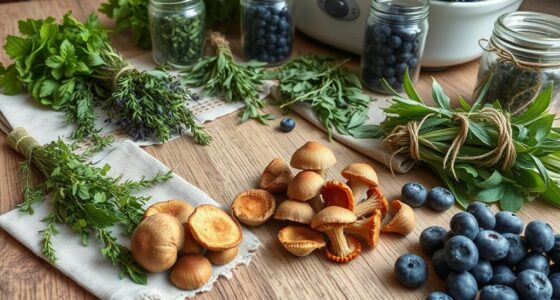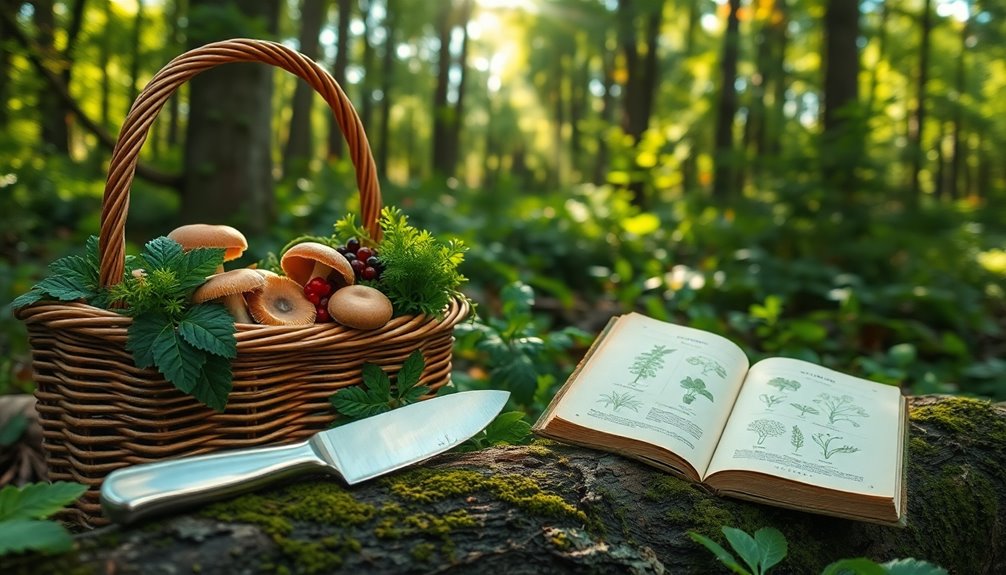
Learning wild foods well takes patience, practice, and keen observation of seasonal cues. You need to understand how plants grow, when they’re most abundant, and how to identify safe, edible species. Rushing the process can lead to mistakes or overharvesting. By developing your skills over time and respecting nature’s cycles, you’ll guarantee sustainable foraging and greater success. Keep exploring, and you’ll uncover even more ways to deepen your wild food mastery.

Get garden gear delivered free — and shop member deals
- Fast, free delivery on millions of items
- Access to Prime Big Deal Days deals on October 6–7
- Prime Video, Amazon Music and more included
Key Takeaways
- Cultivate patience and consistent practice to enhance identification, harvesting, and preparation skills over time.
- Understand seasonal plant cycles and environmental cues for sustainable and effective foraging.
- Develop keen observation skills to distinguish edible plants from toxic look-alikes safely.
- Learn about plant ecology and ecological relationships to support responsible harvesting and environmental health.
- Monitor seasonal shifts and respect plant growth cycles to ensure long-term access and sustainability.
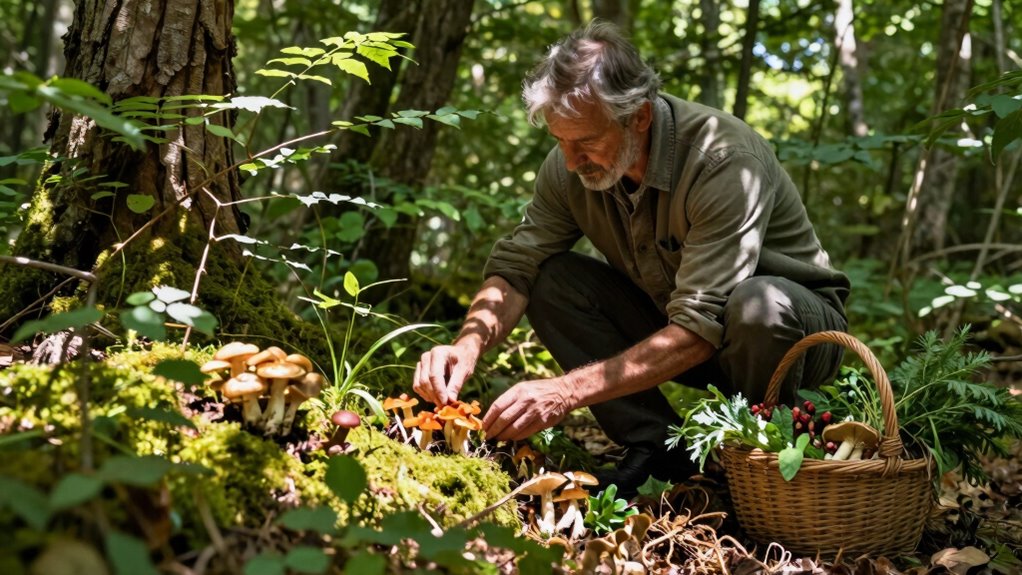
Have you ever wondered why mastering wild foods takes more than just a quick trip into the woods? It’s because learning to identify, harvest, and prepare wild edibles is a skill that demands patience, observation, and practice. You can’t rush the process, especially since nature isn’t static. Foraging techniques are essential, but they’re only part of the puzzle. The real challenge lies in understanding seasonal variations—how plants change throughout the year and how those changes affect what’s available, safe, and delicious to eat.
When you start foraging, you’ll quickly realize that what’s abundant in spring might be scarce in winter. Leaves, berries, and fungi all follow seasonal rhythms. Knowing these patterns helps you plan your foraging trips wisely. For example, wild greens like nettles and dandelion are easiest to identify and harvest when they’re young and tender in early spring. As the seasons progress, certain berries ripen, but they only appear at specific times, which means you need to be familiar with their fruiting schedules. Recognizing these seasonal variations ensures you’re not only collecting the right foods but also doing so sustainably, respecting the plant’s growth cycle.
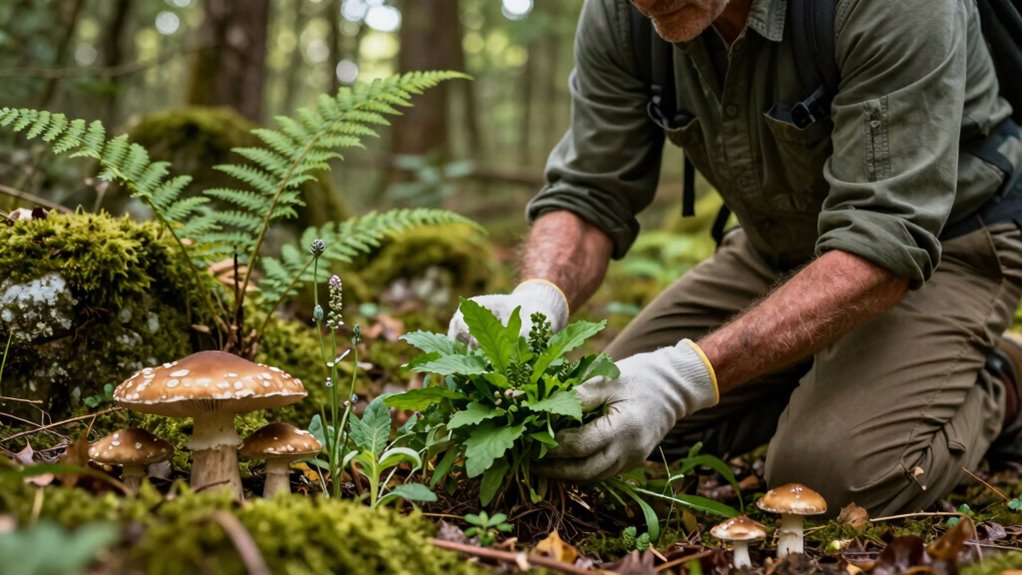
Mastering foraging techniques goes beyond just knowing what’s edible. It involves honing your observation skills—learning how to distinguish between look-alikes and toxic plants, understanding plant habitats, and knowing the best times to harvest for ideal flavor and nutrition. You’ll develop an eye for subtle clues: the color of new shoots, the texture of bark, or the scent of a particular mushroom. Over time, your ability to read the landscape becomes second nature, making each foraging trip more successful and safer. Paying attention to environmental cues can greatly improve your identification accuracy and safety during foraging. Additionally, understanding wild plant ecology and its role in sustainable harvesting can help you locate and sustainably harvest these resources, ensuring their availability for future foragers. Developing an awareness of ecological relationships can also enhance your understanding of how plants interact with their environment, leading to more sustainable foraging practices. Being mindful of seasonal shifts further supports your efforts to forage responsibly and effectively throughout the year.
As an affiliate, we earn on qualifying purchases.
Frequently Asked Questions
How Long Does It Typically Take to Become Proficient in Foraging Wild Foods?
It typically takes several months to a few years to become proficient in foraging wild foods, depending on your foraging patience and dedication. Skill development happens gradually as you learn to identify plants confidently and understand their seasons. Consistent practice and study accelerate your progress, but mastery requires ongoing experience. Keep exploring, stay curious, and remember that patience and persistence are key to becoming a skilled forager.
Are There Any Legal Restrictions on Wild Food Harvesting in Certain Areas?
Yes, there are legal restrictions on wild food harvesting in certain areas. You need to check if you require legal permits, especially in protected regions or parks, to avoid fines or penalties. Always guarantee you’re not harvesting protected species, as they are off-limits. Local regulations vary, so research rules beforehand, and respect conservation efforts to preserve the environment for future foragers and wildlife alike.
What Are Common Mistakes Beginners Make When Foraging Wild Foods?
You might stumble like a lost traveler if you neglect safety precautions and misidentify plants. Common mistakes include rushing identification techniques, overlooking subtle differences, and not double-checking edible parts. You could end up with a dangerous look-alike or harm yourself. To avoid this, take your time, use reliable guides, and always verify your finds. Think of foraging as a delicate dance—precision and patience keep you safe and successful in the wild.
How Can I Ensure the Wild Foods I Forage Are Free From Contaminants?
To guarantee your wild foods are free from contaminants, prioritize safe sourcing by choosing areas away from pollution sources like busy roads or industrial sites. Conduct contaminant testing if possible, especially for mushrooms and root vegetables, to check for heavy metals or pesticides. Always verify plant identification thoroughly, and when in doubt, consult local experts or foraging groups. This careful approach helps you enjoy wild foods confidently and safely.
What Essential Tools or Gear Are Recommended for Novice Wild Food Foragers?
Foraging safety and plant identification are key, so you’ll want a sharp, reliable knife, a sturdy basket or mesh bag, and a field guide specific to your region. A magnifying glass helps with detailed plant identification, while gloves protect your hands. Carry a compass or GPS device to avoid getting lost. These essential tools guarantee you forage safely, confidently, and with a clear focus on identifying edible plants correctly.
Conclusion
Learning wild foods is like tending a garden—you plant seeds of curiosity now, knowing they’ll flourish over time. Stay patient and persistent, and you’ll eventually harvest a bounty of knowledge and flavors that nourish both body and spirit. Remember, every wild edible you master is a step closer to becoming a true forager, weaving yourself into nature’s ongoing story. Keep at it; the wild bounty waits patiently for you to discover it.
Fall yard work Picks
leaf blowers
As an affiliate, we earn on qualifying purchases.