
To keep your tools sharp in the field, use a whetstone to carefully sharpen blades at around 20 degrees, maintaining consistent pressure. Follow up with a leather strop to polish the edge and remove burrs, ensuring a clean cut. Regular maintenance and proper safety practices help prevent dullness and accidents. If you want to learn the best techniques and tips, there’s more to discover that’ll keep your tools performing at their best.
Key Takeaways
- Use whetstones soaked properly to maintain consistent sharpening angles, typically around 20 degrees, for effective edge restoration in the field.
- Incorporate leather strops after sharpening to remove burrs and achieve a polished, sharper blade for prolonged cutting performance.
- Handle blades carefully, using stable surfaces and proper safety practices to prevent slips and injuries during field maintenance.
- Regularly maintain blades with simple tools like whetstones and strops to prevent dullness and ensure safety and efficiency.
- Steady, deliberate movements and routine care are essential for effective field sharpening and maintaining a reliable, sharp edge.
Have you ever found yourself needing a sharp blade in the field but lacking access to a shop or professional sharpening tools? When you’re out there, relying on your gear’s edge isn’t just about convenience—it’s about safety and efficiency. A dull knife is dangerous because it requires more force, increasing the risk of slips and injuries. That’s why mastering simple sharpening techniques is essential for maintaining your tools and ensuring your safety. You don’t need fancy equipment to keep your blades in top shape; a few reliable methods can be done anywhere, empowering you to take control of your gear.
Start by understanding the basics of knife safety before you pick up any sharpening tool. Always handle blades carefully, keeping your fingers away from the cutting edge. When working with whetstones or strops, keep your hands dry and stable, and work on a secure surface. Remember, a sharp blade is safer because it requires less force to cut, but an unsharpened or poorly maintained blade increases the chance of accidents. Keeping your blades sharp isn’t just about performance—it’s about protecting yourself every time you use them.
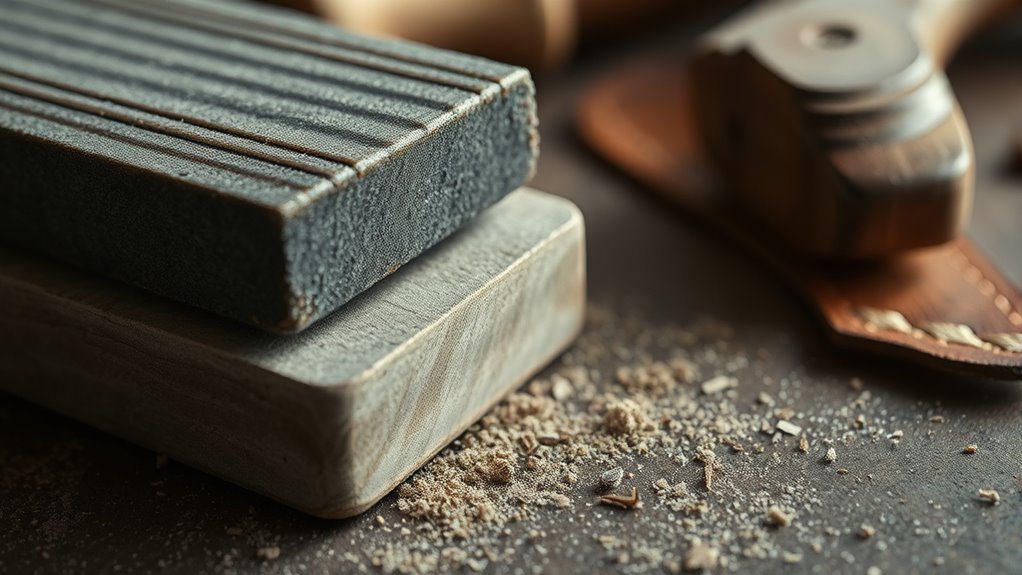
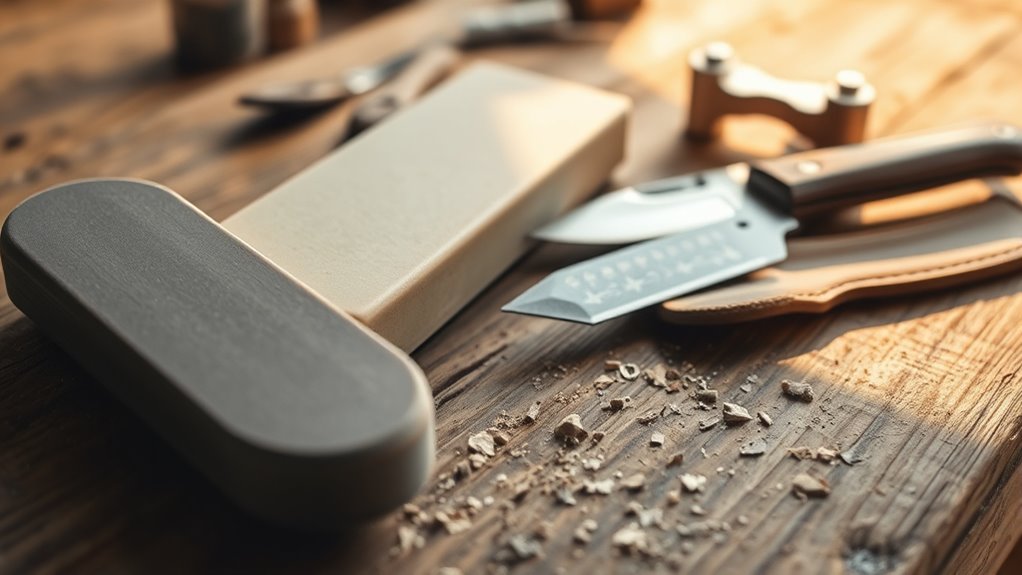
In the field, sharpening techniques are straightforward but effective. A common method involves using a whetstone, which, when properly used, can restore a blade’s edge efficiently. To do this, soak the stone if necessary, then hold the blade at a consistent angle—generally around 20 degrees—and slide it across the stone with controlled pressure. Repeat this process on both sides until you see a clean, sharp edge. This simple technique, performed regularly, keeps your knife functioning smoothly and reduces fatigue during tasks. Additionally, understanding the importance of contrast ratio can help you evaluate how well your sharpening process improves the visual clarity of your blade’s edge, making it easier to assess sharpness.
Strops are another versatile tool you can use for field maintenance. A leather strop helps refine the edge after sharpening, removing burrs and polishing the blade. To use it, draw the blade lightly along the strop at the same angle, alternating sides. This not only improves cutting performance but also prolongs the sharpness of your edge. Incorporate this step into your routine whenever you notice your blade starting to dull; it’s quick, effective, and requires minimal space.
Maintaining your blade’s edge in the field is about consistent care and confident techniques. By understanding knife safety and sharpening techniques, you gain independence and reduce reliance on external help. Whether using a whetstone or a strop, the key is steady, deliberate movements and regular upkeep. With these skills, you’ll be ready to keep your blades sharp, safe, and ready for action whenever you need them.
Frequently Asked Questions
How Often Should I Sharpen My Field Knives?
You should sharpen your field knives whenever they start to drag or lose their edge, usually every few uses or after heavy work. Regular blade honing keeps your knife sharp and ready, but don’t overdo it—sharpening frequency varies with use and blade quality. Trust your senses; if cutting feels dull or uneven, it’s time to sharpen. Embrace the freedom of a well-maintained, razor-sharp knife for effortless performance.
Can I Use Household Items as Makeshift Sharpening Tools?
You can use household alternatives for sharpening your knives, but DIY hacks vary in effectiveness. Items like ceramic mugs, fine-grit sandpaper, or a glass bottle can serve as makeshift tools, giving you a quick edge. Just remember, these hacks offer temporary solutions and might not deliver professional results. For true liberation from dull blades, investing in proper sharpening tools is best, ensuring safety and efficiency in your outdoor adventures.
What Are Signs My Blade Needs Sharpening?
Did you know that 70% of blades become less effective due to neglecting sharpening? You’ll notice your blade needs sharpening if it struggles to cut smoothly, shows signs of blade corrosion, or requires excessive force. Regular sharpening keeps your tools in top shape and avoids frustration. Don’t wait for dullness to take over—sharp blades empower you with ease and precision, giving you the freedom to work effortlessly whenever you need it.
Is It Safe to Sharpen Blades Outdoors?
Yes, sharpening blades outdoors can be safe if you prioritize outdoor safety and watch for sharpening hazards. Make sure you’re in a well-ventilated area, keep your workspace clear of debris, and wear protective gear like gloves and eye protection. Stay alert to avoid accidental cuts or slips. By taking these precautions, you can enjoy the freedom of sharpening your blades outside without risking injury.
How Do I Prevent My Stone From Becoming Dull?
To prevent your stone from becoming dull, regularly clean it after each use to remove debris and buildup. Store it properly in a dry, covered area using storage techniques like a padded box or wrap to avoid chips and dust. Keep the stone flat and dry, and avoid exposing it to moisture or dirt. These simple steps make certain your stone stays sharp longer, giving you the freedom to sharpen effortlessly whenever needed.
Conclusion
Keep your tools sharp, your skills sharp, and your confidence sharp. Regularly sharpen, consistently maintain, and carefully care for your blades. With the right whetstones, proper stropping, and diligent upkeep, you’ll always be ready to tackle any task. Stay attentive, stay precise, and stay sharp—because a well-maintained edge isn’t just about cutting; it’s about doing your best every time. Keep sharpening, keep improving, and keep thriving with tools that perform at their peak.