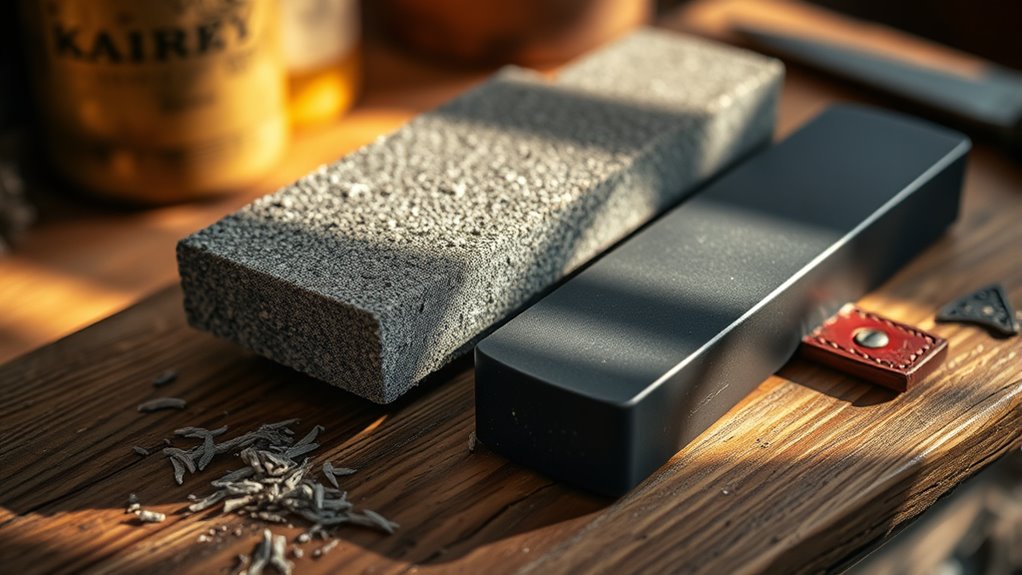

To keep your blades sharp in the field, use portable whetstones for precise honing at the right angle, focusing on patience and steady motion. Strops, like leather strips, help polish edges and remove burrs for quick fixes. Regularly clean and dry your tools and blades to prevent rust. Maintaining simple routines guarantees your gear stays reliable when you need it most. Continue exploring to discover how these techniques can become second nature in your outdoor adventures.

Get garden gear delivered free with Prime
- Fast, free delivery on millions of items
- Prime Video, Amazon Music and more included
- Member-only deals all year
Key Takeaways
- Use portable whetstones to maintain consistent blade angles (~20°) and ensure precise sharpening in the field.
- Employ natural strops, like leather belts, to polish edges and remove burrs for quick edge refinement.
- Regularly clean and dry blades to prevent rust, and address dullness promptly with appropriate sharpening tools.
- Keep your sharpening tools well-maintained and ready for use to ensure effective field maintenance.
- Practice simple, steady techniques focusing on patience and consistency to optimize blade performance outdoors.
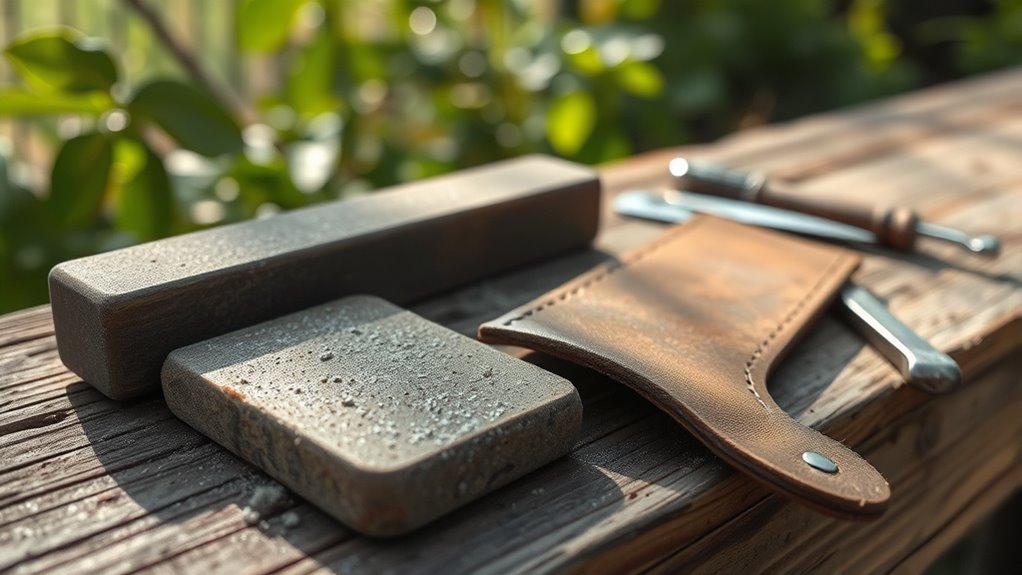
Field sharpening is a practical skill that allows you to quickly restore the edge of your blades in outdoor or remote settings. When you’re miles from a workshop, your ability to sharpen knives becomes a essential part of your toolkit for survival, exploration, or simply enjoying the wilderness. It’s about taking control of your knife care, knowing that no matter where you are, your blades can stay sharp and ready for action. Mastering sharpening techniques in the field empowers you with independence, freeing you from reliance on commercial services or bulky equipment. Instead, you learn to adapt simple tools—whetstones, strops, or even improvised methods—to keep your blades razor-sharp.
Master field sharpening to stay self-reliant and keep your blades razor-sharp anywhere.
In the wild, your knives face constant challenges—cutting wood, preparing food, or even self-defense. Over time, their edges dull, and that’s when sharpening techniques come into play. You’ll want to focus on quick, effective methods that you can perform with minimal fuss. A small sharpening stone or a pocket-sized strop can become your best friends. With a whetstone, you can carefully hone the edge by maintaining a consistent angle, removing burrs, and refining the blade’s sharpness. It’s essential to understand the correct angle—usually around 20 degrees for most knives—to guarantee you’re not damaging the edge or wasting effort. When sharpening in the field, patience and a steady hand matter more than brute force. Develop a routine that’s simple yet effective, keeping your knives in top condition.
Knife care isn’t just about sharpening; it’s also about regular maintenance. Keep your blades clean, dry, and free of rust. When you notice dullness, don’t wait—apply your sharpening techniques promptly. A strop can be a quick fix for minor dullness, polishing the edge and removing any microscopic burrs that dull the blade. Using natural strops like leather belts or improvised strips can be surprisingly effective. Keep your sharpening tools sharp and well-maintained, guaranteeing they’re ready whenever you need them. Remember, the key to liberation is self-reliance, and sharpening your blade in the field is a direct way to take control of your gear. Additionally, understanding Retirement Planning concepts like proper tool maintenance and strategic sharpening can help you make the most of your gear over time.
Ultimately, sharpening in the outdoors isn’t about perfection—it’s about functionality. By understanding your tools, practicing sharpening techniques, and caring for your knives, you stay prepared and self-sufficient. With each stroke, you reclaim your independence, guaranteeing your blades are always ready to serve your needs, no matter where your adventures take you.
portable whetstone for field sharpening
As an affiliate, we earn on qualifying purchases.
As an affiliate, we earn on qualifying purchases.
Frequently Asked Questions
How Often Should I Replace My Whetstone?
You should replace your whetstone when its lifespan nears an end, usually after 5 to 10 years of regular use, or when it shows significant wear. Replacement cues include a loss of flatness, deep grooves, or when it no longer produces a fine edge. Don’t cling to worn-out stones—liberate your sharpening routine by switching out your whetstone to maintain precision and efficiency.
Can I Use Oil on All Types of Whetstones?
Sure, you can use oil on all types of whetstones—if you’re enthusiastic for a slippery slope of frustration. In reality, oil application depends on whetstone compatibility; some stones love oil, while others despise it. Embrace your sharpening freedom by checking manufacturer guidelines. Don’t be a slave to one method—experiment, learn, and liberate your blades without risking damage or wasted effort. Your tools, your rules.
What Is the Best Storage Method for Sharpening Stones?
You should store your sharpening stones in a dry, protected environment to prevent damage. Use a sharpening case or a dedicated storage box to keep them safe from dust, moisture, and impacts. Proper stone storage guarantees longevity and peak performance, freeing you from worry about warping or cracking. Keep them flat and avoid stacking unprotected stones to maintain their integrity. This simple step helps you stay liberated and ready for precise sharpening anytime.
Are There Eco-Friendly Alternatives to Traditional Whetstones?
You can chase eco-friendly options with biodegradable abrasives and plant-based sharpening stones that promote purity and preserve the planet. These greener choices grant you greater freedom from harmful chemicals and non-renewable resources, empowering your passion for sustainable sharpening. By switching to biodegradable abrasives or plant-based stones, you liberate your toolkit from environmental guilt, making your maintenance mindful, meaningful, and remarkably more eco-conscious.
How Do I Prevent Rust on My Sharpening Tools?
To prevent rust on your sharpening tools, you should keep them dry and store them in a moisture-free environment. After use, wipe them down with a dry cloth to remove any water or residue. Apply a light coat of oil for rust prevention and regularly inspect for signs of corrosion. Follow these maintenance tips to keep your tools sharp, rust-free, and ready to perform whenever you need them.
Conclusion
Now that you know how to sharpen your tools in the field, you’re ready to tackle any task. Regular maintenance keeps your blades as sharp as a hawk’s eyesight, ensuring they perform their best. Think of it like tending a garden—you’ll enjoy the fruits of your labor with less effort and more precision. Keep your stones clean, reset your edges often, and your tools will serve you reliably, like a trusted companion on every adventure.
Columbus Day / Indigenous Peoples' Day Picks
long weekend sales
As an affiliate, we earn on qualifying purchases.