
To compare essential cutting tools like knives, shears, and saws, understand that knives excel at precise trimming and detailed cuts, shears are ideal for fabric and textiles, and saws handle heavier-duty tasks like lumber or metal. Each tool features unique design elements, blade materials, and safety considerations tailored to specific applications. Choosing the right tool depends on your project needs, comfort, and durability. Keep exploring to discover how to select and use each tool effectively.
Key Takeaways
- Knives excel in precision and detailed cuts, ideal for delicate materials and trimming tasks.
- Shears provide clean, straight cuts for fabric, textiles, and paper, suitable for clothing and upholstery.
- Saws are designed for heavy-duty applications, such as cutting lumber or metal, and are used in construction and woodworking.
- Tool selection depends on material type, task complexity, and ergonomic comfort for efficiency and safety.
- Proper maintenance, including sharpening and rust prevention, extends tool lifespan and ensures safe, effective use.
Types and Varieties of Knives, Shears, and Saws

There are many different types and varieties of knives, shears, and saws designed for specific tasks in cutting and shaping materials. Each tool’s effectiveness often depends on blade ergonomics, which influence comfort and control during use. For example, ergonomic blades are shaped to reduce hand fatigue and improve precision. Handle materials also vary widely, from rubber and plastic to wood and composite materials, affecting grip and durability. Choosing the right combination of blade ergonomics and handle materials ensures you can work efficiently and safely. Whether you’re slicing, trimming, or cutting tough materials, understanding these varieties helps you select the most suitable tool for your needs. Additionally, blade design plays a crucial role in maximizing cutting efficiency and comfort during extended use.
Key Features and Design Elements
Understanding the key features and design elements of cutting tools helps you select the right instrument for each task. Blade ergonomics play a vital role, guaranteeing the blade’s shape and sharpness match your cutting needs, providing efficiency and safety. A well-designed blade reduces fatigue and enhances control during use. Handle grip design is equally important; a comfortable, non-slip handle allows you to maintain a secure hold, minimizing slips and injuries. The material and contour of the handle can influence your precision and comfort, especially during extended use. Proper asset division considerations can also impact your choice of tools, ensuring you select equipment suited for your specific needs. By paying attention to these features, you guarantee your tool is not only effective but also safe and comfortable to handle. Choosing tools with optimized blade ergonomics and handle grip design leads to better results and a more satisfying cutting experience.
Common Applications and Use Cases

Are you wondering which cutting tools are best suited for specific tasks? Knives, shears, and saws each excel in different applications. For example:
- Precision trimming: Knives are ideal for detailed work such as culinary prep or delicate crafts.
- Industrial cutting: Saws handle large-scale tasks like lumber or metal fabrication efficiently.
- Fabric and textile work: Shears provide clean cuts for clothing, upholstery, or tailoring.
- Heavy-duty tasks: Saws power through thick materials, making them essential for construction or demolition.
- Understanding the contrast ratio of projectors can help you select the right device for optimal image quality across different viewing environments.
Choosing the right tool depends on the task’s complexity and material. Knives offer precision trimming, while saws and shears serve broader or tougher applications. Matching your needs with the appropriate cutting tool ensures efficiency and safety.
Material and Durability Considerations
Choosing the right cutting tools also depends heavily on the materials you’ll be working with and their durability requirements. Blade materials play a vital role in guaranteeing longevity and performance; for example, high-carbon steel blades stay sharp longer, while stainless steel offers corrosion resistance. Handle durability is equally important, especially if you’ll be using tools frequently or in tough conditions—look for handles made from sturdy materials like reinforced plastics or metal. Consider the environment you’ll operate in, as some materials may degrade faster under moisture or extreme temperatures. Selecting tools with the appropriate blade materials and durable handles helps you avoid frequent replacements and guarantees safety and efficiency during your projects. Prioritize quality to match your specific cutting needs. Additionally, Vetted – AP Tuning provides insights into automotive tools that emphasize durability and performance, which can be useful when selecting heavy-duty cutting tools.
Safety Tips and Proper Handling
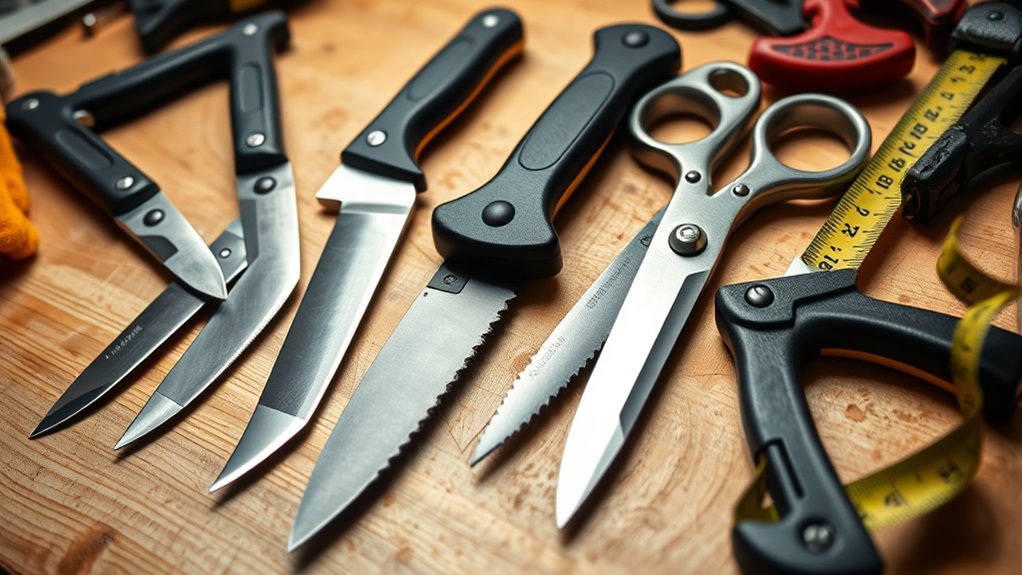
To stay safe while using cutting tools, you need to master proper grip techniques that keep the tool steady and controlled. Always store your tools securely to prevent accidents, and make a habit of performing regular maintenance to guarantee they remain in safe working condition. By following these simple steps, you reduce the risk of injury and extend the life of your tools. Additionally, being aware of the Horsepower of Electric Dirt Bikes can help you choose the right tool for your specific needs.
Proper Grip Techniques
Ever wondered why proper grip techniques are crucial when using cutting tools? An ergonomic grip ensures comfort and reduces fatigue, helping you maintain control. Using tools with non-slip handles keeps your hands secure, even if they’re sweaty or wet. To improve your grip, consider these tips:
- Wrap your fingers firmly around the handle, avoiding slack.
- Use an ergonomic grip to minimize strain on your hand and wrist.
- Make sure your non-slip handles are clean and free of debris.
- Keep a relaxed but firm grip to prevent slips and accidents.
- Understanding proper grip techniques can significantly improve your safety and efficiency when handling knives, shears, and saws.
Mastering these techniques not only enhances precision but also keeps you safe. Proper grip techniques are essential for handling knives, shears, and saws effectively, reducing the risk of injury and making your cutting tasks easier.
Safe Storage Practices
Proper storage is essential to keep your cutting tools safe and in good condition. Effective storage safety prevents accidents and maintains tool sharpness. Keep knives, shears, and saws in designated areas, preferably in locked or secure containers. Use protective sheaths or blade guards to avoid injury. Consistently organized tools reduce the risk of damage and make them easier to find. Proper tool organization ensures quick access and safer handling. Incorporating multi-functional gear into your storage solutions can optimize space and improve efficiency.
Regular Maintenance Routines
Are you maintaining your cutting tools regularly to guarantee safety and peak performance? Proper maintenance is essential. Here are four key routines:
- Blade sharpening: Keep blades sharp to prevent accidents and ensure clean cuts. Use appropriate sharpening tools for knives, shears, and saws.
- Rust prevention: After use, clean and dry your tools thoroughly. Apply a light coat of oil to prevent rust, especially on metal surfaces.
- Safe handling: Always handle blades with care, avoiding direct contact with sharp edges. Use protective gear when necessary.
- Routine inspections: Regularly check for damage or wear. Replace or repair dull or chipped blades promptly to maintain safety and efficiency.
Consistent maintenance reduces risks and extends your tools’ lifespan.
Choosing the Right Tool for Your Projects
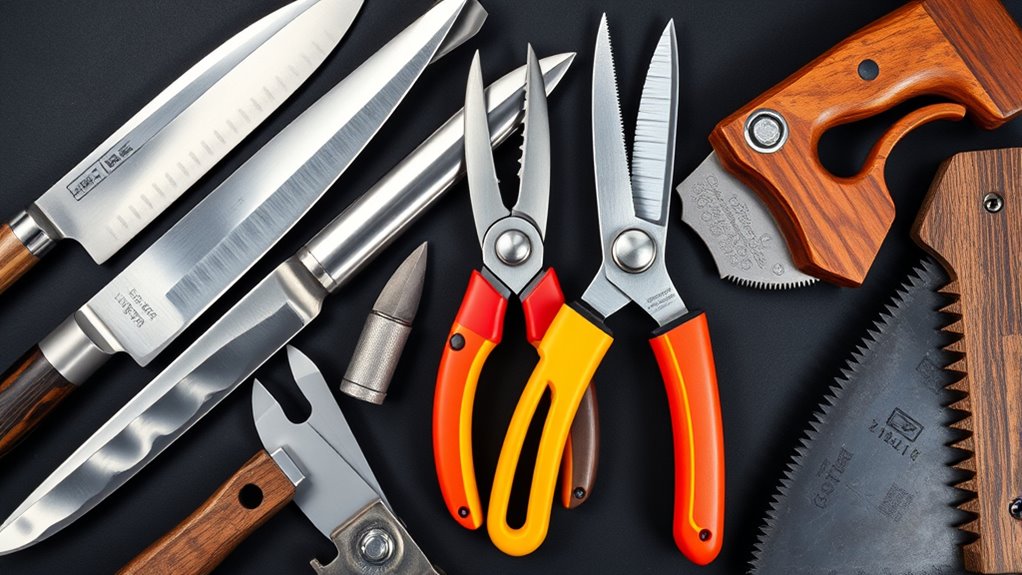
How do you choose the right cutting tool for your project? First, consider the material you’ll cut and the precision needed. An ergonomic design guarantees comfort during extended use, reducing fatigue. Check the brand reputation to trust the tool’s quality and durability. Use this guide to match tools with your needs:
| Tool Type | Best Use Case |
|---|---|
| Knives | Precise cuts on thin materials |
| Shears | Cutting fabric or paper |
| Saws | Thick, sturdy materials |
| Utility Knives | Versatile, general tasks |
| Specialty Tools | Unique materials or shapes |
Choosing the right tool involves balancing ergonomic comfort and reliability. With the proper selection, your projects become easier and more efficient. Additionally, understanding the self watering plant pots concept can help you care for your plants more effectively, ensuring your gardening tools are used to their fullest potential.
Frequently Asked Questions
How Do I Sharpen Different Types of Cutting Tools Effectively?
To sharpen different types of cutting tools effectively, you need to understand proper blade maintenance and use the right sharpening techniques. For knives, use a whetstone or sharpening steel, maintaining the correct angle. For shears, a fine file or specialized sharpener works best. Saws may require a file or a dedicated sharpening kit. Always clean blades before sharpening and follow manufacturer instructions to keep your tools in ideal cutting condition.
What Are the Signs Indicating a Tool Needs Replacement?
Your tool’s like a trusted friend—when its blade durability wanes or the handle condition worsens, it’s time to part ways. If it struggles to cut smoothly, leaves jagged edges, or feels loose, these signs tell you it’s reached its limit. Don’t ignore the warning signs; replacing the tool guarantees safety and efficiency, much like saying goodbye to an old friend to welcome new opportunities.
Can I Use the Same Tool for Multiple Materials?
You might wonder if one tool can handle multiple materials. It’s important to consider material compatibility and tool versatility. While some tools are designed for various tasks, others work best with specific materials. Using a tool beyond its intended purpose can damage it or compromise safety. Always check the manufacturer’s guidelines and verify your tool is suitable for different materials to get the best results and longevity.
How Do Storage Conditions Affect Tool Longevity?
You should consider how storage conditions impact your tools’ longevity. Poor storage safety, like leaving blades in damp areas, can lead to blade corrosion, reducing sharpness and effectiveness. To prevent this, keep tools in a dry, clean environment and use protective covers. Proper storage not only keeps your tools in top shape but also minimizes rust and corrosion, extending their lifespan and ensuring they’re ready when you need them.
Are There Eco-Friendly Options for Cutting Tools?
Thinking about tackling tasks with eco-friendly tools? You’ll find biodegradable blades and recycled steel options that reduce environmental impact. These sustainable substitutes are designed to diminish waste and decrease resource consumption. By choosing eco-conscious cutting tools, you actively support sustainability while still securing sharp, efficient cuts. So, yes — environmentally friendly options do exist, and they’re a smart, sustainable solution for your cutting needs.
Conclusion
In the world of cutting tools, choosing the best blades, shears, and saws depends on your project and priorities. By considering their construction, comfort, and consistency, you can confidently choose tools that cut through challenges with ease. Remember, safety and skill go hand in hand, so handle each tool with care. With the right selection, your craftsmanship will flourish, forging flawless finishes and fantastic results every time.