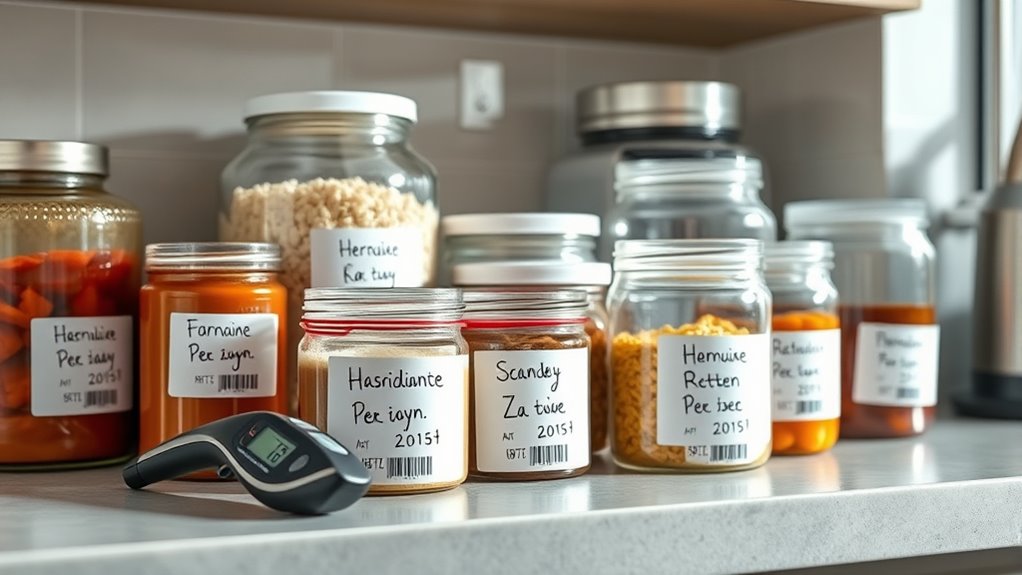

Labeling and lot tracking at home help you stay organized, making it easier to identify food freshness and prevent waste. By clearly marking containers with purchase or preparation dates and expiration dates, you can quickly assess what’s safe to eat. Proper storage and labeling reduce spoilage, minimize trips to the store, and keep your food safe. Keep these practices in mind to gain better control over your kitchen; more tips are just ahead.
Key Takeaways
- Clearly label containers with purchase or preparation dates to track freshness and safety effectively.
- Incorporate lot numbers or batch identifiers to monitor food origins and facilitate recalls if needed.
- Use consistent labeling practices for easy identification of expiration dates and storage durations.
- Implement a tracking system that records food entry and usage to prevent spoilage and reduce waste.
- Regularly review labels and lot information to ensure proper rotation and safe consumption of stored foods.
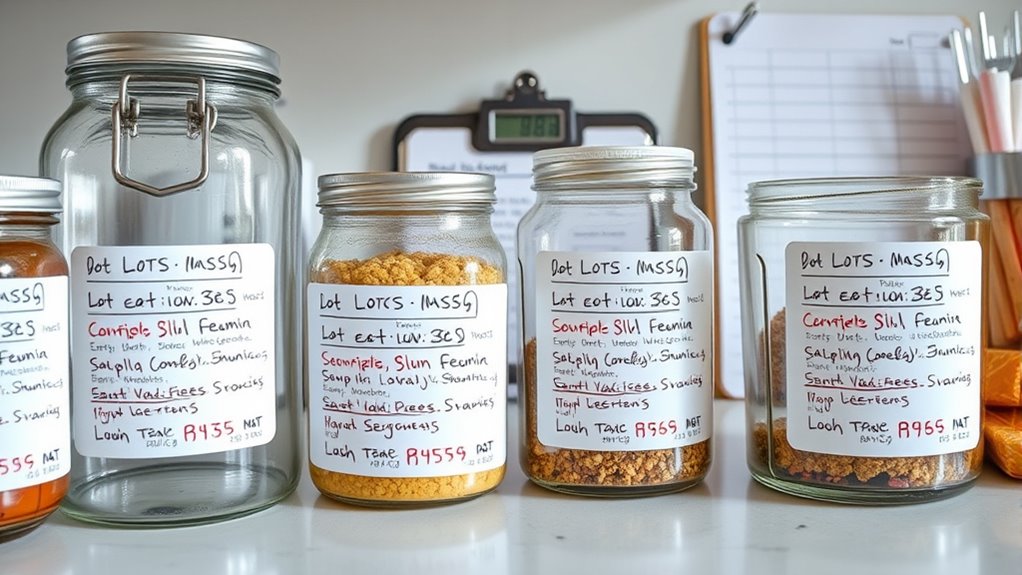
Keeping your food safe at home starts with proper labeling and lot tracking. You’re taking control of what goes into your body, and that means understanding expiration dates and following storage guidelines. When you label your containers clearly with the date you bought or prepared the food, you cut through confusion and reduce waste. No more guessing if that leftover is still safe or if that carton of milk is past its prime. By knowing exactly when items expire, you empower yourself to make smarter, safer choices, freeing you from unnecessary worries about spoiled food or foodborne illness.
Expiration dates are more than just numbers; they’re your first line of defense. They tell you when a product might lose its freshness or safety. However, don’t rely solely on these dates—use them as a guide, not gospel. Some foods can last longer if stored properly, while others spoil quickly. That’s where following proper storage guidelines becomes essential. For example, keeping perishable items at the right temperature in your fridge or freezer extends their life and preserves quality. When you label your food with both the purchase or preparation date and the expiration date, you create a system that keeps you aware of what needs to be used first. This simple step grants you the power to choose freshness over waste, giving you more control over your kitchen and your health.
Label foods with purchase and expiration dates to maximize freshness and control waste.
Storage guidelines aren’t just for food safety—they’re about reclaiming your space and your time. Properly storing food prevents cross-contamination and spoilage, which means fewer trips to the grocery store and less food thrown away. Use clear labels to mark items with the date they were stored and follow recommended temperature settings. This way, you ensure that your food stays at its best longer, reducing the risk of bacteria growth or mold. Additionally, understanding cookie and privacy policies can help you make informed decisions about your online privacy and data security when managing your kitchen’s smart appliances or digital tools. When you take the time to label and store your food correctly, you’re asserting your independence from relying on guesswork or outdated practices. Instead, you’re creating a system that serves your desire for a liberated, efficient kitchen.
In the end, proper labeling and lot tracking give you control over your food safety. It’s about making informed decisions, reducing waste, and feeling confident in what you’re eating. By paying attention to expiration dates and storage guidelines, you free yourself from the chaos of disorganized, unsafe food. You become the master of your kitchen, ensuring every meal is not just delicious but also safe. This practice is your way of maintaining independence, trusting your judgment, and embracing a more conscious approach to food at home.
Frequently Asked Questions
How Can I Start Implementing Lot Tracking at Home Effectively?
Start implementing lot tracking at home by organizing your inventory management system with clear labels and dates. Use digital tracking tools or apps to record each item’s lot number and purchase date, giving you full control and visibility. This approach liberates you from waste and uncertainty, empowering you to manage your food safety effortlessly. Regularly update your records and stay consistent, creating a stress-free environment where you’re always prepared.
What Are the Best Tools for Labeling Food at Home?
Your kitchen deserves the best tools to guarantee food safety, so grab clear, durable labeling materials like waterproof markers and adhesive labels. These essentials make your food safety game unstoppable, giving you the freedom to organize effortlessly. Use printable labels for convenience and color-coded markers to quickly identify food types. By choosing simple, reliable tools, you’re empowering yourself to take control and keep your kitchen safe and liberating.
How Long Should I Retain Lot Tracking Records?
You should retain lot tracking records for at least one year, aligning with legal requirements and best practices. Keeping these records grants you the freedom to trace your food sources quickly and confidently, ensuring safety and accountability. Regular record retention helps you stay organized, reduces stress, and empowers you to manage your kitchen with transparency. Stay compliant and in control by storing your records properly—your peace of mind depends on it.
Are There Specific Labels Recommended for Household Food Storage?
Imagine your kitchen as a sanctuary—custom label designs and eco-friendly labels empower you to organize with purpose. You should choose clear, durable labels that withstand moisture and temperature changes. Opt for eco-friendly options to protect the planet while keeping your food safe. These labels liberate you from confusion, ensuring every item is easily identifiable, reducing waste, and promoting conscious living. Elevate your food storage with labels that serve your values and your home.
How Can I Ensure Labels Stay Legible Over Time?
To keep labels legible over time, choose durable label materials like waterproof, oil-proof, or laminated options that resist moisture, smudging, and peeling. Apply labels on clean, dry surfaces and avoid exposure to heat or sunlight, which can fade ink. Use permanent markers or inkjet printers for sharp, lasting print. Regularly check and replace labels when they start to wear, so your food stays safe and organized.
Conclusion
By mastering labeling and lot tracking at home, you’re building a shield around your loved ones’ health. Think of your kitchen as a fortress, where each label is a beacon of safety guiding your choices. When you track your food’s journey, you’re weaving a safety net that catches potential mistakes before they become problems. Keep these tools close, and turn your kitchen into a sanctuary—where safety and love are always on the menu.