
TL;DR

Get garden gear delivered free with Prime
- Fast, free delivery on millions of items
- Prime Video, Amazon Music and more included
- Member-only deals all year
Grow Organic’s guide says pickling cucumbers should be harvested young and firm, and that tested pickle recipes may call for removing a 1/16-inch slice from the blossom end. The National Center for Home Food Preservation links the step to reducing soft texture; it is not a way to prevent bitterness. For shelf-stable canned pickles, use a tested recipe without changing its ingredient proportions.
Grow Organic’s cucumber guide explains how to grow and harvest pickling cucumbers and why some tested pickle recipes call for cutting a 1/16-inch slice from the blossom end. The National Center for Home Food Preservation says the flower end may contain enzymes that soften pickles, making the trim a preparation step aimed at texture—not a fix for bitter cucumbers.
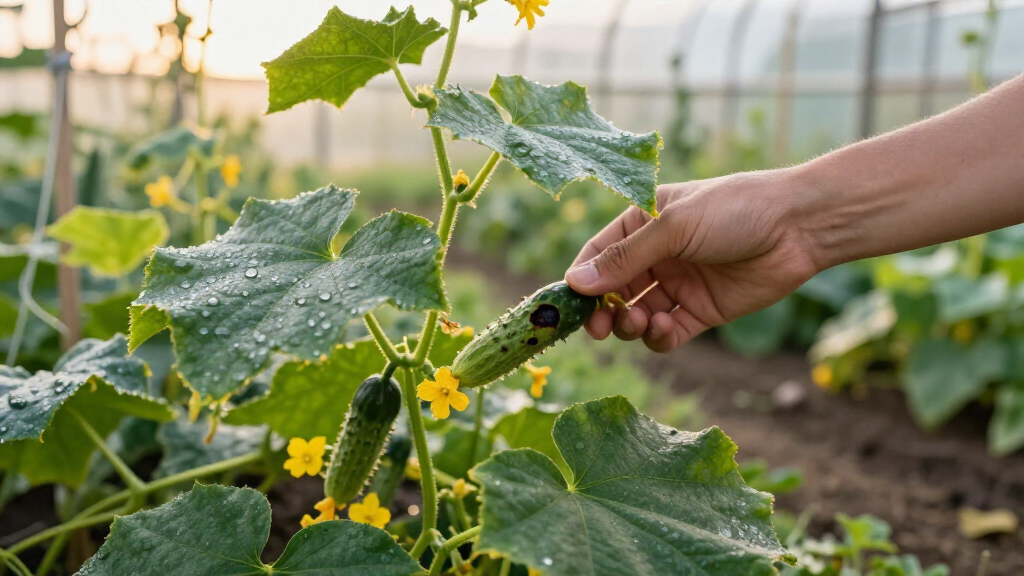
The blossom end is opposite the stem end: it is where the flower was attached. If the stem is still on the cucumber, the blossom end is the other end. If not, look for the small flower scar. Grow Organic says to follow the directions of the tested recipe being used, since trimming instructions can depend on the recipe.
Pickling cucumbers are generally harvested young and firm. They are often shorter and thinner-skinned than slicing varieties, although characteristics vary. The guide advises waiting to plant until frost danger has passed and the soil has warmed, then providing sun, well-drained soil, steady moisture and space for vines to spread or climb. Seed packets provide variety-specific information about maturity.
Harvesting regularly matters: the guide says fruit can grow quickly after successful pollination and that leaving oversized cucumbers on the vine may reduce further production. Fresh, good-quality cucumbers are suitable for pickling, but the preservation method and ingredients depend on the recipe. For shelf-stable canned pickles, use a tested recipe and do not alter its vinegar, food or water proportions. Grow Organic points readers to the National Center for Home Food Preservation’s guidance for safe pickling.
Why the Blossom-End Trim Matters
The small cut addresses a practical concern for people who want firm pickles. According to the National Center for Home Food Preservation guidance cited by Grow Organic, enzymes that may be present at the blossom end can contribute to softening. Removing a thin slice, when the recipe directs it, is a targeted preparation step rather than a guarantee that pickles will stay crisp.
The distinction matters because a soft pickle and a bitter cucumber are different issues. The source says blossom-end trimming should not be confused with preventing bitterness. Readers should not treat this step as a substitute for sound growing practices or safe preservation instructions. For canned pickles intended to be stored at room temperature, changing the tested recipe’s proportions can affect food safety.
The guide also connects kitchen preparation with garden timing: choosing a suitable variety, harvesting fruit while it is young and firm, and picking often all help growers prepare cucumbers for their intended use. These points are practical guidance from the source, not a claim that one growing method guarantees a particular result.
As an affiliate, we earn on qualifying purchases.
From Garden Harvest to Pickle Jar
The source is a Grow Organic gardening and food-preparation guide, not an announcement of new research or a change to official preservation rules. It brings together growing advice and a recipe-preparation detail attributed to the National Center for Home Food Preservation. The supplied material does not give the article’s publication date, so its timing cannot be stated more precisely.
Pickling cucumbers can also be eaten fresh, according to the guide. For pickling, recipes may call for whole cucumbers, spears, strips or slices; some tested recipes specify fruit around 3 to 5 inches long. That size is not presented as a universal requirement. Variety, recipe instructions and the desired pickle all affect how cucumbers should be selected and cut.
Methods also differ: refrigerator pickles, fermented pickles and shelf-stable canned pickles are not interchangeable processes. The guide says ingredients may include cucumbers, vinegar with 5% acidity, pickling or canning salt, water and seasonings, depending on the tested recipe. An informal “3-2-1” ratio is not a universal preservation rule; the source advises using a tested recipe for canned pickles instead of relying on a general ratio.
“The blossom may contain enzymes that soften pickles.”
— Grow Organic guide
Recipe Directions Still Govern
The supplied source does not identify a publication date, specific cucumber variety under cultivation or a particular pickle recipe. It also does not establish that every recipe requires the same blossom-end cut; the recommendation is to follow the tested recipe’s directions. The cited explanation says the blossom may contain softening enzymes, rather than asserting that every cucumber blossom end will cause a texture problem.
Growing outcomes depend on factors such as variety, weather and pollination. The guide says cucumbers may develop quickly after successful pollination, but does not give a single harvest schedule that applies to all gardens. It also notes that flowers without fruit may be male flowers, which often appear first, or may reflect poor pollination; the material cannot diagnose a specific plant.
Check the Recipe Before Processing
For growers, the next step is to check the seed packet for variety-specific maturity information, wait until frost danger has passed and soil has warmed, and monitor vines for firm, harvest-ready fruit. Picking regularly can help prevent fruit from becoming oversized. At preparation, identify the end opposite the stem and remove the 1/16-inch slice only if the tested recipe calls for it.
Anyone making shelf-stable canned pickles should consult current tested preservation directions before processing and keep the specified ingredient proportions unchanged. The source provides no announcement of a new rule or future research milestone; its practical advice remains to follow recipe-specific instructions and established food-preservation guidance.
Key Questions
Which end of a cucumber is the blossom end?
It is the end opposite the stem, where the flower was attached. If the stem is missing, look for the flower scar.
Why trim the blossom end before pickling?
The National Center for Home Food Preservation guidance cited by Grow Organic says the blossom may contain enzymes that soften pickles. A tested recipe may direct you to remove a 1/16-inch slice to help limit softening.
Does trimming the blossom end prevent bitterness?
No such benefit is established in the supplied guide. It says blossom-end trimming is about pickle texture and should not be confused with preventing bitterness.
Can pickling cucumbers be eaten fresh?
Yes. Grow Organic says pickling cucumbers can be eaten fresh as well as pickled, though their size, shape and texture may differ from slicing varieties.
Can I change a canned-pickle recipe’s vinegar and water amounts?
The guide says not to change those proportions in a tested recipe for shelf-stable canned pickles. Follow the recipe’s complete preservation directions rather than substituting a general ratio.
Source: rss
Halloween Picks
halloween
As an affiliate, we earn on qualifying purchases.