TL;DR

Get garden gear delivered free with Prime
- Fast, free delivery on millions of items
- Prime Video, Amazon Music and more included
- Member-only deals all year
Garlic shoots appearing before winter do not by themselves mean the crop has failed; University of New Hampshire guidance says fall shoots usually survive winter. Leave healthy leaves attached, check whether cloves and roots remain covered, and use mulch recommendations suited to local conditions rather than digging up, cutting back or fertilizing the plants.
Garlic shoots appearing before winter are not, by themselves, evidence that a planting has failed, according to guidance summarized in a Planet Natural report. Gardeners should leave healthy leaves attached and check whether cloves and roots remain covered, then decide whether local conditions call for mulch; pulling up cloves, clipping shoots or adding fertilizer can disturb plants unnecessarily.
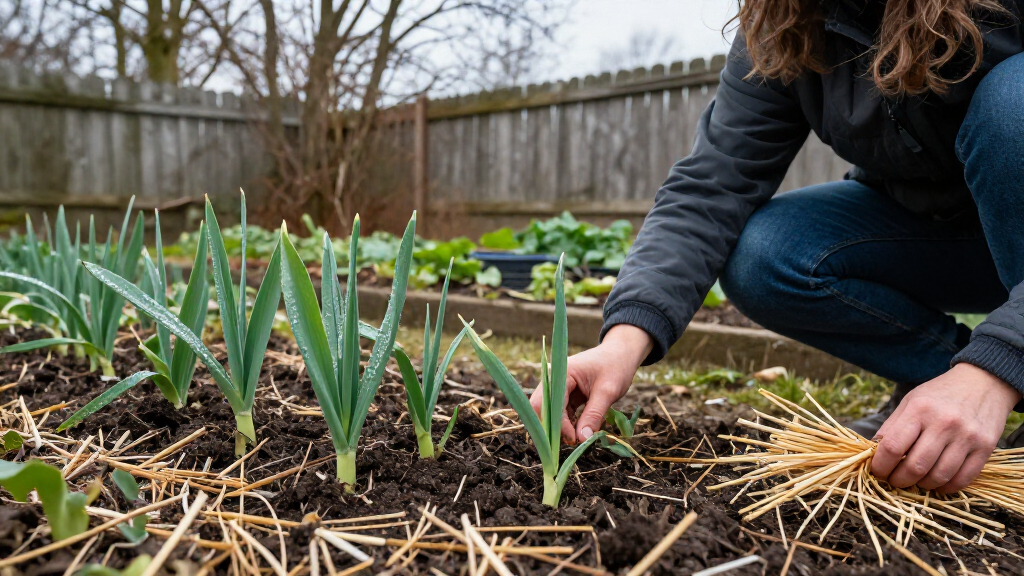
The response depends on what is happening at the soil line. A few short green tips with undisturbed soil generally call for observation and an appropriate winter-mulch plan. Several inches of foliage mean more growth is exposed to cold, but the report advises keeping leaves intact and checking that cloves remain covered. Exposed roots or a lifted clove need more attention than a green tip: when soil is thawed and workable, gardeners can gently return loose soil around them.
Cold can damage garlic foliage, but the report cites Iowa State Extension guidance that foliage killed back by cold may regrow, although losing that growth can reduce the eventual crop. The outcome depends on more than a single air-temperature reading: the length and severity of cold, plant acclimation, mulch, snow cover and conditions around the clove all matter. The report cautions against treating any one temperature as a guarantee.
Mulch recommendations vary by region. The examples in the report include Minnesota Extension’s recommendation of three to four inches of leaf or straw mulch, Iowa State’s recommendation of four to six inches of weed-free straw in November, and New Hampshire guidance to add winter mulch once the ground is frozen. Those directions are local examples, not a universal depth or schedule. Mulch should be loose, not a dense, wet mat, and should not be replaced by airtight plastic.
Protecting Roots Without Crushing Shoots
What gardeners do now can affect whether cloves stay protected through winter. Stable soil cover and moderate soil temperature swings help limit frost heaving, the upward movement that can happen as soil repeatedly freezes and thaws. Heaving may expose roots to cold and drying. Replacing cover around an exposed clove can address that risk without dismantling the whole row.
The opposite mistake is treating every green shoot as a problem that needs immediate intervention. Digging up planted cloves or pulling on shoots can disturb established roots; cutting off leaves removes growth that may persist or return after cold. Extra mulch is not automatically helpful either. In wet conditions, a flattened, saturated layer will not fix poor drainage. Local winter patterns matter: a cold, dry garden, a mild region and a wet bed do not call for identical protection.
Popular right now

Ninja Foodi 10-Quart DualZone 6-in-1 Air Fryer, Black, DZ302

Ninja Flip Toaster Oven & Air Fryer, 8-in-1, Stainless Steel, SP151

Bose QuietComfort Wireless Bluetooth Headphones with Active Noise Cancellation, Mic, USB‑C Charging, Deep Bass, 24‑Hour Battery – White Smok
As an affiliate, we earn on qualifying purchases.
Why Autumn Shoots Appear Early
Garlic is generally planted in autumn so cloves can establish roots before winter while limiting aboveground growth. A prolonged mild spell can bring shoots above ground earlier than expected, even when planting took place on a reasonable local schedule. Visible leaves alone do not reveal whether a clove is planted too shallowly or whether its roots are exposed; the soil around the plant must be checked gently.
The report draws on guidance from several extension services, including the University of New Hampshire, Iowa State, Minnesota and Oregon State. Their different mulch advice reflects regional conditions, not a single rule that applies everywhere. Planting-depth instructions also need careful reading: a stated depth may refer to the clove’s base or to soil above its tip, which are not the same measurement.
What the Green Tips Cannot Tell You
The appearance of leaves alone cannot establish whether the clove is rooted securely, planted too shallowly or damaged. The report says gardeners should check soil beside an affected plant rather than pull on the shoot or uncover the row. Whether foliage will be damaged also depends on the duration and severity of cold and on conditions such as mulch and snow cover; the source does not offer a temperature that predicts the result for every bed.
The best mulch timing and depth remain region-specific. The report provides examples from extension services but does not identify the reader’s climate, garlic variety, soil drainage or existing mulch. In a wet bed, more cover may not solve standing water; the cause and extent of any drainage problem would need to be assessed locally.
Check the Bed as Cold Approaches
When the surface has thawed and the soil is workable, look beside any plant that appears lifted or has exposed roots. Gently move aside a little mulch to check the soil line, and restore loose soil around exposed roots or a clove. Do not force a rooted clove into frozen ground, tug it out or bury its leaves under a mound.
As sustained cold approaches, compare the bed with local garlic guidance and replenish only thin or windblown cover where needed. Check again after wind or heavy rain. If the bed is already suitably mulched, a shoot showing through is not, on its own, a reason to add another layer. In wet areas, watch for standing water and saturated mulch; longer-term drainage changes may be better planned for a future planting than attempted by working frozen ground.
Key Questions
Does garlic sprouting before winter mean the crop has failed?
No. The report cites University of New Hampshire guidance saying fall shoots usually survive winter. Early foliage alone does not show that the clove or crop has failed.
Should I cut off the green garlic leaves?
Leave healthy leaves attached. The report cautions that cutting the tops or disturbing cloves is unnecessary when shoots are simply emerging early.
Should I add mulch right away?
Not automatically. Follow regional timing and depth advice, and check whether the bed already has adequate cover. Recommendations differ, including by winter conditions and local extension guidance.
What if roots or a clove are exposed?
When the soil is thawed and workable, gently restore loose soil around the exposed roots or clove. Do not pull on the shoot or force the plant into frozen ground.
Can I use plastic to cover the garlic bed?
The report advises against an airtight plastic sheet as winter protection. It says a bed still needs to drain and breathe; loose mulch, where locally recommended, is a common option.
Source: planetnatural.com