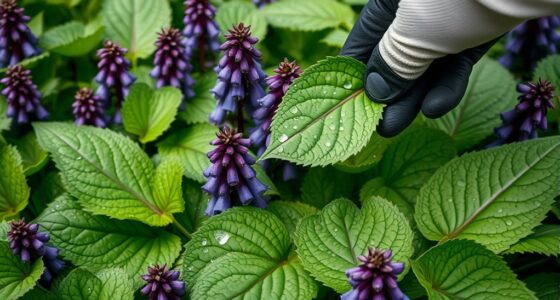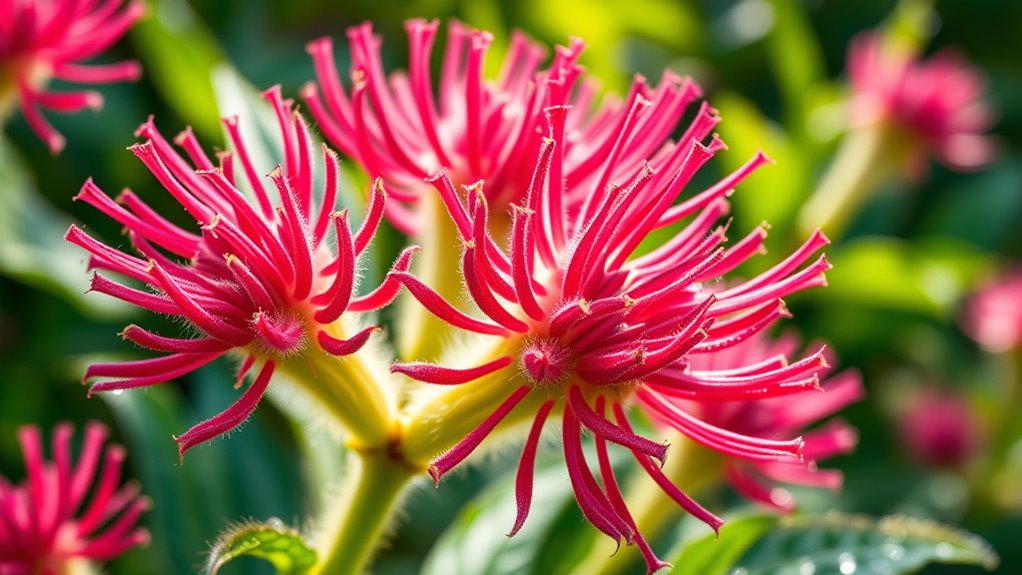

Monarda, or bee balm, is a thymol-rich herb known for its natural antimicrobial and healing qualities. You can use it to make herbal remedies like tinctures, teas, or salves that boost your immune system and support natural healing. Growing and harvesting monarda also attracts pollinators, helping your garden thrive. By exploring this plant further, you’ll discover how to incorporate its powerful medicinal benefits into your self-care routines.
Key Takeaways
- Monarda (Bee Balm) contains thymol, offering natural antimicrobial and healing properties for field remedies.
- Its leaves and flowers can be used to prepare herbal tinctures, teas, and salves for various ailments.
- Cultivating monarda supports pollinators like bees and butterflies, enhancing ecological health.
- Harvesting monarda promotes sustainable self-sufficient health practices, reducing reliance on synthetic medicines.
- Thymol-rich monarda embodies traditional herbal medicine, symbolizing resistance, renewal, and holistic healing.
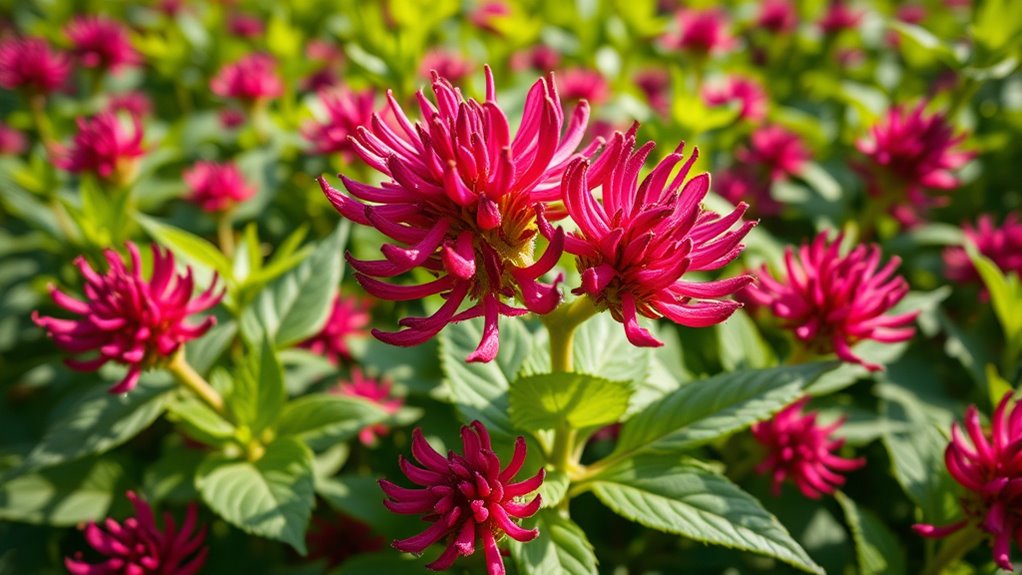
Monarda, commonly known as bee balm, has long been valued not only for its vibrant blooms but also for its medicinal properties. But beyond its beauty, this plant offers a chance to reclaim your health with herbal preparations rooted in nature’s power. You hold the key to harnessing monarda’s thymol-rich compounds, which have been cherished for centuries for their antimicrobial and healing qualities. Instead of relying solely on synthetic remedies, you can create your own herbal tinctures, teas, or salves, empowering yourself to treat ailments naturally and confidently. These preparations aren’t just healing; they’re a form of liberation from over-dependence on commercial pharmaceuticals. When you use monarda in herbal preparations, you tap into a tradition of self-sufficiency that connects you directly to the earth’s medicine cabinet. Whether you’re brewing a calming tea to soothe your nerves or making a topical salve to heal skin irritations, you control what goes into your remedies. This independence is empowering, a direct challenge to the pharmaceutical industry’s grip on health. Furthermore, planting monarda invites pollinators into your space, supporting the broader ecosystem. Its vibrant, tubular flowers attract bees, hummingbirds, and butterflies, creating a lively, thriving environment that benefits both your garden and your well-being. By cultivating this plant, you’re not just nurturing your health but also fostering a community of pollinators that sustain the natural world. This mutual relationship celebrates the cycle of life and reminds you of your role as a steward of nature’s gifts. The act of harvesting monarda’s leaves and flowers for herbal preparations also deepens your connection to the land and encourages a more sustainable lifestyle. You become a part of a movement that values natural remedies over synthetic chemicals, pushing back against the commodification of health. With each herbal infusion or tincture, you regain your autonomy, choosing herbs that work in harmony with your body. The plant’s thymol-rich content offers potent antimicrobial effects, making your herbal preparations effective against common infections. As pollinators flock to your garden, they help guarantee the ongoing health of your plants, creating a vibrant cycle of life and healing. Supporting biodiversity through cultivating monarda benefits both your garden and your health. Monarda stands as a symbol of resistance and renewal—an invitation to embrace herbal medicine and foster a harmonious relationship with nature. In doing so, you access a world of natural remedies that restore your independence and nourish your spirit, all while supporting the pollinators that keep our ecosystems thriving.
Frequently Asked Questions
Can Monarda Be Used to Treat Respiratory Infections?
Yes, you can use Monarda as a respiratory infection remedy. Its thymol-rich leaves make bee balm inhalation effective for clearing congestion and soothing irritated airways. You’re empowered to harness this natural remedy, breathing in the steam or making teas to fight respiratory infections. Don’t wait for mainstream treatments—embrace bee balm inhalation and take control of your respiratory health naturally and confidently.
Are There Any Known Allergic Reactions to Bee Balm?
You might want to watch out—just because bee balm is a natural remedy doesn’t mean you’re in the clear. Allergic sensitivities and herbal allergies can cause reactions, so it’s wise to test a small amount first. Some people experience skin irritation or respiratory issues. If you have a history of allergies, consult with a healthcare professional before embracing bee balm as your herbal ally. Stay vigilant and take control of your health journey.
How Does Monarda Compare to Other Thymol-Rich Herbs?
You’ll find that monarda stands out for its herbal potency and high thymol content compared to other thymol-rich herbs. It offers a stronger, more invigorating experience, giving you a natural boost with its antimicrobial properties. While herbs like thyme and oregano also contain thymol, monarda’s unique profile lets you harness its full potential more effectively. Embrace the freedom to choose a powerful, thymol-rich herb that energizes your remedies.
What Are the Best Harvesting Practices for Medicinal Use?
You should harvest monarda at peak flowering, usually early morning when essential oils are most potent. Cut just above the base to encourage regrowth. Dry the herb upside down in a well-ventilated, dark space to preserve thymol and aroma. Proper harvesting timing and drying techniques free your remedies from synthetic dependencies, empowering you to harness nature’s healing power directly from your garden, revealing true medicinal freedom.
Is Monarda Safe for Children and Pregnant Women?
You want to know if monarda’s safe for kids and pregnant folks? Well, herbal safety isn’t a one-size-fits-all, and dosage considerations are essential. While bee balm’s generally gentle, it’s best to consult a healthcare pro before use—especially for children and pregnant women. Don’t just blindly embrace nature’s remedies; empower yourself with knowledge and liberate your health choices wisely. Safety first, then enjoy the herbal ride!
Conclusion
Just like a bee finds its perfect blossom, you’ll discover Monarda’s healing power when you trust its natural remedies. I once met a gardener who used bee balm to soothe her skin irritation, and it worked wonders—reminding me how nature’s simple gifts can be powerful allies. Incorporate this thymol-rich herb into your remedies, and you’ll find yourself blooming with health, just like the vibrant flowers it graces. Trust in nature’s gentle strength—you’ll be glad you did.