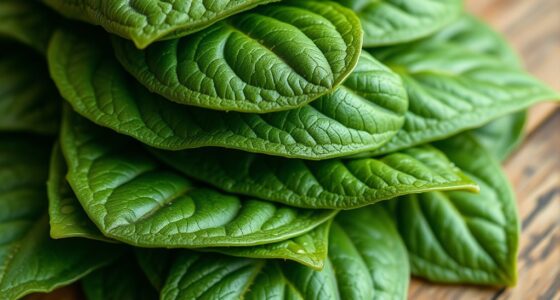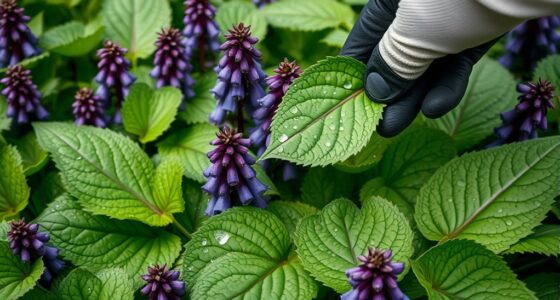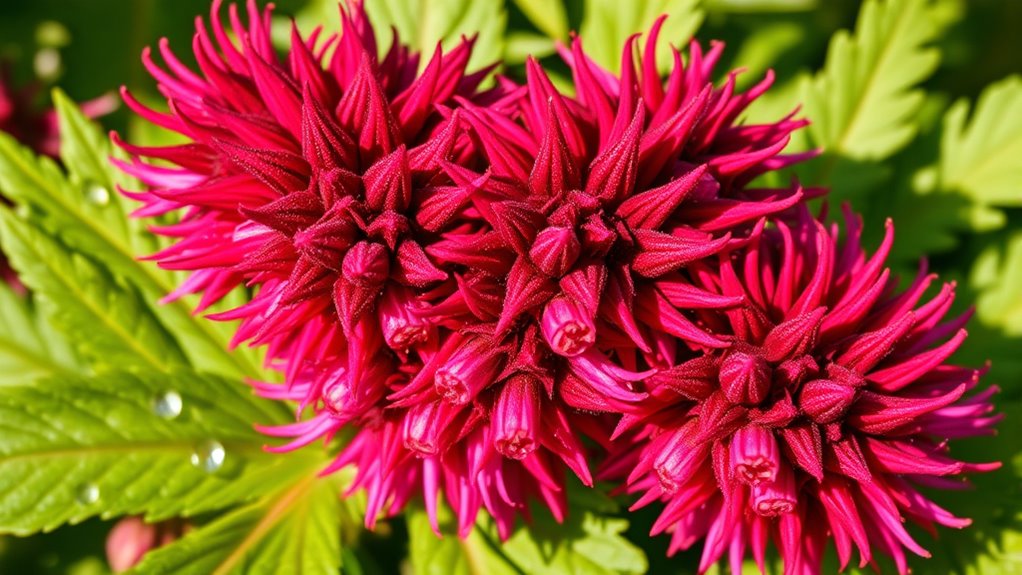
To create thymol-rich field remedies with monarda, you should harvest the leaves and flowers just before full bloom for maximum potency. Use these fresh or dried herbs to craft teas, salves, or tinctures that harness its antimicrobial and healing properties. Proper cultivation, like planting in well-drained soil and harvesting at peak times, guarantees your remedies remain potent. Continue exploring to discover how to harvest, store, and prepare monarda for effective natural treatments.
Key Takeaways
- Monarda (Bee Balm) contains thymol-rich compounds with antimicrobial and anti-inflammatory properties, ideal for natural field remedies.
- Harvest leaves and flowers at peak bloom for maximum thymol content to enhance medicinal potency.
- Cultivate in sunny, well-draining soil and prune regularly to promote robust growth and higher thymol levels.
- Dry herbs in dark, warm environments and store in airtight containers to preserve thymol and active compounds.
- Use Bee Balm in teas, salves, or infusions to support respiratory, skin, and digestive health naturally.
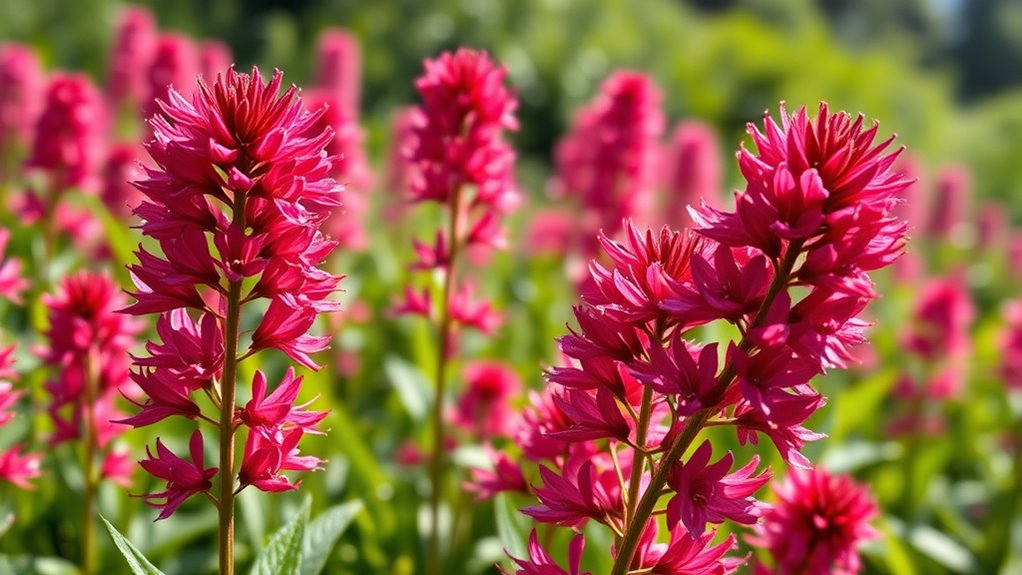
Monarda, commonly known as bee balm, has long been valued not just for its vibrant blooms but also for its medicinal properties. If you’re seeking natural remedies that empower you to take control of your health, this plant offers potent solutions. Its leaves and flowers contain thymol-rich compounds known for their antimicrobial and healing qualities. By harnessing bee balm’s medicinal properties, you can craft your own herbal remedies that support your well-being and foster independence from commercial pharmaceuticals.
To access these benefits, understanding cultivation tips is essential. You need to grow bee balm in a way that maximizes its medicinal potency. Choose a sunny location with well-draining soil, as this encourages healthy growth and robust thymol content. Regular watering keeps the plant vigorous, but avoid overwatering to prevent root rot. Bee balm is quite hardy and thrives with minimal fuss, making it perfect for those who want a self-sufficient approach to herbal medicine. Deadheading spent blooms encourages continuous flowering, so you can harvest leaves and flowers throughout the season for your remedies. During the growing season, prune back the plant to promote bushier growth, which enhances overall yield and medicinal quality.
Choose sunny, well-draining spots; prune and deadhead regularly for maximum bee balm medicinal potency.
Harvest your bee balm at peak potency—just before it fully blooms—when the leaves and flowers are most concentrated with medicinal compounds. Dry your harvest in a warm, dark place to preserve thymol and other active ingredients. Proper storage is vital to maintain potency, so keep your dried herbs in airtight containers away from light and moisture. Understanding plant cultivation tips is essential to ensure your herbs retain their medicinal strength over time. By mastering these cultivation tips, you guarantee your remedies are potent, effective, and truly your own.
Using bee balm in your medicinal repertoire means more than just brewing teas or making salves; it’s about reclaiming your health with nature’s gifts. The thymol-rich compounds in bee balm offer antimicrobial and anti-inflammatory benefits, making it a versatile remedy for colds, respiratory issues, skin irritations, and digestive discomfort. When you cultivate and prepare bee balm yourself, you eliminate reliance on commercial products, empowering you to be the healer in your own life. This plant’s natural medicinal properties can become a cornerstone of your self-care routine, helping you feel more liberated and in control of your health choices.
Ultimately, growing bee balm and understanding its medicinal properties allow you to connect deeply with nature’s healing power. With proper cultivation tips, you can guarantee your plants remain potent and ready whenever you need them. This journey of self-sufficiency not only enhances your physical health but also restores a sense of independence and harmony with the natural world.
Frequently Asked Questions
Can Monarda Be Used to Treat Respiratory Infections?
Yes, you can use monarda to support respiratory health and fight infections. Its natural thymol-rich compounds act as herbal remedies that help soothe coughs, clear congestion, and bolster your immune response. Incorporate fresh or dried monarda leaves into teas or infusions to harness its healing power. Embrace this herbal remedy to take charge of your respiratory wellness and liberate yourself from persistent infections naturally and effectively.
Is Monarda Safe for Pets and Children?
You should be cautious with Monarda around pets and children, as pet safety and children’s health are paramount. While it’s a natural remedy, ingestion or contact can cause allergic reactions or toxicity in young kids and animals. To stay safe, always consult with a healthcare professional or veterinarian before using Monarda in your home. Protect your loved ones by choosing gentle, proven remedies and keeping this herb out of their reach.
How Long Does It Take to See Remedies’ Effects?
You’ll typically see the effects of remedies within a few hours to a couple of days, depending on the issue. The remedy timeline varies, but patience pays off as you experience relief. Effectiveness duration can last from several hours to a few days, so stay consistent with the use. By understanding this, you take control and can confidently harness nature’s power for your well-being, enjoying true liberation from discomfort.
Are There Any Known Allergies to Monarda?
You should be aware that some people experience allergenic reactions or skin sensitivities when using monarda. It’s wise to do a patch test first to check for any adverse effects. If you notice redness, itching, or swelling, discontinue use immediately. Everyone’s skin reacts differently, so stay vigilant and listen to your body. Embrace your freedom from restrictions by staying informed and cautious with new remedies.
Can Monarda Be Cultivated Indoors Successfully?
Yes, you can successfully cultivate monarda indoors. To thrive, follow simple steps: provide bright, indirect light, keep the soil consistently moist, and guarantee good air circulation. Indoor cultivation lets you liberate your garden from the outdoors, allowing plant growth requirements to be met with minimal fuss. With a little attention, your monarda will flourish, filling your space with its fragrant, vibrant beauty and empowering your gardening spirit to grow freely.
Conclusion
Next time you see monarda in a field, remember it’s more than just pretty. Its thymol-rich leaves can boost your immune system and soothe ailments naturally. Did you know that monarda has been used medicinally for centuries across North America? With its powerful properties, you can harness this wild herb for simple, effective remedies. So, why not incorporate some into your herbal toolkit? Nature’s healing secrets are just a field away!