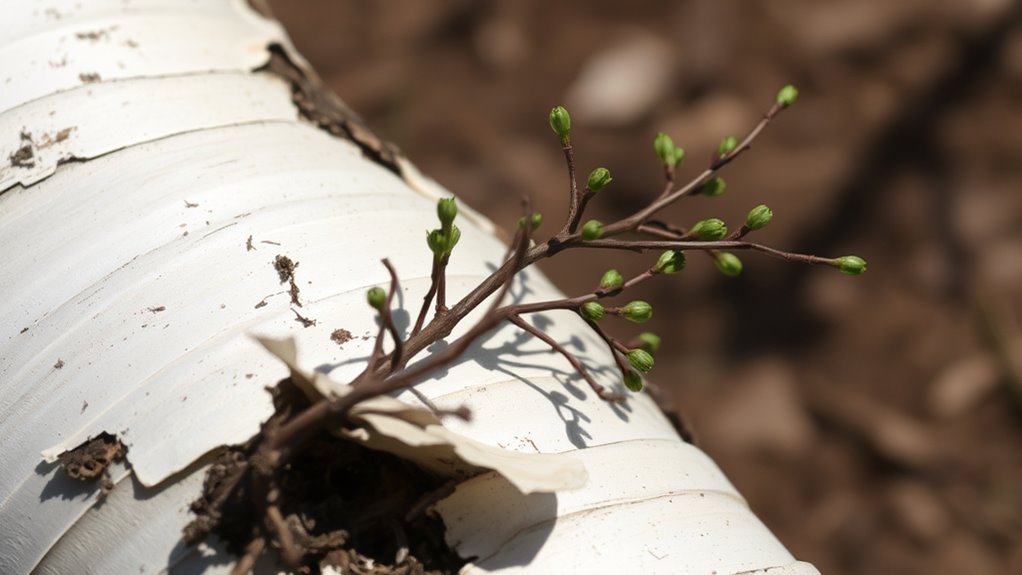

Birch bark and twigs naturally contain salicylates, compounds known for their pain-relieving and anti-inflammatory properties. Traditionally, people harvested bark and twigs carefully, then boiled or steamed them to extract these beneficial compounds for teas, poultices, or salves. Modern techniques improve extraction efficiency, allowing for consistent remedies like creams or capsules. By understanding these natural sources, you can explore simple ways to harness their healing power—more details await your discovery.
Key Takeaways
- Birch bark and twigs naturally contain salicylates, which have pain-relieving and anti-inflammatory properties.
- Indigenous and herbal traditions have historically extracted salicylates through boiling and steaming plant parts.
- Modern methods utilize steam distillation and cold-pressing to obtain concentrated salicylate extracts.
- These extracts are incorporated into topical remedies like creams and infusions for natural pain relief.
- Combining traditional knowledge with scientific techniques enhances effective, sustainable use of birch-derived salicylates.
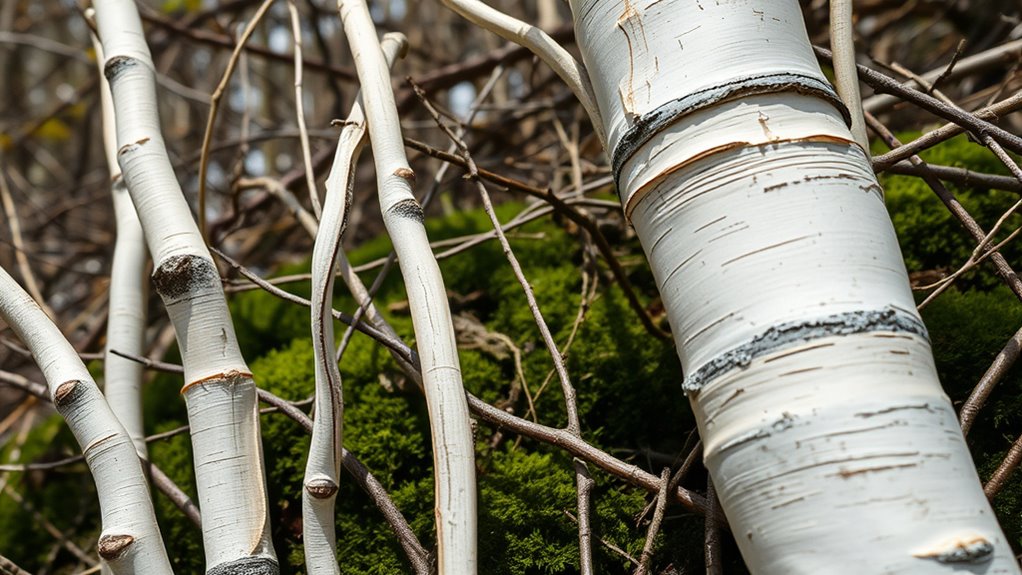
Birch bark and twigs contain natural compounds called salicylates, which are known for their pain-relieving and anti-inflammatory properties. This ancient gift from nature offers you a pathway to freedom from synthetic drugs and their side effects. Throughout history, people have harnessed these plant parts through traditional preparation methods, transforming raw bark and twigs into potent remedies. By steaming, boiling, or simmering, they extracted salicylates to create salve, poultices, or infusions. These methods reflect a deep understanding of nature’s pharmacy—simple yet effective. Today, these traditional preparations continue to inspire modern applications, blending ancient wisdom with contemporary science.
Birch bark and twigs naturally contain salicylates, offering pain relief through traditional methods rooted in nature’s pharmacy.
In the past, indigenous cultures and herbalists relied on straightforward techniques: peeling bark carefully, drying twigs, and then processing them into teas or topical pastes. These methods were accessible, sustainable, and rooted in the direct relationship humans had with the land. They understood that the pain-relieving and anti-inflammatory effects of salicylates could be harnessed without the need for harsh chemicals or pharmaceuticals. That knowledge remains relevant as we seek to reclaim control over our health and well-being. You can still tap into this tradition by experimenting with simple recipes—boiling birch bark to make a tea that eases discomfort or applying crushed twigs as a poultice to inflamed skin. Additionally, understanding the nutritional benefits of plant compounds can enhance your approach to natural healing.
Modern applications have taken these age-old practices further, incorporating scientific research that confirms the efficacy of salicylates. Today’s herbalists and natural health advocates utilize extraction techniques that maximize salicylate content, such as steam distillation or cold-pressing, to produce concentrated oils and tinctures. These products can be added to creams, gels, or capsules, offering targeted relief with fewer risks than synthetic NSAIDs. The beauty of these modern methods is precision—they allow you to harness the healing power of birch in a controlled, consistent manner, aligning with a desire for independence from pharmaceutical chains. You’re empowered to integrate these plant-based solutions into your wellness routine, knowing they’re rooted in centuries of tradition but enhanced by today’s scientific understanding.
Whether you choose to prepare a simple decoction or opt for a professionally extracted salicylate supplement, you’re actively participating in a movement that values natural healing and self-reliance. The legacy of birch bark and twigs lives on, proving that ancient traditions can evolve into innovative therapies. By embracing these natural compounds, you’re reclaiming your health, forging a path toward liberation from dependency on drugs that often come with unwanted side effects. The power to heal is in your hands—grounded in tradition, elevated by science, and driven by your desire for true freedom.
Frequently Asked Questions
Can Birch Bark Salicylates Cause Allergic Reactions?
Yes, birch bark salicylates can cause allergic reactions if you’re sensitive, especially if you have birch bark allergies or salicylate sensitivity. You might experience symptoms like skin irritation, rashes, or respiratory issues. If you’re aware of these sensitivities, it’s best to avoid contact with birch bark or products containing its salicylates. Knowing your allergies helps you stay free and empowered, preventing unwanted reactions and enjoying your life fully.
Are Salicylates in Birch Bark Safe for Children?
Salicylates in birch bark aren’t typically safe for children, especially when used as herbal remedies. You should prioritize children’s safety by avoiding exposure to salicylates unless a healthcare professional approves. While natural remedies can feel liberating, it’s essential to be cautious and informed. Always consult a pediatrician before using herbal products with salicylates on or around children, ensuring their well-being and safety come first.
How Do Salicylates Affect Individuals With Aspirin Sensitivity?
If you’re aspirin-sensitive, salicylates can trigger reactions because they affect your salicylate metabolism. You might experience symptoms like hives, nasal congestion, or asthma. To manage your aspirin allergy, avoid products with high salicylate levels and consult your doctor for safe alternatives. Understanding how salicylates impact your body helps you take control, freeing you from unpredictable reactions and empowering you with better allergy management.
Can Salicylates Be Extracted for Medicinal Use?
Imagine a secret garden where salicylates are the treasure you seek. Yes, you can extract these natural compounds for medicinal applications, freeing you from synthetic drugs. Through careful natural extraction, you harness the power of birch bark and twigs, transforming nature’s gifts into remedies. Embrace this liberation, and let the plant’s bounty empower your health journey, unshackled from chemical dependencies and artificial boundaries.
Are There Environmental Concerns Related to Harvesting Birch Bark?
Yes, harvesting birch bark can raise environmental concerns if not done sustainably. You should focus on sustainable harvesting practices to minimize ecosystem impact, ensuring you don’t damage the tree or disturb surrounding flora and fauna. Overharvesting can weaken trees and disrupt local ecosystems. By being mindful and responsible, you can enjoy the benefits of birch bark without compromising environmental health, helping you preserve nature’s balance while gaining medicinal resources.
Conclusion
You now know that birch bark and twigs contain salicylates, nature’s own pain relievers. While they offer a natural remedy in the wild, remember they’re not a substitute for medical advice. The delicate balance between healing and harm lies in understanding these compounds. So, embrace the beauty of nature’s pharmacy, but stay cautious—sometimes, the simplest solutions carry the greatest risks. Nature’s gifts are powerful; use them wisely and respectfully.