When harvesting elderflowers, you should carefully snip the fully open clusters in early summer for the best aroma, avoiding damage to the plant. For elderberries, wait until late summer when the berries turn black or deep purple, then gently pick or shake the ripe clusters, wearing gloves if needed. These different actions reflect their unique uses and cultural significance—continue exploring to discover how these practices honor tradition and maximize their benefits.
Key Takeaways
- Elderflowers are harvested in early summer at full bloom for infusions and syrups, while elderberries are picked in late summer once fully ripe for culinary and medicinal uses.
- Harvesting elderflowers involves snipping clusters before they fade, ensuring maximum aroma; elderberries require gentle picking or shaking after berries turn black or purple.
- Elderflowers are used primarily for fragrant infusions, teas, and syrups, whereas elderberries are valued for their health benefits and cooking applications.
- Proper preparation of elderberries includes removing unripe berries to avoid toxicity, while elderflowers are used fresh or dried without extensive processing.
- Respectful harvesting practices connect to cultural symbols of renewal and protection, emphasizing mindful collection appropriate to each plant’s stage.
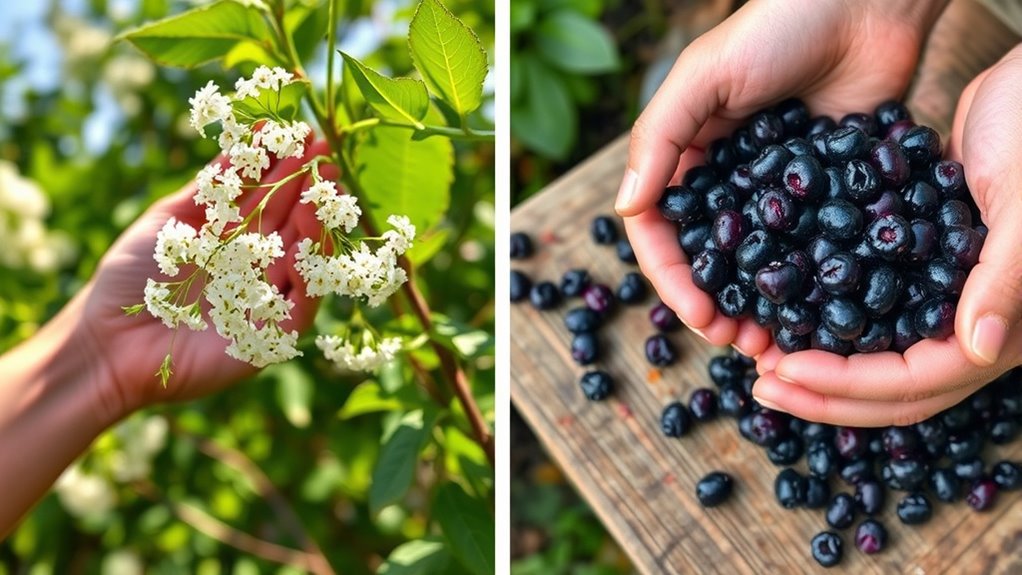
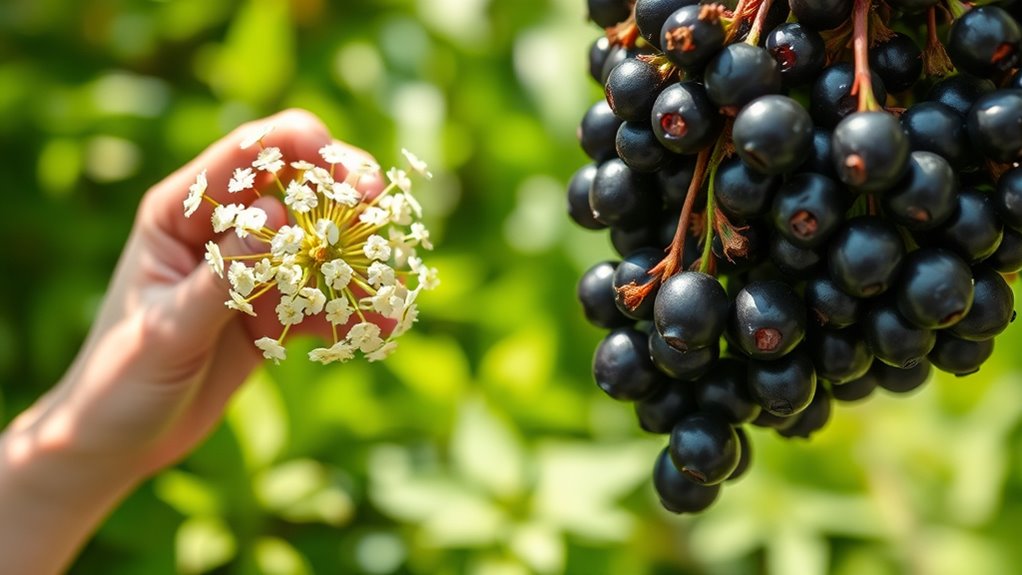
When choosing between elderflower and elderberry, understanding their differences is essential, as each offers unique benefits and uses. You have the power to harness these plants’ gifts, but knowing how to harvest and appreciate their cultural significance is key to revealing their full potential. Elderflowers bloom in early summer, their delicate clusters radiating a sweet, floral aroma that signals a time of abundance. Harvest your elderflowers carefully, grasping the clusters gently to avoid damaging the plant, and snip them with clean scissors or shears. Timing matters: pick them when the flowers are fully open, fragrant, and before they start to fade or turn brown. This guarantees you capture the peak of their aromatic essence, perfect for infusions, syrups, or teas. Elderflowers are more than just pretty blossoms—they hold a deep cultural significance rooted in folklore and tradition. Across many cultures, they symbolize renewal, protection, and community. In some regions, elderflowers are used in sacred rituals, believed to invite good fortune and ward off evil spirits. By harvesting mindfully and respectfully, you connect with this cultural legacy, honoring the plant’s role in human history and spiritual practices.
Elderberries, on the other hand, ripen later in summer, their dark, plump berries hanging in dense clusters that beckon for harvest. The key to harvesting elderberries lies in patience and precision. Wait until the berries are fully black or deep purple—any earlier, and they won’t have developed their full flavor, or could be toxic if unripe. Use gloves if you’re sensitive to the plant’s sap, which can cause skin irritation. Gently pick the berries, or shake the cluster into a container, ensuring you don’t damage the branches. Proper harvesting techniques involve removing only ripe berries, leaving the unripe ones behind to continue maturing naturally. Elderberries are celebrated for their health benefits, especially their immune-boosting properties, but they also carry a rich cultural significance. They’ve been used for centuries in folk medicine, culinary traditions, and even in rituals for protection and vitality. When you harvest elderberries, you’re participating in a centuries-old tradition of using the plant’s potent berries to nourish, heal, and connect with community roots.
Both elderflowers and elderberries serve as symbols of nature’s bounty, but their harvest and cultural meanings differ. Embrace these differences, and you’ll not only gather the plants’ fruits and blossoms with skill but also honor the ancient stories woven into their existence. This knowledge empowers you to use elder plants consciously, respecting their history and unlocking their true potential in your quest for liberation and vitality.
Frequently Asked Questions
Are Elderflower and Elderberry Safe for Children?
You should be cautious with elderflower and elderberry around children. Elderflower is generally safe when prepared correctly, but watch for an elderflower allergy. Elderberry can cause serious issues if overdosed, leading to symptoms like nausea or vomiting. Always consult a healthcare professional before giving these to kids, and guarantee proper preparation. Avoid any risky consumption to keep your children safe and free from potential allergic reactions or overdose effects.
Can Elderflower and Elderberry Be Used Interchangeably in Recipes?
You can’t use elderflower and elderberry interchangeably in recipes, as their flavor profiles are quite distinct. Elderflower offers a floral, delicate aroma perfect for beverages and desserts, while elderberry provides a tart, berry flavor ideal for jams and syrups. With elderberries containing natural sugars and antioxidants, they’re best for hearty, warming dishes. Embrace their unique culinary uses and let your taste buds explore their individual charm.
What Are the Potential Side Effects of Elderflower and Elderberry?
You should be aware that elderflower and elderberry can cause allergic reactions in some people, leading to symptoms like itching or swelling. Toxicity concerns also exist if you consume unripe berries or improperly prepared parts, which can cause nausea or vomiting. To stay safe and enjoy their benefits, always use properly prepared elderflower and elderberry products and watch for any allergic responses.
How Do Harvesting Times Differ for Elderflower and Elderberry?
You should harvest elderflowers in late spring to early summer, when the blooms are fully open and fragrant, typically around May or June, depending on your location’s seasonal variations. For elderberries, wait until late summer to early fall, usually August or September, when the berries are deep purple or black. Timing is key to guarantee ideal flavor and medicinal benefits, so stay attuned to your local climate and plant signals.
Are There Any Known Drug Interactions With Elderflower or Elderberry?
Like a double-edged sword, elderflower and elderberry can cut through health issues, but you must watch for drug interactions to avoid unintended harm. While generally safe, they may interfere with medications like diuretics or immunosuppressants, risking herbal safety. You’re the captain of your health voyage, so consult your healthcare provider before adding these herbs to your routine. Empower yourself, and navigate your herbal journey with knowledge and caution.
Conclusion
Just like choosing the right tool for a job, knowing when to use elderflower or elderberry makes all the difference. I once made a syrup with elderflower for a summer gathering, and it brightened everyone’s day—its delicate aroma is perfect for soothing. Meanwhile, elderberry’s immune-boosting power comes from its rich antioxidants. Remember, each has its unique role; treat them like different ingredients in your culinary toolkit, and you’ll always create something truly beneficial.