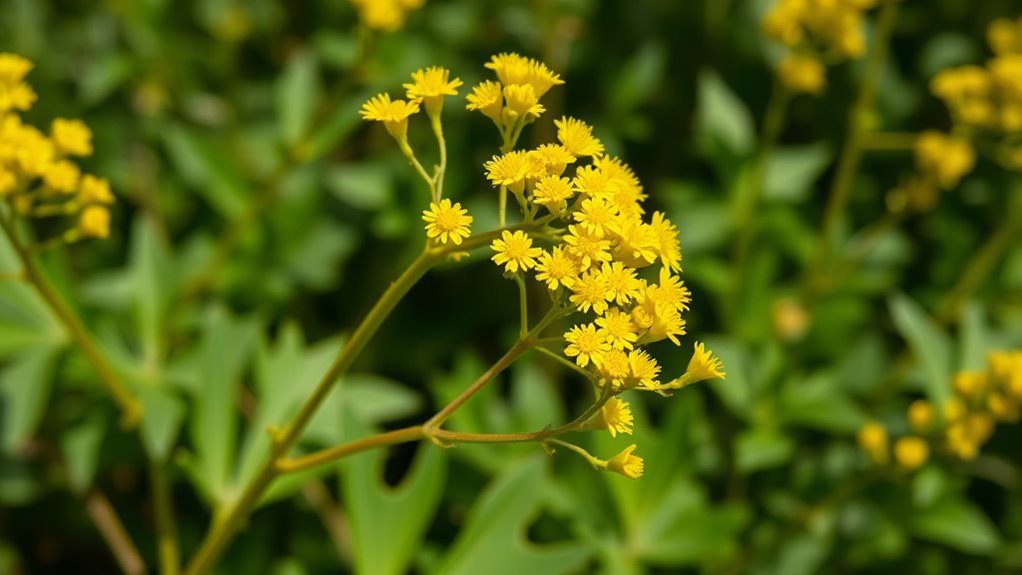
Many believe goldenrod causes allergy symptoms, but this is a myth. In fact, goldenrod produces heavy, insect-pollinated flowers that aren’t airborne, unlike ragweed, which triggers allergies. Traditionally, it’s valued for its anti-inflammatory, diuretic, and wound-healing properties. When properly identified and used, goldenrod is safe and beneficial. By understanding its true nature, you can confidently explore its herbal uses—more insights await if you want to find out why this herb is so misunderstood.
Key Takeaways
- Goldenrod’s heavy, insect-pollinated flowers produce minimal airborne pollen, making it unlikely to cause allergies.
- The allergy myth stems from confusion with ragweed, which blooms simultaneously but has wind-pollinated, airborne pollen.
- Traditionally, goldenrod has been used for anti-inflammatory, diuretic, and wound-healing purposes, with a well-established safety profile.
- Proper identification and sourcing are important to ensure safe use, though most individuals experience no allergic reactions.
- Understanding goldenrod’s pollination and historical uses helps dispel myths and supports its safe incorporation into herbal practices.
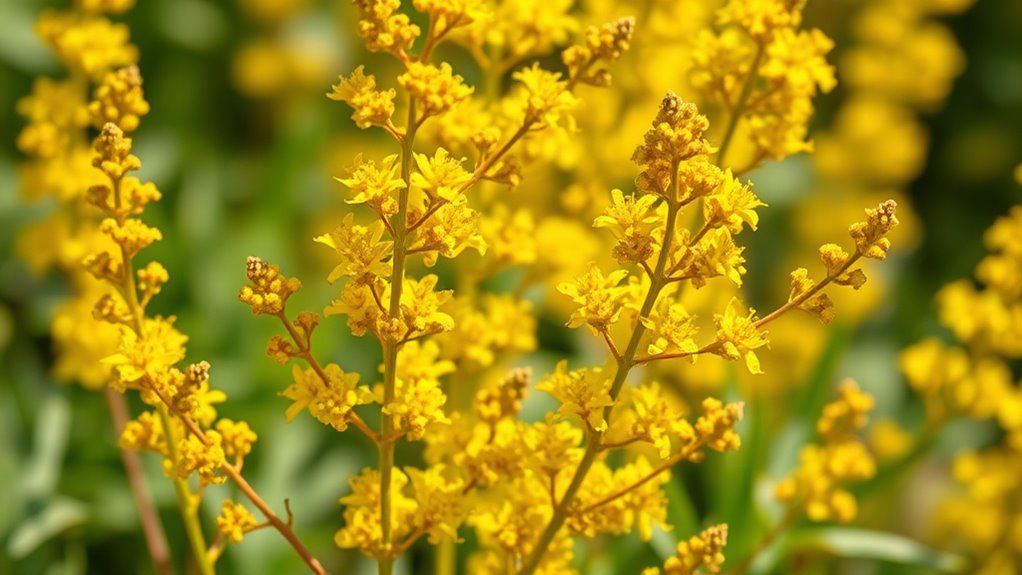
Many people believe that goldenrod causes allergies, but this is a common misconception. If you’ve been avoiding it out of fear, it’s time to reconsider. The idea that goldenrod triggers allergy symptoms mainly stems from confusion with ragweed, which blooms around the same time and produces potent pollen. Unlike ragweed, goldenrod produces heavy, sticky flowers that are primarily pollinated by insects, not the wind. This means its pollen isn’t airborne in significant amounts, making it less likely to cause pollen sensitivity or allergic reactions. So, if you’re concerned about herbal safety and allergic responses, know that goldenrod’s role in pollen sensitivity is minimal, and it’s generally safe for most people.
Goldenrod’s pollen is insect-pollinated, making it unlikely to trigger allergies like ragweed.
Your desire for liberation from unfounded fears should guide you to understand that goldenrod’s traditional uses are rooted in herbal medicine, not allergy triggers. Historically, this plant has been valued for its anti-inflammatory, diuretic, and wound-healing properties. Many herbalists have relied on it to support urinary health and soothe respiratory issues, not to provoke allergic responses. Its safety profile is well-documented when used appropriately, which means you can incorporate it into your herbal arsenal without fear. It’s time to question the myth that has kept you from exploring its benefits and to embrace the truth backed by herbal safety research.
If you’re considering goldenrod for medicinal purposes, remember that proper identification and preparation are key. While it’s generally safe, some individuals with pollen sensitivities might experience mild reactions—not because of goldenrod itself, but due to rare cross-reactions or individual sensitivities. However, this is uncommon. Most people can enjoy its benefits without concern. Understanding pollen mechanisms and sourcing goldenrod from reputable suppliers to ensure purity and avoid contamination are important steps to safely incorporate this plant into your health routine. Doing so empowers you to integrate this plant into your health routine confidently, shedding fears rooted in misinformation.
In embracing goldenrod’s traditional uses, you reclaim your right to natural remedies that have stood the test of time. The myth that it causes allergies is just that—a myth. With knowledge about pollen sensitivity and herbal safety, you can make informed choices that support your well-being. Stop letting unfounded fears hold you back from exploring the natural healing potential of goldenrod. Instead, step forward with clarity, confidence, and a renewed sense of liberation, knowing that this humble plant can be a safe and effective ally in your health journey.
Frequently Asked Questions
Is Goldenrod Safe for Children to Use Medicinally?
Goldenrod can be safe for children if used properly, but you should always consider children’s dosage and pediatric safety. Consult a healthcare professional before giving goldenrod to kids, as the right dosage varies by age and weight. While it’s a natural remedy, it’s important to guarantee safety. Never use it as a substitute for medical advice, and always follow expert recommendations to protect your child’s health.
Can Goldenrod Interfere With Any Medications?
Think of goldenrod as a double-edged sword—you might find it beneficial, but it can also interfere with medications. Yes, goldenrod can cause drug interactions, especially with blood thinners and diuretics. Be mindful of dosage considerations to avoid unintended effects. If you’re aiming for natural healing without the chains of side effects, consult your healthcare provider before incorporating goldenrod into your routine. Freedom begins with informed choices.
Are There Any Known Side Effects of Goldenrod?
Goldenrod is generally safe for most people, but you should be aware of potential allergic reactions. Some individuals might experience skin irritation or respiratory issues, especially if they’re allergic to plants in the Asteraceae family. To guarantee Goldenrod safety, start with small doses and monitor your response. If you notice any allergic reactions, discontinue use immediately and consult your healthcare provider. Your health freedom starts with safe, informed choices.
How Do Traditional Uses of Goldenrod Vary Across Cultures?
Imagine goldenrod as a bridge connecting diverse worlds—each culture’s herbal tradition shapes its meaning. Across regions, it symbolizes healing, vitality, and resilience, woven into regional medicinal practices from North America to Europe. You can liberate yourself by exploring these cultural herbal traditions, discovering how goldenrod’s uses vary—from soothing inflammation to supporting urinary health—empowering you to embrace nature’s wisdom and craft your own path to wellness.
What Are the Best Methods for Harvesting Goldenrod for Herbal Remedies?
To harvest goldenrod for herbal remedies, you should use careful harvesting techniques that prioritize sustainable collection. Pick healthy, vibrant stems just as the flowers bloom, avoiding overharvesting from a single plant. Use sharp scissors or pruning shears to trim the stems, leaving enough foliage for the plant to thrive. Always harvest responsibly, respecting nature’s cycles and ensuring goldenrod remains abundant for future generations to enjoy and benefit from.
Conclusion
Despite the common myth, goldenrod isn’t a major allergen. Imagine Sarah, who’s avoided it for years, only to discover her allergies stem from other plants. Once she tried goldenrod tea, she felt no sneezing or itchy eyes. If you’re hesitant, try a small amount first. Remember, many traditional uses, like treating wounds, have been valued for centuries. Don’t let the allergy myth keep you from exploring goldenrod’s natural benefits—your body might thank you.