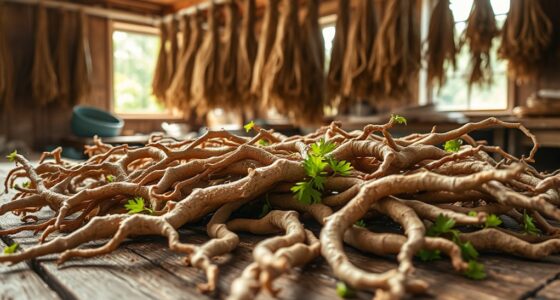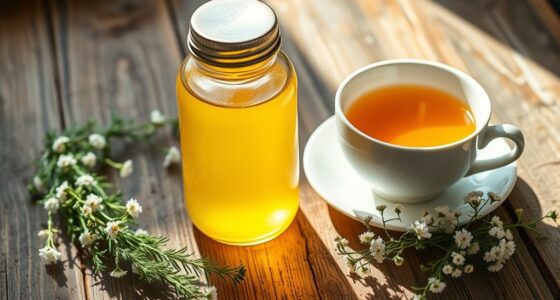

You can see how mullein earned its place in herbal history through centuries of traditional use across cultures. It was valued for treating respiratory issues, skin problems, and even for spiritual protection. People prepared teas, poultices, and tinctures, trusting in its healing power. Modern science confirms many of these benefits, showing its chemical compounds contribute to its healing effects. If you’re curious, there’s more to discover about this revered plant’s rich legacy.

Get garden gear delivered free with Prime
- Fast, free delivery on millions of items
- Prime Video, Amazon Music and more included
- Member-only deals all year
Key Takeaways
- Mullein has been used for centuries across cultures for respiratory and skin ailments, establishing its medicinal reputation.
- Its spiritual significance and use in rituals elevated its status beyond just medicinal applications.
- Traditional preparations like teas and poultices demonstrated effective healing, reinforcing its herbal value.
- Scientific studies confirmed active compounds, validating its long-standing traditional claims.
- Its continued use in modern herbal remedies preserves its historical prominence in natural healing.
Throughout history, mullein has been valued as a versatile medicinal herb, prized for its healing properties and spiritual significance. You might find it fascinating that this plant has been used for centuries across different cultures, primarily for its medicinal properties and traditional uses. People have relied on mullein to soothe respiratory issues, treat infections, and ease inflammation, making it a staple in herbal medicine cabinets long before modern pharmaceuticals emerged.
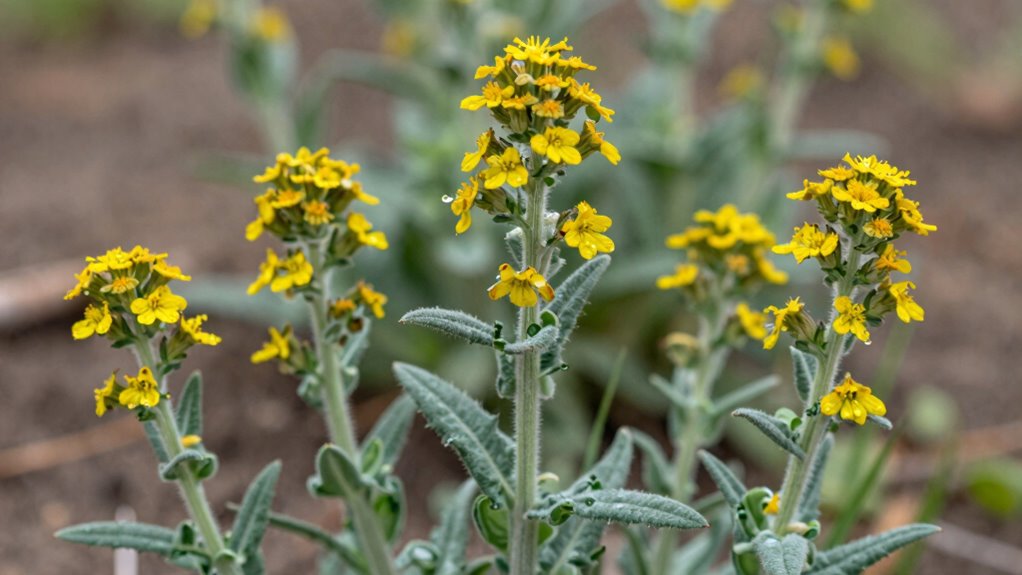
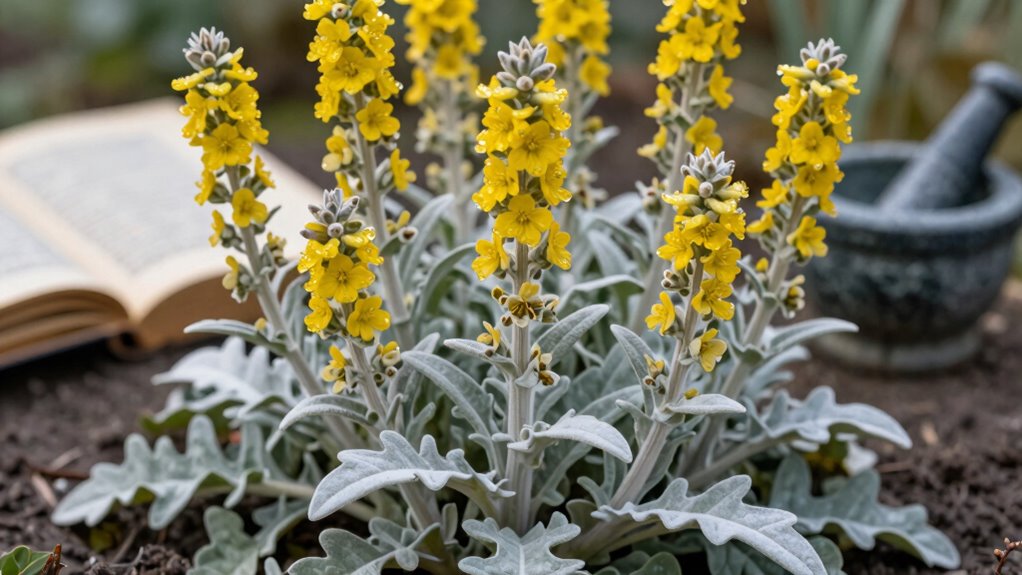
The plant’s tall, fuzzy leaves and bright yellow flowers made it easy to identify, and early herbalists recognized its potential. You’ll discover that traditional uses of mullein often involved making teas, tinctures, or poultices from its leaves and flowers. These preparations were used to alleviate coughs, bronchitis, and asthma, thanks to the plant’s natural expectorant and anti-inflammatory qualities. Its soothing effects on mucous membranes earned it a reputation as a go-to remedy for respiratory ailments. People also used mullein externally to treat skin irritations, wounds, and boils, believing it promoted healing and prevented infection. Modern herbal research supports these traditional uses, highlighting its medicinal properties.
Historically, mullein’s medicinal properties weren’t just limited to respiratory health. Folk medicine often employed it for digestive issues, such as indigestion and diarrhea, because of its mild laxative and anti-spasmodic effects. Its spiritual significance was equally notable; some cultures regarded mullein as a sacred plant, using it in rituals and ceremonies to ward off evil spirits or bring protection and good luck. These traditional uses reflected a holistic approach to health, blending physical healing with spiritual well-being. Additionally, some communities used mullein’s traditional preparations to enhance their spiritual practices, emphasizing its cultural importance. Modern research has also explored the plant’s potential therapeutic benefits, further reinforcing its traditional value.
As centuries passed, herbal healers and herbalists documented mullein’s uses, passing down knowledge through generations. Its reputation grew, and scientific studies later confirmed many of the traditional claims. Researchers identified compounds like saponins, flavonoids, and mucilage, which contribute to its medicinal properties. These discoveries validated centuries of traditional uses, solidifying mullein’s place in herbal history. It’s remarkable how modern science continues to uncover new insights into this ancient remedy.
Today, you can still find mullein in herbal remedies, teas, and supplements, honoring its long-standing role in natural healing. Its rich history of traditional uses and proven medicinal properties make it a beloved herb among herbalists and health enthusiasts alike. Mullein’s journey from a sacred, medicinal plant to a modern herbal remedy highlights how nature’s gifts, long recognized by ancient cultures, continue to serve and heal us today.
mullein tea for respiratory health
As an affiliate, we earn on qualifying purchases.
As an affiliate, we earn on qualifying purchases.
Frequently Asked Questions
What Are the Traditional Preparations of Mullein in Various Cultures?
You can prepare mullein through traditional decoctions by steeping dried leaves or flowers in hot water, creating a soothing tea for respiratory relief. In various cultures, people make cultural infusions by soaking mullein in oil or alcohol to create tinctures or poultices. These methods have been passed down for generations, highlighting mullein’s healing properties and its enduring role in herbal medicine across different traditions.
How Has Modern Medicine Validated Mullein’s Health Benefits?
You might find it intriguing that modern medicine validates mullein’s health benefits through scientific studies, revealing herbal synergy with its traditional uses. Researchers confirm that mullein’s compounds soothe respiratory issues, aligning with traditional dosing practices. This coincidence of ancient wisdom and scientific evidence highlights how mullein genuinely supports lung health. As a result, healthcare providers now recommend mullein as a complementary treatment, bridging herbal tradition with contemporary medicine for respiratory wellness.
Are There Any Known Side Effects or Contraindications for Mullein?
You should be aware of some toxicity concerns and allergy risks with mullein. While generally safe, it can cause allergic reactions in sensitive individuals, especially those allergic to plants like ragweed. There’s limited evidence of toxicity, but avoid using large amounts or long-term without medical advice. Always check for potential interactions with medications, and consult a healthcare professional if you’re pregnant, nursing, or have respiratory issues.
Can Mullein Be Cultivated for Commercial Herbal Use?
Yes, you can cultivate mullein for commercial herbal use. Focus on herbal cultivation techniques that promote healthy growth, like well-drained soil and ample sunlight. To guarantee crop sustainability, practice crop rotation and avoid overharvesting. Mullein adapts well to various environments, making it a viable choice for herbal farmers. Proper management helps maintain its medicinal qualities while supporting ecological balance, making it a sustainable and profitable crop.
What Are the Differences Between Wild and Cultivated Mullein?
You’re getting the scoop on wild versus cultivated mullein. Wild mullein grows naturally, offering a hardy, robust plant with potentially more variability in quality. Cultivated mullein, on the other hand, is grown intentionally through wild cultivation methods, often resulting in more uniform, high-quality herbal harvesting. The main difference lies in control—cultivation allows you to manage growing conditions, while wild harvesting relies on nature’s schedule and environment.
Conclusion
As you reflect on mullein’s journey through herbal history, imagine its gentle presence as a quiet guardian, softly whispering tales of healing through the ages. Its delicate leaves and velvety flowers have quietly woven themselves into the fabric of traditional remedies, offering comfort like a warm breeze on a cool day. In embracing mullein, you invite a timeless whisper of nature’s caring touch, subtly reminding you of the gentle power that resides in the earth’s quietest gifts.
Halloween Picks
halloween
As an affiliate, we earn on qualifying purchases.