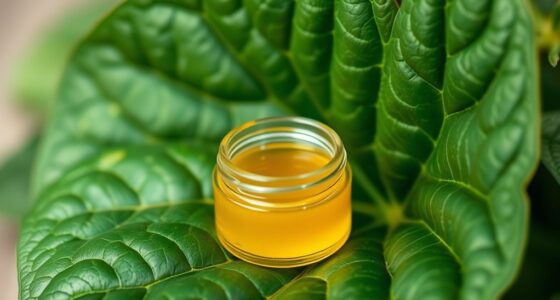
To use mullein flowers and leaves for ear oil and respiratory tea, start by identifying the plant’s velvety leaves and tall flower spikes. Prepare a soothing tea by steeping dried leaves in hot water for 10-15 minutes to help clear mucus and ease breathing. For ear health, infuse dried flowers in olive or almond oil, then apply a few drops to reduce inflammation and discomfort. Continue exploring how these natural remedies can support your wellness journey.
Key Takeaways
- Mullein leaves are used to prepare soothing respiratory tea by steeping dried leaves in hot water.
- Mullein flowers are infused in oil to create ear oil that alleviates earaches and inflammation.
- Proper identification of mullein’s velvety leaves and tall flower spikes ensures safe harvesting.
- Mullein herbal remedies support respiratory health and ear care naturally, reducing reliance on synthetic medications.
- Making mullein-based tea and ear oil empowers self-care and promotes natural healing practices.

Mullein flowers and leaves have long been valued for their medicinal properties and striking appearance. If you’re seeking natural ways to harness the power of herbal remedies, understanding plant identification is essential. Mullein’s vibrant, velvety leaves and tall, fuzzy flower spikes stand out in the wild, making it easy to recognize once you know what to look for. This plant has been used for centuries to support respiratory health and ear care, offering a sense of liberation from synthetic options or invasive procedures. By learning to identify mullein accurately, you open a door to effective, natural healing.
Mullein’s velvety leaves and tall flower spikes make it easy to identify for natural healing.
When you consider herbal remedies for respiratory issues, mullein is a top choice. Its leaves contain soothing compounds that ease coughs, congestion, and inflammation. You can prepare a respiratory tea by steeping dried mullein leaves—just a handful in hot water for 10-15 minutes. As you sip this gentle infusion, you’re actively supporting your respiratory system, clearing mucous, and calming irritated tissues. The tea acts as a natural expectorant, helping you breathe more freely and regain control over your health. Mullein’s leaves are not only easy to identify but also versatile for creating remedies that empower your body’s innate healing abilities. Recognizing mullein’s distinctive appearance enhances your confidence in harvesting the correct plant parts for your herbal preparations.
For ear health, mullein’s flowers are your allies. The traditional use of mullein ear oil involves infusing the flowers in oil—often olive or almond—allowing their properties to infuse. When prepared correctly, this oil can be used to soothe earaches and reduce inflammation. Instead of relying solely on pharmaceutical options, you can take control by making your own herbal preparations. Precise plant identification ensures you harvest the right parts of the plant, avoiding confusion with look-alikes. Once you’ve prepared the oil, a few drops in the ear can provide relief, promoting healing from infections or discomfort. This approach empowers you to care for yourself naturally, fostering independence from conventional medicine.
Embracing the knowledge of plant identification and the use of herbal remedies like mullein means you’re reclaiming your health. You’re not just passively consuming remedies but actively engaging with nature’s blueprint for wellness. Mullein’s striking appearance serves as a reminder of its potent medicinal qualities, waiting to be harnessed with awareness and respect. Whether making a respiratory tea to breathe easier or preparing ear oil to soothe discomfort, you take control of your healing journey. This plant invites you to step into a more liberated, natural way of caring for your body—one rooted in understanding, tradition, and empowerment. Recognizing the plant’s distinctive appearance can further enhance your confidence in accurate identification for safe and effective use.
Frequently Asked Questions
Can Mulleins Be Used to Treat Chronic Respiratory Conditions Long-Term?
You can use mullein for long-term management of chronic respiratory conditions, but it’s crucial to take into account long-term safety. While many find relief, you should consult a healthcare professional to guarantee it’s suitable for ongoing use. Mullein’s natural properties may support breathing, but consistent use requires caution. Embrace natural remedies confidently, yet stay informed about potential risks to maintain your respiratory health and achieve true liberation from discomfort.
Are There Any Known Allergic Reactions to Mulleins in Sensitive Individuals?
Nearly 10% of people with plant allergies report reactions to mulleins, making allergic sensitivities a real concern. If you’re sensitive to plant allergies, you could experience symptoms like skin irritation or respiratory discomfort. Don’t let fear hold you back—know your body and test cautiously. With proper awareness, you can enjoy mulleins’ benefits while avoiding allergic reactions, freeing yourself to explore natural remedies confidently.
How Should Mullein Preparations Be Stored for Maximum Potency?
You should store your mullein preparations in airtight containers, away from direct sunlight and heat, to maintain their potency. Keep them in a cool, dark place like a pantry or cupboard to prevent degradation. Proper storage tips ensure you get the most out of your mullein’s benefits, allowing you to enjoy its soothing effects whenever you need. Take control of your herbal remedies by maintaining their freshness and strength.
What Is the Recommended Dosage for Mullein-Based Ear Oil?
Think of your ear as a delicate garden needing just the right care. For mullein-based ear oil, the dosage guidelines recommend applying 2-3 drops into the affected ear, twice daily. Gently warm the oil and use an applicator or clean dropper for proper application. This method guarantees maximum benefits without overdoing it, giving you the freedom to experience relief naturally and confidently.
Are There Any Interactions Between Mullein and Common Medications?
You should be aware that mullein can interact with certain medications, so it’s crucial to take into account drug interactions for your medication safety. Mullein may amplify or reduce the effects of some drugs, particularly those affecting the respiratory system or blood sugar. Always consult your healthcare provider before adding mullein to your routine, especially if you’re on medication, to ensure you’re making a safe, informed choice and maintaining your health independence.
Conclusion
So, next time you encounter mullein flowers and leaves, think of them as nature’s gentle healers, ready to soothe your ears and breathe life into your respiratory health. Whether you make ear oil or tea, these plants are like a calming lullaby, wrapping you in their healing embrace. Embrace their power, and let them be your botanical allies in nurturing wellness—like a quiet river that steadily restores your strength.