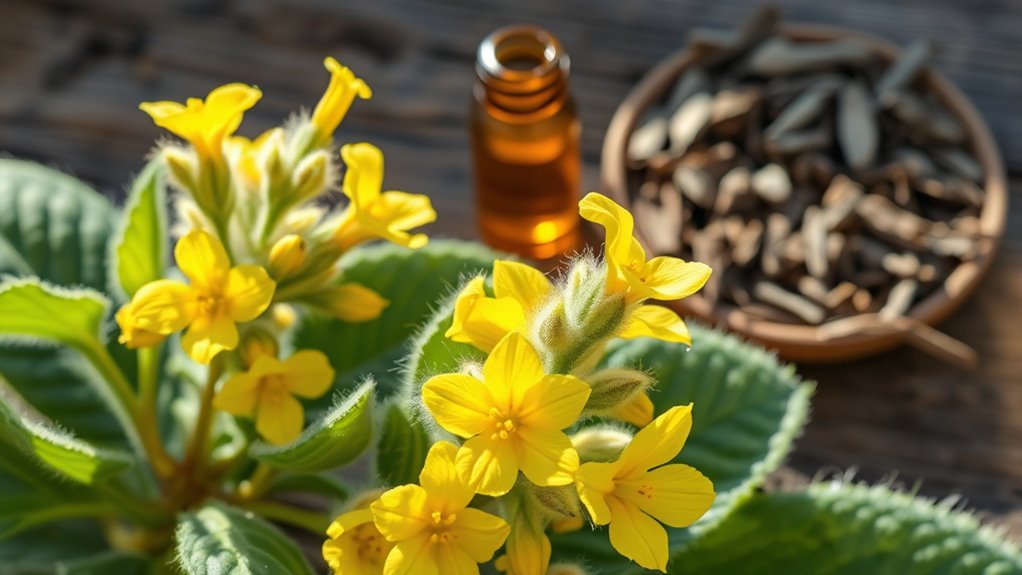

Mullein flowers and leaves have been used for centuries to make natural remedies like ear oil and respiratory tea. You can infuse mullein flowers into oil to help soothe earaches and reduce inflammation naturally. The leaves are often used to brew teas that clear respiratory congestion, ease coughs, and soothe sore throats. Exploring these herbal options connects you with traditional healing practices that promote wellness and resilience—discover how these remedies work as you continue on.
Key Takeaways
- Mullein leaves are traditionally brewed into teas to alleviate respiratory congestion, coughs, and sore throats.
- Mullein flowers are infused into oil to create natural ear remedies for earaches and inflammation.
- Both leaves and flowers contain anti-inflammatory and soothing compounds supporting respiratory and ear health.
- Making mullein ear oil and tea connects users with herbal traditions, promoting self-healing and natural wellness.
- Mullein symbolizes resilience and protection, emphasizing a holistic, earth-centered approach to health care.
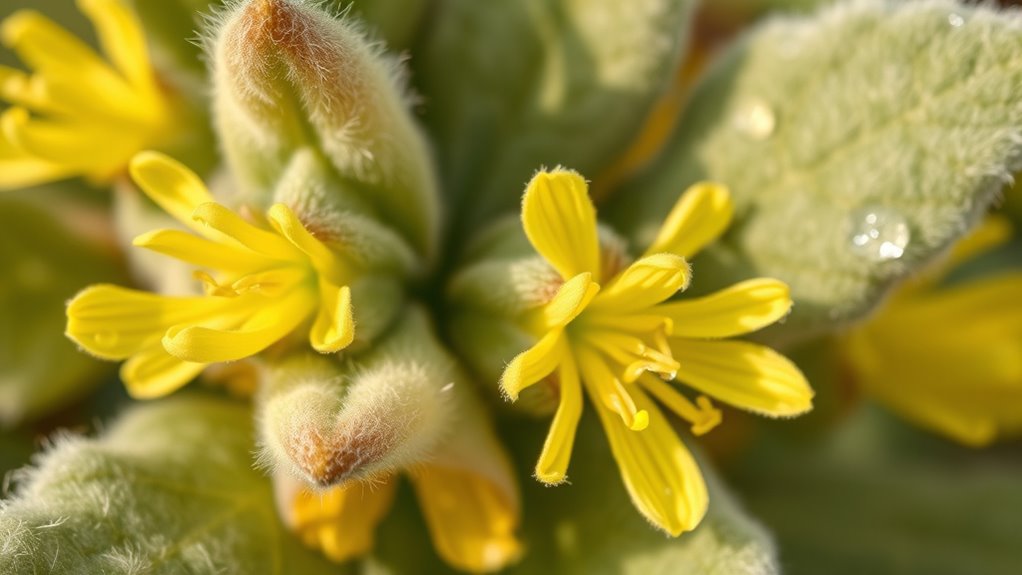
Have you ever noticed the tall, fuzzy stalks of mulleins blooming in late summer? These striking plants are more than just a visual delight; they hold a rich history rooted in herbal medicine and traditional uses. If you’re seeking natural remedies that empower you to take control of your health, mulleins offer a powerful ally. Their leaves and flowers have been used for centuries to address respiratory issues, soothe pain, and promote healing. Today, their traditional applications continue to inspire those who want to embrace herbal medicine as a path to liberation from pharmaceutical dependence.
Mulleins have a rich herbal history, empowering natural healing for respiratory health and overall wellness.
The leaves of mulleins are packed with medicinal properties. Traditionally, they’ve been used to make teas that clear respiratory congestion, ease coughing, and soothe sore throats. When you brew a cup of mullein tea, you tap into a centuries-old practice that harnesses the plant’s anti-inflammatory and soothing qualities. This simple act connects you to a long line of herbalists who believed in empowering individuals to heal themselves naturally. The leaves also contain mucilage, which coats the respiratory tract, easing irritation and making breathing easier. Whether you’re fighting off a cold or managing chronic bronchitis, mullein tea offers a gentle yet effective solution rooted in traditional uses.
Beyond teas, the flowers of mulleins have been used in herbal medicine to prepare ear oils, a remedy that’s stood the test of time. By infusing the flowers into oil, you create a natural ear treatment that helps alleviate earaches and reduce inflammation. This traditional use showcases how mulleins serve as a self-reliant remedy, giving you the power to address minor ear infections without relying solely on pharmaceuticals. When you choose to prepare ear oil from mullein, you’re reconnecting with ancestral wisdom—embracing herbal medicine that’s simple, accessible, and effective.
Additionally, understanding the dream symbolism associated with plants like mulleins can deepen your connection to their healing qualities, as many cultures see such herbs as symbols of resilience and protection. Using mulleins in your herbal toolkit means reclaiming your health and independence. Their traditional uses remind you that nature provides the tools needed for healing—no middlemen required. Whether you’re making a respiratory tea to clear your lungs or preparing ear oil for minor discomfort, mulleins put the power of herbal medicine in your hands. Their tall, fuzzy stalks are a symbol of resilience and natural healing, inviting you to harness their gifts and stand empowered in your wellness journey. In embracing these traditional uses, you choose a path of liberation—free from the dependency on synthetic medicines, and rooted in the wisdom of the earth.
Frequently Asked Questions
Are Mullein Flowers Safe for Children?
Yes, mullein flowers can be safe for children when used properly. You should always prioritize pediatric safety and follow dosage guidelines carefully. Consult a healthcare professional to determine the right amount and form, especially for young kids. Avoid giving large doses or using it without guidance. When used correctly, mullein flowers offer natural relief for respiratory issues and can be a gentle addition to your child’s wellness routine.
How Often Can I Use Mullein Ear Oil?
You can typically use mullein ear oil twice daily, but don’t just wing it—check the dosage guidelines and follow application frequency carefully. Overuse might turn your ear into a battleground of irritation, so use it responsibly and liberate yourself from unnecessary discomfort. Remember, moderation is your ally in this journey toward ear wellness; let the oil work its magic without going overboard.
Can Mullein Tea Treat Chronic Respiratory Issues?
Mullein tea can offer relief for chronic respiratory issues by harnessing traditional plant uses and herbal respiratory remedies. While it may alleviate symptoms like cough and inflammation, it shouldn’t substitute medical treatment for serious conditions. You can incorporate it into your routine to support lung health and breathe easier. Stay consistent, but always consult a healthcare professional to ensure mullein tea complements your overall treatment plan and addresses your specific needs.
Are There Any Side Effects From Mullein Leaves?
You might experience side effects from mullein leaves, especially if you have allergies or mullein leaf toxicity concerns. Some people develop allergic reactions like skin irritation, respiratory issues, or swelling. Although rare, mullein leaf toxicity can occur if consumed in large quantities. To stay safe, start with small doses, and if you notice any adverse effects, stop use and consult a healthcare professional. Your freedom from side effects depends on awareness and caution.
How Should I Harvest Mullein for Medicinal Use?
Like a wise gardener tending to their freedom, you should harvest mullein when the plant reaches full maturity, usually in late summer. Use sharp scissors or pruning shears to carefully collect the leaves and flower stalks, avoiding the woody stem. Harvest during dry weather, preferably in the morning, to preserve potency. Proper harvesting techniques empower you to extract nature’s healing essence, revealing the plant’s true potential for your well-being.
Conclusion
You might think that simple mulleins are just pretty flowers, but they hold powerful healing secrets. Their gentle leaves and vibrant flowers soothe your respiratory system, yet can also provide relief for sore ears. It’s a surprising contrast—delicate appearance, mighty benefits. Next time you see mulleins, remember they’re not just ornamental; they’re your natural remedy, quiet and unassuming, ready to support your health in ways you never expected. Sometimes, nature’s simplest gifts are the most profound.