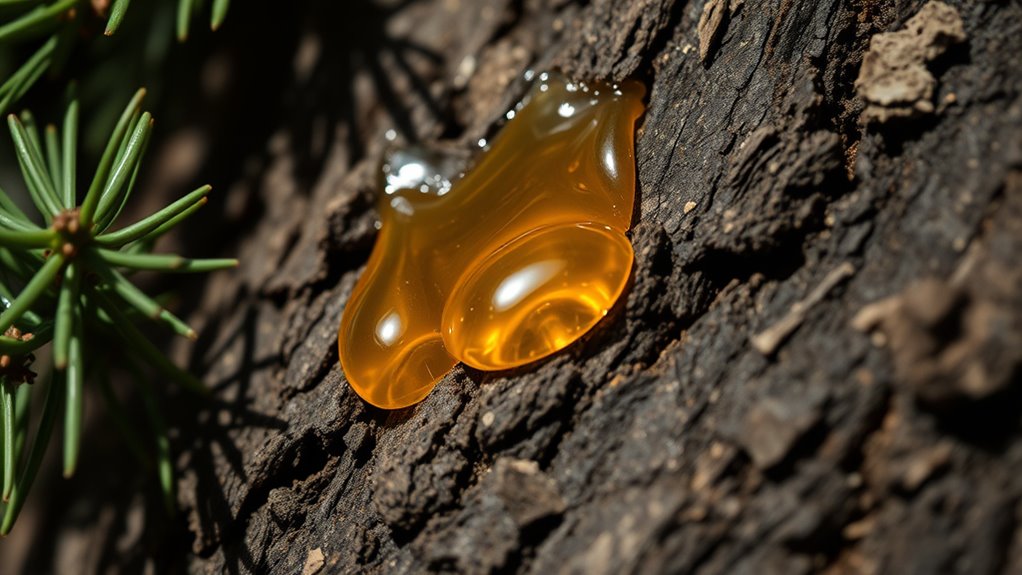
You can sustainably harvest pine resin by selecting healthy, mature trees and carefully incising the bark with clean tools to collect the hardened, amber resin that exudes naturally. This resin forms the basis of pine pitch salve, which offers natural first-aid for cuts, burns, and skin irritations due to its antimicrobial and anti-inflammatory properties. Proper collection techniques guarantee the health of the tree and continued resin supply—continue exploring to discover more about making and using this healing salve.
Key Takeaways
- Proper resin collection involves making small, careful cuts on healthy pine trees using clean tools to ensure sustainability.
- Pine pitch salve leverages the resin’s antiviral, antimicrobial, and anti-inflammatory properties for effective first-aid treatment.
- Harvested resin hardens upon cooling and can be processed into a salve that creates a protective, healing barrier on the skin.
- Sustainable collection techniques preserve tree health, supporting ongoing resin production and natural remedy use.
- Pine pitch salve is ideal for treating cuts, burns, rashes, and skin irritations, promoting faster healing and reducing scarring.
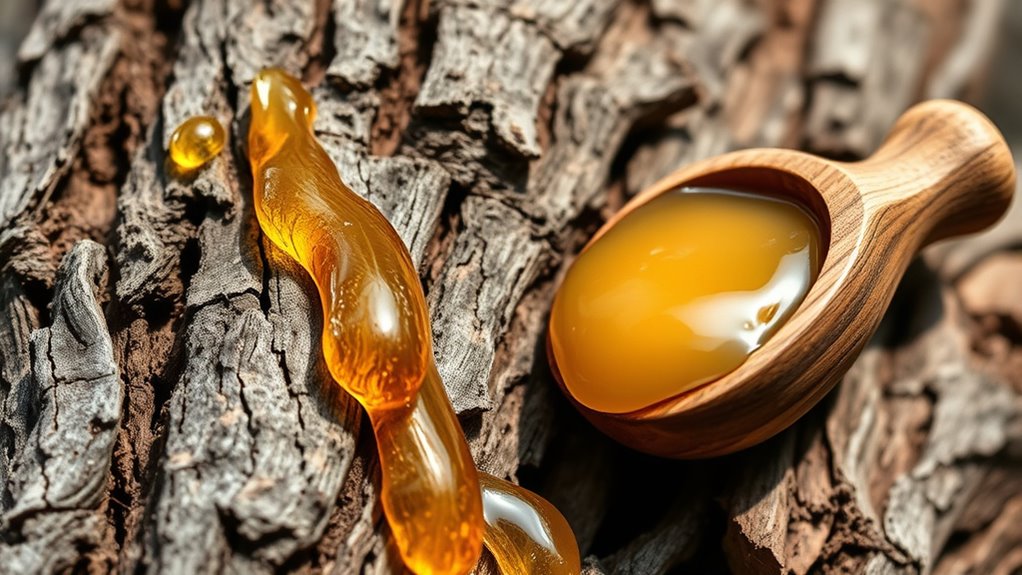
Have you ever wondered how traditional remedies like pine pitch salve can soothe skin irritations and promote healing? If you’re seeking natural ways to empower yourself and reclaim your health, understanding the medicinal properties of pine pitch is a game-changer. This ancient remedy harnesses the potent compounds found in pine resin, which has been used for centuries to treat cuts, burns, and rashes. The key lies in knowing how to properly harvest the resin and release its healing potential.
Resin harvesting techniques are straightforward but require respect for the tree and patience. To collect pine resin, you start by selecting a healthy, mature pine tree, preferably one that’s free from disease. Using a clean, sharp tool, you make small incisions in the bark—being careful not to damage the tree beyond what it can recover from. As the tree responds to the injury, it produces resin to protect itself. Over time, this resin exudes from the cuts and can be collected. You’ll notice it hardening as it cools, forming a sticky, amber substance. Proper resin harvesting involves gentle, sustainable methods that guarantee the tree remains healthy and continues to produce resin for future use.
Once collected, the resin can be processed into pine pitch salve—a highly effective natural ointment. The medicinal properties of pine pitch are impressive; it is antiviral, antimicrobial, and anti-inflammatory. These qualities make it ideal for treating skin irritations, wounds, and even respiratory issues when used appropriately. When applying pine pitch salve, you create a protective barrier on your skin that not only soothes pain but also helps prevent infection. Its natural antiseptic qualities promote faster healing and reduce scarring, giving you a sense of empowerment over your health. Additionally, understanding resin collection techniques ensures sustainable harvesting and preserves the health of the trees.
Frequently Asked Questions
Is Pine Pitch Salve Safe for Children?
Pine pitch salve isn’t always safe for children, so you should exercise pediatric precautions and consult a healthcare professional first. Keep allergy awareness in mind, as some kids might react to resin components. If you decide to try it, test a small patch first and monitor for any adverse reactions. Always prioritize your child’s safety and seek medical advice if unsure, ensuring a safe and liberating experience.
How Long Does Homemade Pine Pitch Salve Last?
Your homemade pine pitch salve typically lasts about a year if stored properly. To maximize shelf stability, keep it in an airtight container in a cool, dark place away from direct sunlight. Proper storage guarantees its potency and safety over time, giving you the freedom to use it whenever needed. Regularly check for any changes in texture or smell to ensure it remains effective and safe for your use.
Can Pine Pitch Salve Treat Fungal Infections?
Imagine you’re a pioneer, boldly facing fungal infections with your homemade pine pitch salve. Yes, it can serve as a topical treatment, helping to soothe and protect affected skin. While it might not completely eradicate the infection, it offers a natural, liberating option to support healing and fight fungal infections. Embrace this ancient remedy to reclaim your skin’s health, standing strong against the discomfort of fungal woes.
Are There Any Allergic Reactions to Pine Pitch Salve?
Yes, you can experience allergic reactions to pine pitch salve, especially if you have skin sensitivity or allergic contact dermatitis. You might notice redness, itching, or swelling after application. To protect your skin’s freedom, do a patch test first. If you experience any adverse reactions, discontinue use immediately. Embrace your skin’s resilience by staying aware of how it responds, and enjoy the healing benefits without risking irritation.
What Are the Environmental Impacts of Resin Harvesting?
You might wonder about the environmental impacts of resin harvesting, and it’s crucial to consider sustainable harvesting practices. When done responsibly, it minimizes ecosystem effects, protecting trees and surrounding habitats. By avoiding overharvesting, you help maintain forest health and biodiversity. Embracing sustainable methods allows you to enjoy the benefits of resin while freeing the environment from unnecessary stress, ensuring these natural resources remain available for future generations to harness and cherish.
Conclusion
Now that you’ve harnessed the incredible power of pine pitch salve, you can heal wounds faster than a superhero in a comic book! With this ancient remedy, you’ll fend off infections, soothe burns, and fix skin mishaps in the blink of an eye. Say goodbye to costly band-aids and hello to nature’s ultimate first-aid kit. Get ready to become the legend of healing, armed with nothing but resin and your unstoppable spirit!