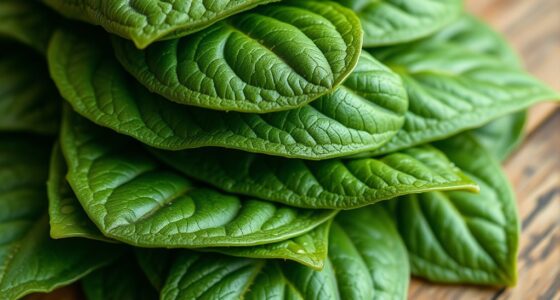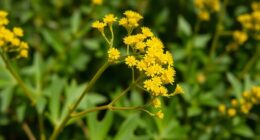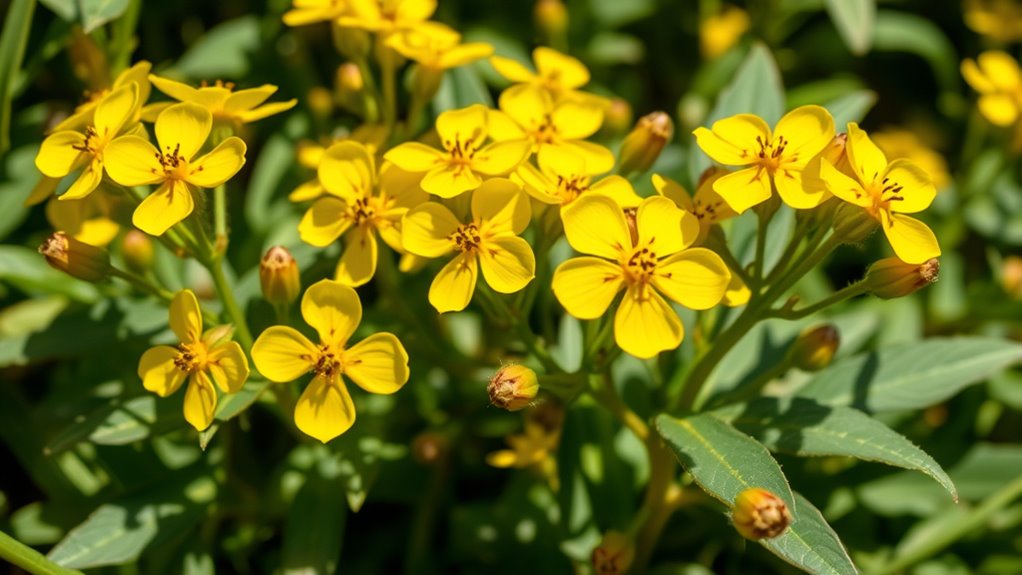
To identify St. John’s Wort, look for bright yellow flowers with five petals and tiny black dots, along with oblong, slightly hairy leaves. Harvest during peak bloom midday using sharp scissors, and dry in a dark, ventilated space to preserve its medicinal compounds. Be cautious, as it interacts with medications like antidepressants and birth control. If you keep exploring, you’ll discover more about safely using this powerful herb for your well-being.
Key Takeaways
- Identify St. John’s Wort by its bright yellow flowers with five petals and black freckles, with plant heights of 1-3 feet.
- Harvest flowering tops at midday during peak bloom using sharp scissors, ensuring minimal plant damage.
- Dry the collected parts in a dark, well-ventilated space to preserve medicinal compounds.
- Use dried St. John’s Wort for teas, tinctures, or capsules to support mental well-being naturally.
- Consult a healthcare professional before use, as it can interact with medications like antidepressants and birth control.
Have you ever heard of St. John’s Wort? This powerful herb has been harnessed for centuries as a natural remedy, offering a path to healing that aligns with your desire for liberation from synthetic medications. Known for its medicinal properties, St. John’s Wort is celebrated in the world of herbal remedies for its ability to uplift mood and ease symptoms of depression. Its vibrant yellow flowers are not just eye-catching; they’re packed with compounds that interact with your body’s chemistry, promoting mental well-being without the harsh side effects of many pharmaceuticals. If you’re seeking to take control of your health naturally, understanding how to identify, harvest, and use this herb safely is vital.
Discover St. John’s Wort, a natural remedy that uplifts mood and promotes mental well-being without harsh side effects.
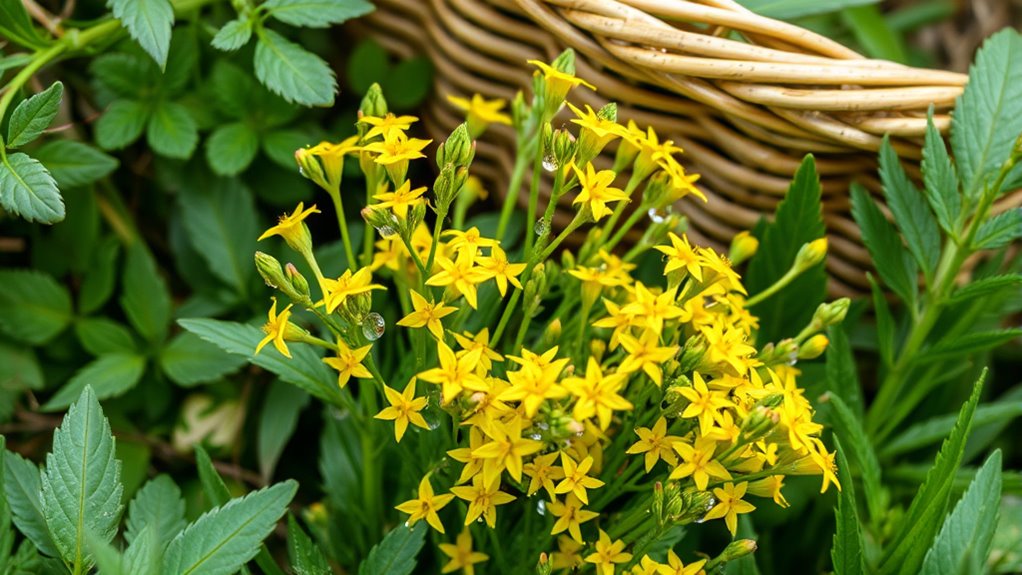
To identify St. John’s Wort, look for its distinctive bright yellow flowers with five petals, often with black dots on the petals that resemble tiny freckles. The plant typically grows about 1 to 3 feet tall, with oblong, lance-shaped leaves that have a slightly hairy texture. Its flowering season spans from late spring to early fall, making this the ideal time to harvest. When you’re out in nature or your garden, be sure to recognize the plant accurately—mistaking it for other yellow-flowered plants could lead to unintended effects. Proper identification guarantees you’re working with a herb that truly offers the medicinal properties you seek and that you’re respecting the plant’s natural integrity.
Harvesting St. John’s Wort requires care and respect for its potency. Pick the flowering tops during peak bloom, usually in the middle of the day when the sun is strongest, as this is when the plant’s medicinal properties are at their highest. Use sharp scissors or pruning shears to gently cut the flowers and leaves, avoiding damaging the plant. Dry the harvested parts in a well-ventilated, dark space to preserve their active compounds. Once dried, the herb can be used to make teas, tinctures, or capsules, empowering you to incorporate its healing properties into your daily routine and reclaim your health naturally. Additionally, understanding the proper harvesting timing ensures maximum potency and efficacy of the herb.
However, safety should always come first. St. John’s Wort can interact with certain medications, including antidepressants and birth control pills, reducing their effectiveness. It’s essential to consult with a healthcare professional before starting any herbal remedy, especially if you’re on medication or have underlying health conditions. While it offers a natural path to liberation from mental health struggles, improper use can lead to adverse effects. Respect the plant’s power, use it responsibly, and remember that herbal remedies are tools to support your journey—never a substitute for professional medical advice when needed. By understanding and respecting its medicinal properties, you can harness St. John’s Wort as a valuable ally in your quest for health and freedom.
Frequently Asked Questions
Can St. John’s Wort Be Used for Conditions Other Than Depression?
Yes, St. John’s Wort can be used for conditions beyond depression, offering alternative uses that harness its herbal benefits. You might find it helpful for anxiety, sleep issues, and nerve pain. Its natural properties can support your well-being in various ways, giving you a sense of liberation from conventional treatments. Just remember to consult a healthcare professional before using it for other health concerns to guarantee safe and effective use.
Are There Any Recommended Dosages for Different Age Groups?
Wondering about safe use? You should follow dosage guidelines tailored to your age. For adults, typical doses range from 300 to 900 mg daily, divided into three doses. Children and teens need lower, age-specific recommendations—consult your healthcare provider for personalized advice. Don’t let confusion hold you back—knowing the right dose empowers you to use St. John’s Wort safely and confidently, revealing its benefits without risking side effects.
How Long Does It Take to See Effects From Using St. John’s Wort?
You might notice symptoms improving within 4 to 6 weeks of using St. John’s Wort, but the timeline effects can vary. Stay consistent, and you’ll feel the potential liberation from depression or anxiety gradually unfolding. Keep track of your progress, and don’t get discouraged if it takes a little longer. Your commitment can lead to positive changes, helping you regain control and experience the relief you deserve.
Can It Interact With Specific Prescription Medications?
You might not realize it, but St. John’s Wort can dangerously interact with certain prescription medications, affecting their effectiveness. These drug interactions can lead to unexpected side effects or diminished benefits, risking your well-being. To truly feel free from worries, always stay vigilant and consult your healthcare provider before combining herbal remedies with prescription drugs. Managing these side effects is vital for your liberation and peace of mind.
Is St. John’s Wort Safe During Pregnancy or Breastfeeding?
You should avoid using St. John’s Wort during pregnancy and breastfeeding because it’s not considered safe. Pregnancy safety is a top concern, as it could affect your developing baby. During breastfeeding, it may pass into breast milk and cause unintended effects. For liberation and peace of mind, consult your healthcare provider before considering St. John’s Wort, ensuring you protect both your health and your baby’s wellbeing.
Conclusion
St. John’s Wort is a remarkable plant with a rich history of medicinal use, but always remember to identify it correctly and harvest responsibly. Did you know that studies show it can reduce mild to moderate depression symptoms in up to 70% of users? Stay cautious about potential interactions and side effects, and consult a healthcare professional before starting any new supplement. With proper knowledge, you can safely enjoy the benefits of this powerful herb.