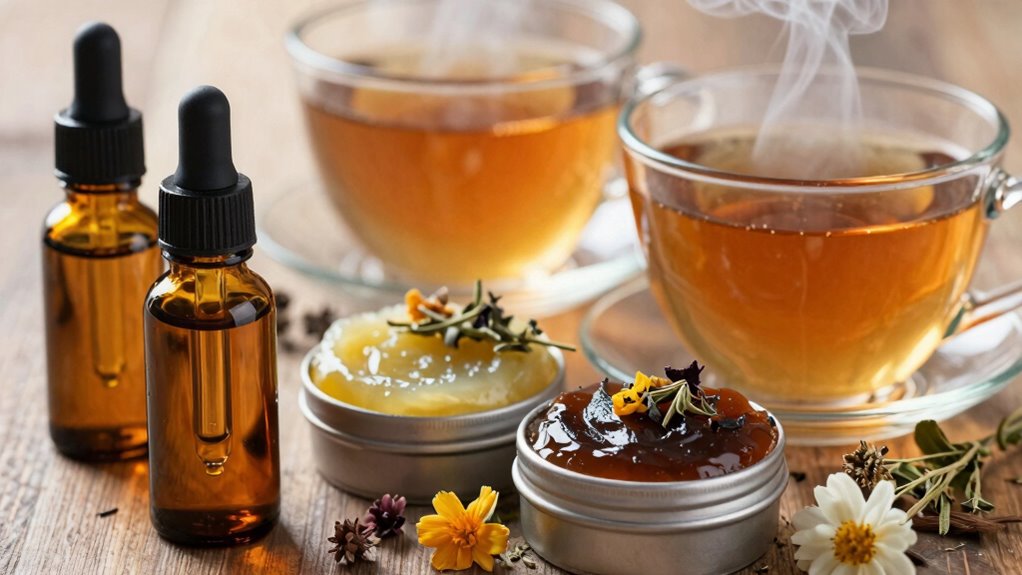

Tinctures, teas, and salves each work differently to support your health. Tinctures use alcohol to extract potent active compounds, offering quick, targeted relief by taking drops orally. Teas steep herbs in hot water for gentle, daily support and mild remedies. Salves infuse oils with herbs for external use, providing localized relief for skin or inflammation. To understand how each method enhances your wellness and when to use them, keep exploring these options further.

Get garden gear delivered free with Prime
- Fast, free delivery on millions of items
- Prime Video, Amazon Music and more included
- Member-only deals all year
Key Takeaways
- Tinctures are highly concentrated alcohol-based extracts for quick, targeted internal relief, while teas are gentle water infusions for daily support.
- Salves deliver herbal compounds externally through oils or fats, focusing on localized skin or tissue issues.
- Tinctures are potent and fast-absorbing, suitable for precise symptom relief; teas and salves are milder, ideal for ongoing or external use.
- Extraction methods differ: tinctures use alcohol, teas steep herbs in hot water, and salves infuse herbs into oils for topical application.
- Tinctures mainly target internal health, whereas teas support general wellness and salves treat external or localized conditions.
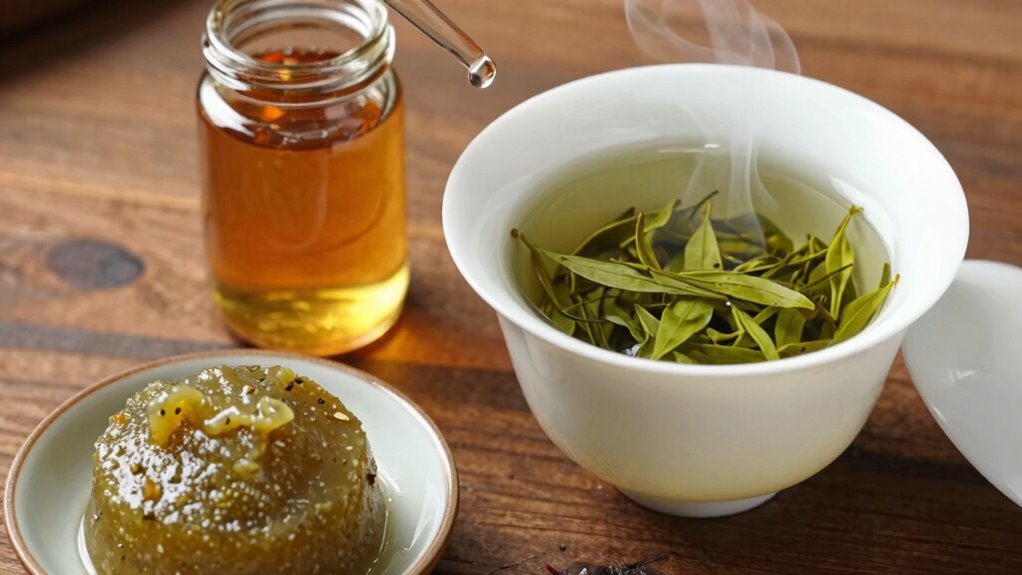
When it comes to natural remedies, tinctures, teas, and salves each serve distinct purposes, and understanding how they differ can help you choose the right one for your needs. The key difference lies in herbal extraction and application methods. Tinctures are concentrated liquid extracts made by soaking herbs in alcohol or a mixture of alcohol and water. This process extracts active compounds efficiently, resulting in a potent remedy that retains the herb’s medicinal properties for longer periods. You typically take tinctures by placing a few drops under your tongue or mixing them into water or juice, allowing for fast absorption into your bloodstream. Their concentrated nature makes them ideal for targeting specific symptoms quickly. Additionally, tinctures can be customized with different herbal blends to address particular health concerns.
Tinctures are concentrated herbal extracts taken directly for quick, targeted relief.
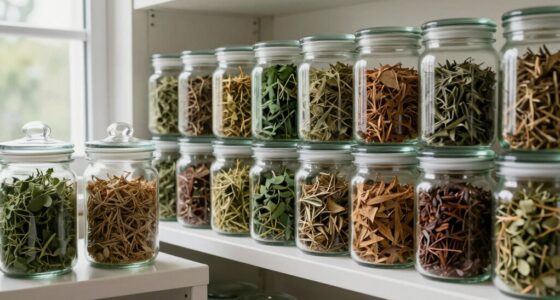
Teas, on the other hand, involve steeping dried or fresh herbs in hot water, which extracts water-soluble compounds. The herbal extraction process here is gentler and emphasizes the release of delicate constituents like volatile oils and tannins. When you brew tea, the application method is straightforward—you simply pour hot water over the herbs and let them steep for several minutes. This method is excellent for gentle, daily support, promoting hydration, and soothing minor ailments. Because teas are less concentrated than tinctures, they’re best used for ongoing, mild issues rather than acute or severe symptoms.
Salves differ significantly in their application method and herbal extraction process. They are topical ointments made by infusing herbs into oils or fats, which draw out the herbal constituents through a process called infusion or maceration. Once prepared, salves are applied directly to the skin, offering targeted relief for localized issues like inflammation, cuts, or skin irritations. The herbal extraction in salves emphasizes the transfer of medicinal properties into a form that can be absorbed through the skin. Salves provide a protective barrier and deliver active compounds directly to affected tissues, making them effective for external use. Many herbal preparations for salves involve oil infusion techniques to maximize potency and skin absorption.
Additionally, understanding the extraction process involved in each remedy can help you better assess their potency and suitability for your needs. Understanding these differences helps you match the remedy to your situation. If you need quick, potent relief, tinctures are your best choice. For gentle, daily support or minor ailments, teas work well. When dealing with skin issues or localized pain, salves are most effective. Each method’s unique herbal extraction process influences how the remedy works and how you should apply it. By knowing the application methods and what each form delivers, you can make informed choices about incorporating these natural remedies into your health routine.
herbal tinctures for quick relief
As an affiliate, we earn on qualifying purchases.
As an affiliate, we earn on qualifying purchases.
Frequently Asked Questions
Are Tinctures More Potent Than Teas or Salves?
Yes, tinctures are more potent than teas or salves because herbal extraction concentrates active compounds into alcohol or glycerin, making them stronger. When you take a tincture, your body absorbs the herbal benefits quickly through topical absorption or digestion, providing faster, more targeted effects. Teas are milder and less concentrated, while salves are primarily topical, offering localized relief. Tinctures deliver a potent, fast-acting herbal boost.
How Long Do Tinctures, Teas, and Salves Last?
Think of herbal preservation as locking in a sunset’s glow; tinctures, teas, and salves each have their own lifespan. Tinctures typically last 2-5 years with proper storage, while teas are best consumed within 1-2 years. Salves, like gentle guardians, stay effective for about 1-3 years. Store them in cool, dark places to extend their storage longevity, ensuring your herbal remedies remain potent and full of life’s quiet magic.
Can I Use Tinctures Internally and Salves Externally?
Yes, you can use tinctures internally and salves externally. Tinctures are designed for internal use, so you take them by drops or as directed. Salves are meant for external application, providing localized relief or healing. Just make certain you follow the instructions for each product. Using tinctures internally and salves externally allows you to target different issues effectively, maximizing their benefits for your health.
Are There Specific Herbs Best Suited for Each Form?
Certain herbs excel in specific forms due to their herb extraction and herbal absorption properties. For example, adaptogenic herbs like Ashwagandha work well as tinctures because alcohol quickly extracts their active compounds, ensuring rapid absorption. Chamomile, often used as a tea, offers gentle herbal absorption suited for soothing effects. Salves are best for herbs like calendula or arnica, which benefit from topical herb extraction, targeting skin concerns effectively.
How Quickly Do Each of These Forms Work?
Like the swift arrow of Cupid’s bow, tinctures act fast, thanks to their alcohol-based herbal extraction methods that rapidly release active compounds. Teas take longer, as hot water gently extracts nutrients over time, but absorption is slower through the digestive system. Salves provide quick relief through topical absorption rates, delivering herbs directly to the skin. Your choice depends on how quickly you want the effect and the desired delivery method.
Conclusion
So, next time you’re choosing between tinctures, teas, or salves, remember—they all claim to do magic differently. Ironically, the one you pick might just be the placebo you needed all along. Whether it’s a quick tincture, a calming tea, or a soothing salve, your body’s still guessing what’s real. Sometimes, the simplest remedy is just believing it works—because in the world of herbal healing, certainty is often the greatest cure.
Columbus Day / Indigenous Peoples' Day Picks
long weekend sales
As an affiliate, we earn on qualifying purchases.