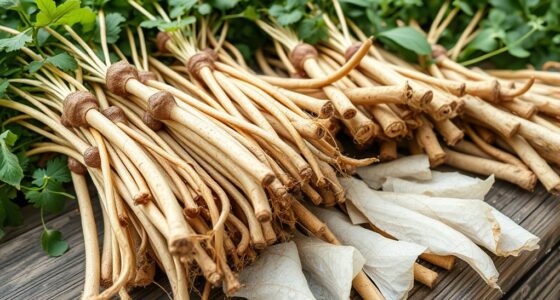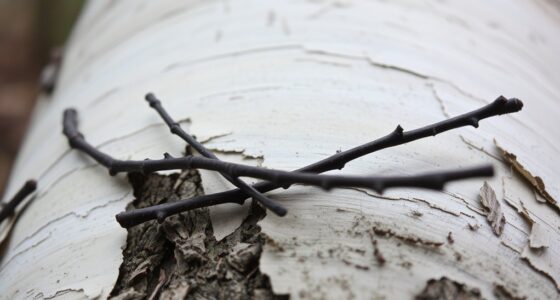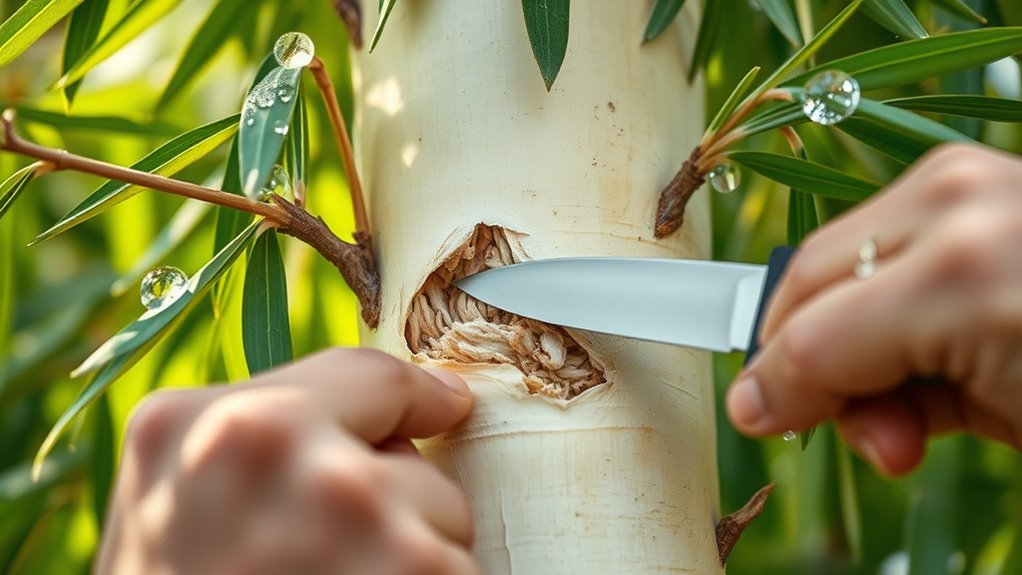

When harvesting willow bark ethically, you should focus on timing during the tree’s dormant season and select mature trees to minimize harm. Use precise cuts just below the bark’s surface, and harvest from multiple trees to reduce individual stress. This approach respects ecological balance while ensuring a sustainable supply. Modern science guides these traditional techniques, blending ethics with chemistry to promote health and regeneration. Continue exploring to discover more about sustainable methods and the chemistry behind willow bark.
Key Takeaways
- Ethical harvesting involves minimal bark removal, selecting mature trees, and making precise cuts during dormancy to ensure tree health.
- Proper timing aligns with the tree’s natural cycle, promoting quick recovery and ecological balance.
- Knowledge of tree biology guides harvesters to avoid damaging vital tissues, supporting sustainable bark extraction.
- Willow bark contains salicin, a natural compound chemically similar to aspirin, used for pain relief and anti-inflammatory purposes.
- Combining traditional practices with scientific insights ensures ethical harvesting methods and preserves the chemical integrity of the bark.
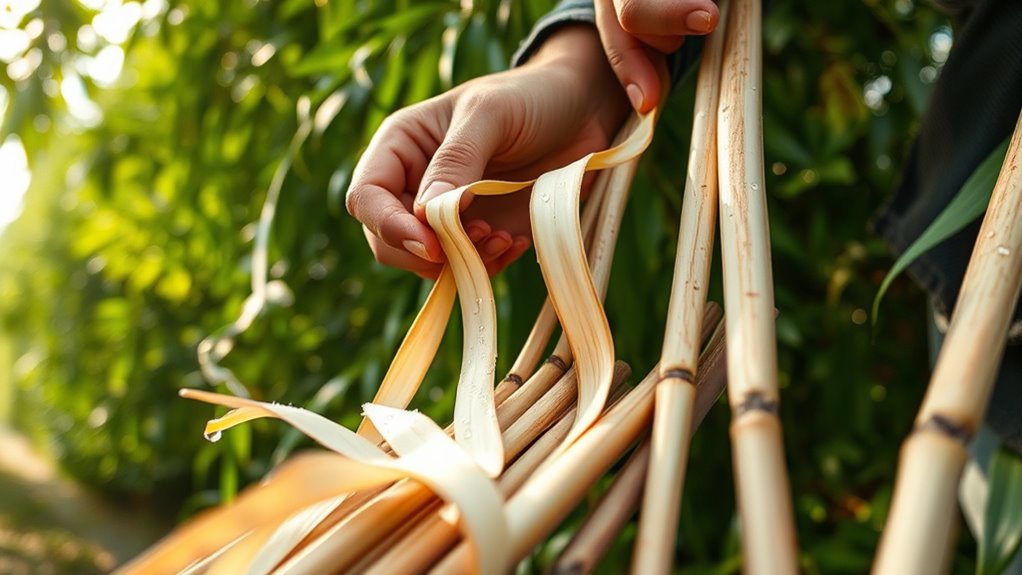
Have you ever wondered how willow bark is harvested sustainably? It’s a process rooted in respect for nature and a desire to preserve the environment’s balance. Traditional harvesting methods have long guided how we gather this valuable resource, emphasizing minimal disruption and long-term health of the trees. Instead of stripping entire groves or damaging the bark, skilled harvesters carefully select mature willow trees, understanding that the key to sustainability lies in moderation and knowledge. They make precise cuts, usually just below the bark’s surface, avoiding the deeper layers that help the tree thrive. This practice ensures that the willow can continue to grow and regenerate, providing a continuous supply without causing lasting harm.
Sustainable practices are central to ethical harvesting. They involve timing the harvest correctly—typically in the dormant season—so the trees can recover quickly. By doing so, those who harvest willow bark honor the tree’s natural cycle, allowing it to heal before the next season. This approach not only secures the health of individual trees but also protects entire ecosystems that depend on these trees for habitat and stability. It’s about working in harmony with nature’s rhythms, rather than exploiting them for immediate gain. This respect for the environment gives you a sense of liberation—knowing you’re part of a process that values preservation and renewal.
The art of traditional harvesting also involves understanding the biology of willow trees. Experienced harvesters recognize which branches and sections are best suited for bark removal, ensuring their actions don’t compromise the tree’s vitality. They often harvest from multiple trees across a wide area, reducing pressure on any single grove. This mosaic approach guarantees a steady, sustainable yield over time, aligning with a broader vision of ecological balance. When you embrace these methods, you participate in a tradition that values integrity and long-term health over short-term profits. Additionally, integrating modern scientific knowledge about cultural impact helps refine these sustainable techniques for future generations.
Frequently Asked Questions
How Does Willow Bark Harvesting Impact Local Ecosystems?
When you harvest willow bark responsibly, you minimize ecosystem disturbance and help prevent biodiversity loss. Overharvesting can weaken trees and disrupt habitats, harming local flora and fauna. By practicing sustainable techniques, you support the health of the ecosystem, ensuring that native species thrive and biodiversity remains intact. Your mindful approach helps preserve the delicate balance of nature, giving ecosystems the freedom to flourish without unnecessary harm.
Are There Regulations Governing Sustainable Willow Bark Collection?
Yes, there are regulatory standards and conservation policies that govern sustainable willow bark collection. You must follow these rules to guarantee the environment stays healthy and thriving. By adhering to strict guidelines, you help protect ecosystems and promote responsible harvesting practices. This way, you contribute to conserving nature’s resources, allowing you to harvest with freedom and confidence, knowing you’re supporting ecological balance and respecting the land.
What Are the Best Tools for Ethical Willow Bark Harvesting?
Imagine wielding tools that champion your freedom to harvest sustainably. The best harvesting equipment includes sharp, lightweight knives and pruning shears designed for precision, minimizing harm to the tree. Incorporate sustainability practices by selecting tools that reduce waste and avoid damaging the bark. With these tools, you can ethically harvest willow bark, ensuring the tree’s significance and your liberation to gather nature’s gifts responsibly.
How Can Consumers Identify Ethically Harvested Willow Bark Products?
You can identify ethically harvested willow bark products by checking for clear label transparency and certification standards like Fair Trade or Organic labels. These ensure responsible sourcing and adherence to ethical harvesting techniques. When you choose products with verified labels, you’re supporting sustainable practices that respect the environment and local communities. Trust brands that openly share their sourcing info—liberate your choices and make a positive impact with every purchase.
What Are Alternative Methods to Obtain Salicin Without Harvesting Bark?
Think of plant biotechnology as your key to freedom; it unseals new paths to salicin without harming trees. You can turn to synthetic salicin, crafted in labs to mimic natural compounds perfectly. This method offers a sustainable alternative that liberates you from ethical dilemmas and ecological harm. By embracing biotechnological advances, you gain access to pure, cruelty-free salicin, empowering you to make choices aligned with ethical and environmental integrity.
Conclusion
By harvesting willow bark ethically, you help preserve this valuable resource for future generations. Using sustainable techniques guarantees the trees aren’t harmed and that you can continue to benefit from their medicinal properties. Did you know that over 100 million pounds of willow bark are harvested worldwide each year? That’s a huge amount—and it highlights the importance of responsible harvesting. By choosing ethical methods, you contribute to both environmental health and the ongoing availability of this natural remedy.