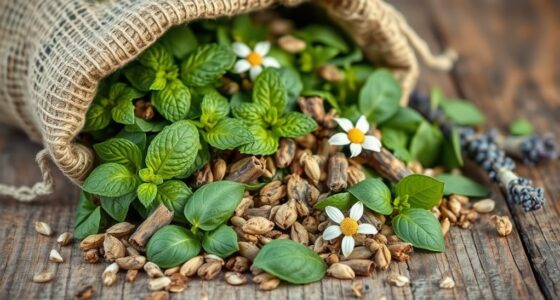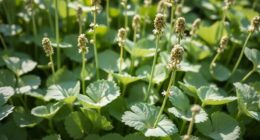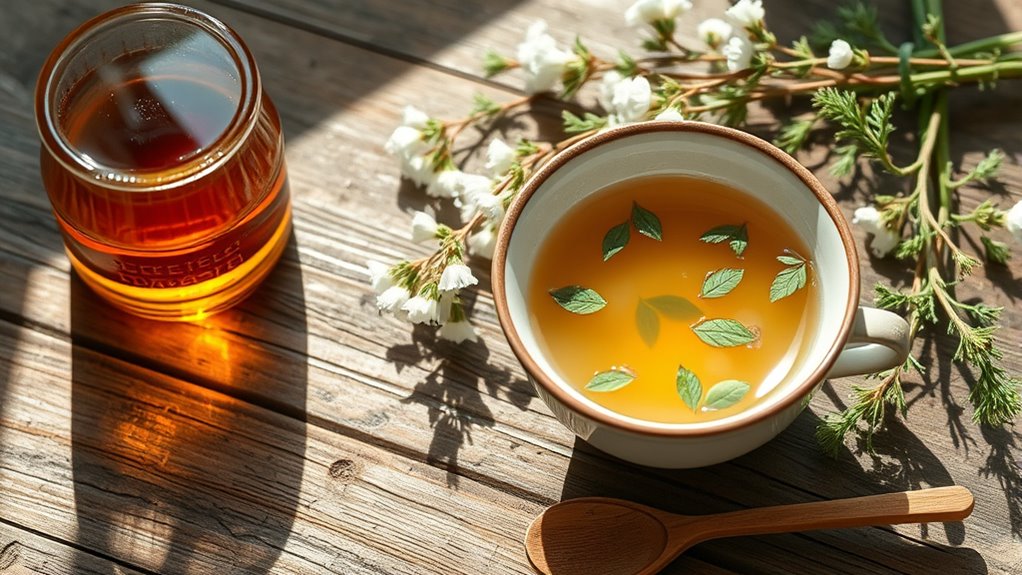

You should use yarrow tincture or tea when you want to support your overall wellness, but avoid it if you’re pregnant, breastfeeding, or have allergies to plants in the Asteraceae family. Don’t take it before surgery or if you’re on blood-thinning medications, as it can affect blood clotting. Always start with small doses and listen to your body. To learn how to use yarrow safely and effectively, keep exploring the details below.
Key Takeaways
- Use yarrow tincture or tea for mild digestive issues, menstrual cramps, or to support wound healing as recommended.
- Avoid yarrow if allergic to Asteraceae plants, pregnant, breastfeeding, or before surgery.
- Start with small doses (1 ml tincture or 1 teaspoon tea) and adjust based on response.
- Do not use yarrow if taking blood thinners or medications affecting blood pressure without medical advice.
- Discontinue use if adverse reactions such as itching, swelling, or breathing issues occur.
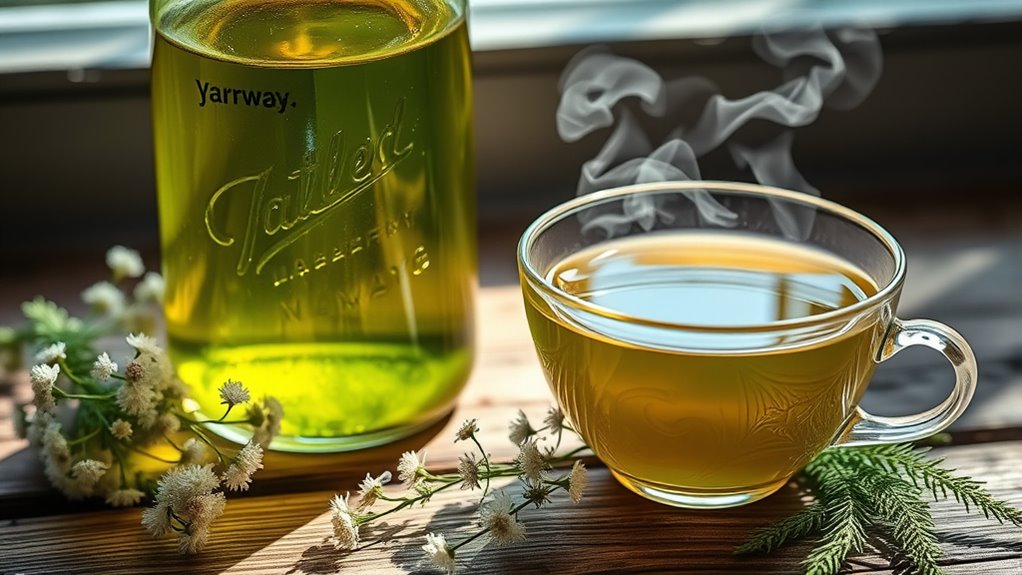
Yarrow tincture and tea are popular herbal remedies known for their numerous health benefits. If you’re seeking natural ways to support your body, yarrow offers a potent option. But to truly harness its power and stay safe, understanding dosage guidelines and safety precautions is essential. You’re in control of your health, and knowing when and how to use yarrow helps you avoid unnecessary risks while maximizing its benefits.
When considering dosage guidelines, it’s important to start small and pay attention to how your body responds. For tinctures, a typical dose ranges from 1 to 3 milliliters, taken two to three times daily. Tea, on the other hand, usually involves brewing one to two teaspoons of dried yarrow in a cup of hot water, drinking up to three times a day. These guidelines aren’t set in stone; they serve as a starting point to help you gauge your tolerance and adjust accordingly. Remember, yarrow is potent, and more isn’t necessarily better. Always respect the recommended amounts and listen to your body’s signals.
Start small with yarrow: 1-3 ml tincture or 1-2 teaspoons tea, up to three times daily.
Safety precautions are just as essential as dosage. Yarrow may cause allergic reactions, especially if you have sensitivities to plants in the Asteraceae family, like ragweed or daisies. If you notice any itching, swelling, or difficulty breathing, cease use immediately and seek medical help. Pregnant women should avoid yarrow, as it can stimulate uterine contractions and potentially lead to complications. It’s also wise to consult your healthcare provider before starting yarrow, particularly if you’re on medications, such as blood thinners, or have underlying health conditions. Yarrow can interact with certain drugs, possibly affecting clotting or blood pressure.
Use yarrow with respect, not recklessness. Do not consume yarrow if you’re allergic or if you’re pregnant or breastfeeding unless your healthcare provider approves. Avoid using yarrow if you’re planning surgery, as its blood-thinning properties could increase bleeding risks. Keep yarrow out of reach of children, and store it in a cool, dry place. Always verify the source—quality matters when it comes to herbal remedies—and avoid products that contain additives or fillers. Additionally, selecting diverse plant materials such as those from sustainable sources can ensure the best results and safety.
Ultimately, yarrow is a powerful plant that can free you from reliance on synthetic remedies, but only if used responsibly. By following proper dosage guidelines and safety precautions, you empower yourself to make informed choices and protect your health. When used thoughtfully, yarrow tincture and tea can be allies in your journey toward natural wellness and liberation from unnecessary limitations.
Frequently Asked Questions
Can Yarrow Tincture Help With Seasonal Allergies?
Yes, yarrow tincture can help with allergy relief by reducing inflammation and soothing your irritated tissues. As an herbal remedy, it offers a natural way to combat seasonal allergies and ease your symptoms. You’ll feel liberated from the discomfort when you incorporate yarrow into your routine, but always check with a healthcare professional first to guarantee it’s right for you. Embrace the power of nature to reclaim your well-being.
Is Yarrow Tea Safe for Children?
Yarrow tea is generally not recommended for children due to safety concerns. Studies show herbal remedies can affect kids differently, and children’s safety should always come first. You should consult a healthcare professional before giving yarrow tea or any herbal options to children. While herbal considerations are important, your priority is ensuring safe, appropriate remedies that support their health without risking adverse reactions.
How Does Yarrow Interact With Blood-Thinning Medications?
Yarrow can interfere with blood thinning medications, potentially increasing bleeding risks. If you’re on blood thinners, you should avoid consuming yarrow tincture or tea without consulting your healthcare provider. Its natural blood-thinning properties may amplify medication effects, disrupting your health goals. Take control of your wellness by being aware of these interactions and always seeking professional advice before adding yarrow to your routine.
What Are the Long-Term Effects of Yarrow Use?
Long-term safety of yarrow use isn’t fully established, so you should be cautious with chronic use. While some experience benefits, prolonged use might lead to allergic reactions or skin sensitivities. You might also risk interfering with blood clotting or liver health. To protect your well-being and maintain your freedom to choose natural remedies, consider consulting a healthcare professional regularly and limiting continuous use without breaks.
Can Yarrow Tincture Be Used During Pregnancy?
You should avoid using yarrow tincture during pregnancy because of herbal safety concerns. It can stimulate uterine contractions, risking miscarriage. Always follow pregnancy precautions and consult your healthcare provider before trying any herbal remedies. Your body deserves safe, empowering choices—so trust professional advice and prioritize your health and baby’s safety over unverified herbal use during this important time.
Conclusion
Remember, yarrow tincture and tea can be gentle allies on your wellness journey, offering comfort when the time feels right. However, like any delicate bloom, they’re best used with care and awareness of your body’s whispers. Trust your instincts and seek guidance if needed, so your experience remains a harmonious dance with nature’s subtle touch. When used thoughtfully, yarrow can be a soothing companion, guiding you toward balance and serenity.