Burn morels usually thrive in recently disturbed, fire-affected areas, where natural fires clear out competition and create nutrient-rich, charred ground ideal for their growth. In contrast, black morels in natural, undisturbed environments tend to appear less frequently and prefer specific habitats like burned forests and wood debris zones. Understanding how fire influences their habitat reveals their resilience and role in ecosystem renewal. Keep exploring to learn more about how these fungi connect to nature’s cycles.
Key Takeaways
- Burn morels thrive in recently disturbed, fire-affected areas, benefiting from ash-rich soils and reduced competition.
- Natural black morel populations develop in undisturbed, organic-rich environments, often linked to decayed wood and soil health.
- Fire ecology plays a crucial role, with burn morels flourishing post-fire, whereas natural morels prefer stable, undisturbed habitats.
- Burn morels demonstrate resilience by adapting to charred landscapes, contrasting with natural morels that require mature, undisturbed ecosystems.
- Both types contribute to ecosystem renewal, but burn morels specifically indicate recent fire activity and habitat disturbance.
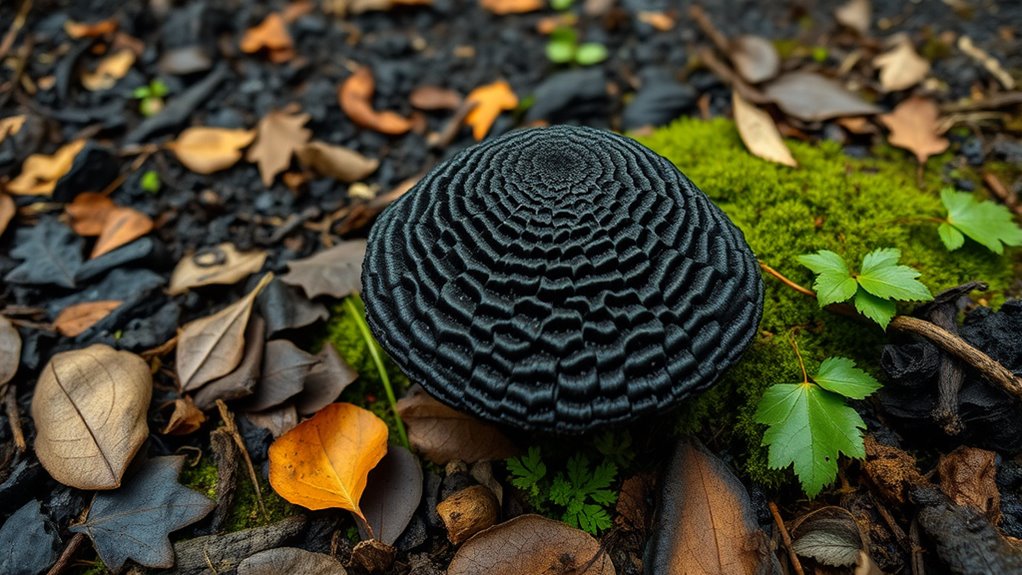
Have you ever wondered how black morels thrive in their unique environments? These elusive fungi possess a resilience that’s rooted in their specialized black morel growth and the distinct black morel habitat they choose. Unlike other mushrooms, black morels don’t just pop up randomly; they have a deep connection to their surroundings, thriving in conditions that many overlook or dismiss. When you understand what makes their environment so essential, you gain a new perspective on the power of nature’s balance and the importance of respecting these delicate ecosystems. Black morel growth is influenced by a complex web of factors, including soil composition, moisture levels, and the presence of decaying organic matter. They flourish in areas where fire has recently swept through, clearing out competing vegetation and leaving behind nutrient-rich ash. This post-fire environment becomes a fertile ground for their spores to take hold and expand. The black morel habitat, often found in burned forests and areas with specific types of wood debris, is a proof of nature’s ability to reset and renew itself. Their presence signals a natural cycle of destruction and rebirth, and understanding this cycle is essential if you seek to protect their delicate existence. Additionally, the connection between black morel habitat and fire ecology highlights how fire plays a vital role in maintaining healthy forest ecosystems and promoting fungal diversity.
Burn morels, in particular, have adapted to thrive in these recently disturbed areas, where their growth is stimulated by the altered landscape. The charred ground provides a unique microenvironment that supports black morel growth, giving them a competitive edge over other fungi that prefer undisturbed soils. As a seeker of liberation from societal constraints, recognizing the resilience of these organisms underscores the importance of respecting natural processes. They remind us that destruction isn’t always the end but often the beginning of something new and important.
Their habitat isn’t just about survival; it’s about thriving in a space where others might see only devastation. The black morel habitat, with its specific conditions, becomes a symbol of resilience and rebirth. You begin to see that black morels are not just fungi but messengers of renewal, thriving in environments that challenge and transform. When you understand what fuels black morel growth, you reveal a deeper appreciation for the symbiotic relationship between these fungi and their environment. This awareness empowers you to protect these habitats, recognizing that their existence is intertwined with the health of the broader ecosystem. Black morels, in their silent strength, teach us that even after destruction, life persists and finds a way to flourish.
Frequently Asked Questions
How Do Black Morels Affect Local Ecosystems?
Black morels boost local ecosystems by promoting mycelium diversity, which strengthens soil health and resilience. As you explore, you’ll see how their presence impacts soil nutrient levels, enriching the environment naturally. These fungi foster a thriving underground network, supporting plant growth and ecological balance. By understanding their role, you can appreciate how black morels contribute to a healthier, more liberated ecosystem, empowering your connection with nature’s intricate harmony.
What Are the Best Methods to Cultivate Black Morels Naturally?
You can cultivate black morels naturally by mimicking their wild environment, creating a sanctuary with rich, well-drained soil that embraces both organic matter and subtle moisture. Keep soil composition balanced and moisture levels consistent, allowing these elusive fungi to flourish freely. Embrace your role as a guardian of their freedom, nurturing the land with care and patience, so these mysterious treasures can thrive in harmony with nature’s liberation.
Are Burn Morels More Nutritious Than Natural Ones?
Burn morels aren’t necessarily more nutritious than natural ones, but they do offer similar health benefits. Their nutritional content includes antioxidants, vitamins, and minerals that support immune health and overall well-being. By embracing these wild, fire-boosted fungi, you liberate yourself from conventional farming limits, connecting with nature’s raw, potent offerings. Enjoy burn morels for their unique flavor and health benefits, knowing they help you reclaim your natural, vibrant vitality.
How Does Fire Frequency Influence Black Morel Growth?
Fire frequency considerably influences black morel growth, impacting their life cycles and overall abundance. When fire impact occurs at ideal intervals, it stimulates growth cycles, encouraging morels to thrive by clearing out competition and enriching the soil. Too frequent fires, however, can hinder growth, disrupting their cycles and reducing yields. Embrace controlled burns to release these fungi, unleashing their full potential and transforming your foraging experience into a powerful act of nature’s renewal.
Can Black Morels Be Used in Medicinal Applications?
Imagine opening nature’s secret pharmacy—black morels can indeed be used in medicinal applications. They offer medicinal benefits that can aid immune support and anti-inflammatory needs. Embrace their herbal applications to liberate your health naturally, breaking free from synthetic remedies. By incorporating black morels into your wellness routine, you harness their healing power, connecting with the earth’s ancient wisdom and reclaiming your body’s innate strength.
Conclusion
You might think that burn morels are just a temporary boost, but they actually play a crucial role in the ecosystem by encouraging new growth and maintaining healthy soil. Embrace both burn and natural morels, knowing they each contribute uniquely to their environment. Don’t let the idea of competition discourage you; exploring both types enriches your understanding and appreciation of these fascinating fungi. Enjoy your foraging journey, knowing you’re supporting a balanced, thriving ecosystem.