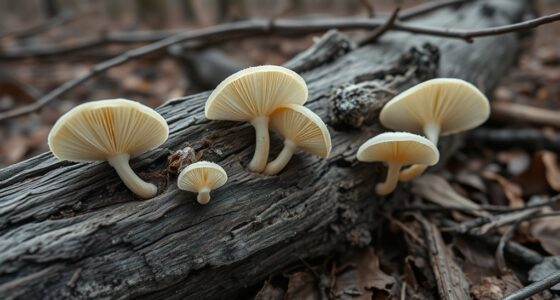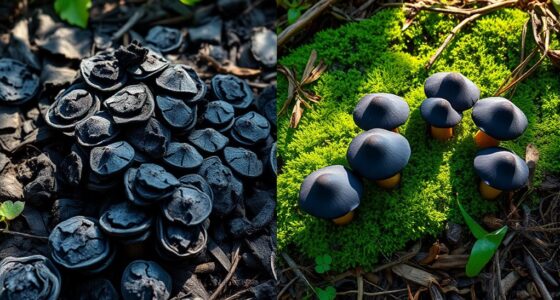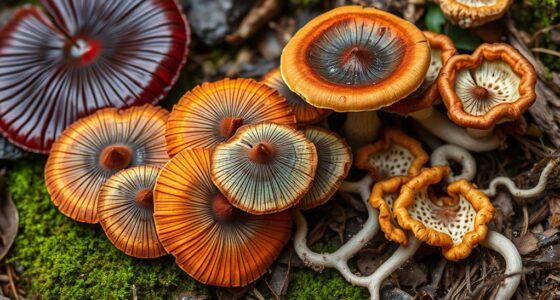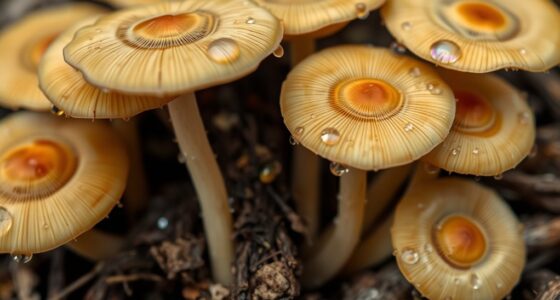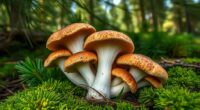
Black morels thrive in both burned and natural environments, but their ecology is shaped by fire-affected landscapes. After a wildfire, they often flourish on charred soils with reduced competition and increased nutrients, making burn morels especially prominent. In natural settings, they grow alongside decaying organic matter in forests. Understanding how fire and organic conditions influence their growth can help you find these fascinating fungi more successfully; there’s much more to uncover about their ecological relationship.

Get garden gear delivered free with Prime
- Fast, free delivery on millions of items
- Prime Video, Amazon Music and more included
- Member-only deals all year
Key Takeaways
- Burn morels thrive in post-fire landscapes with nutrient-rich, disturbed soils, while natural black morels can grow in undisturbed, organic matter.
- Dispersal of burn morel spores is closely linked to fire-affected habitats, whereas natural black morels rely on animals and insects for spore spread.
- Burn morels are indicators of recent or past fires, highlighting their role in fire ecology; natural black morels are more adaptable to various environments.
- The proliferation of burn morels depends on prescribed or natural burns, while natural black morels flourish in diverse, organic-rich forest soils.
- Both types contribute to ecosystem renewal, but burn morels specifically exploit post-fire conditions, whereas natural black morels adapt to broader habitats.

Have you ever wondered how black morels thrive in their unique environments? Their survival hinges on intricate processes like spore dispersal and specific habitat preferences. When you seek liberation through foraging or understanding these fungi, recognizing how black morels spread their spores becomes essential. Unlike many fungi that rely on wind, black morels often depend on animals and insects to disperse their spores. This method allows them to reach distant, untouched areas, expanding their ecological footprint. As spores are released from the fruiting body, they hitch rides on animals’ fur or are carried by insects, ensuring the spores land in fertile ground ready to support new growth. This natural dispersal strategy empowers black morels to colonize diverse environments, reinforcing their resilience and adaptability. Additionally, their association with fire-affected landscapes highlights their role in fire ecology, illustrating their capacity to thrive in disturbed ecosystems.
Your understanding of their habitat preferences reveals much about their thriving success. Black morels favor disturbed soils, especially those affected by fire. Whether it’s a natural wildfire or a controlled burn, these fungi are drawn to the aftermath of destruction. The charred ground, rich in nutrients and free from competing vegetation, offers an ideal environment for them to flourish. Burn morels, as they’re often called, have evolved to exploit these conditions, growing vigorously in areas where other fungi might struggle. Yet, black morels aren’t exclusive to burned landscapes. They also thrive in undisturbed, decaying organic matter, particularly in forests where the soil remains rich and moist. Their habitat preferences reflect a keen adaptability—they seek out conditions that allow their spores to settle, germinate, and produce fruiting bodies.
For those who seek liberation from the constraints of conventional foraging, understanding these habitat preferences *unlocks* a new level of appreciation. Recognize the importance of fire ecology—how controlled burns can foster black morel populations—and respect their delicate relationship with the environment. By allowing natural or managed disturbances, you support their ecological niche, ensuring their continued presence and proliferation. Whether in a burned landscape or a lush, decaying forest floor, black morels demonstrate resilience rooted in their ability to adapt their spore dispersal mechanisms and habitat choices. This symbiotic dance with their environment empowers you to approach foraging with awareness and reverence, embracing the wild spaces that nurture these remarkable fungi. In doing so, you participate in the ongoing cycle of ecological renewal, *liberated* from the confines of conventional knowledge, and connected to the intricate dance of life that sustains black morels.
black morel mushroom foraging kit
As an affiliate, we earn on qualifying purchases.
As an affiliate, we earn on qualifying purchases.
Frequently Asked Questions
How Do Black Morels Impact Local Ecosystems?
Black morels play a essential role in your local ecosystems by forming mycorrhizal relationships with trees, enhancing nutrient exchange and soil health. Their spores disperse through wind and animal activity, helping spread these fungi across the landscape. As you embrace their presence, you support biodiversity and natural balance, freeing ecosystems from reliance on human intervention. Black morels naturally enrich their environment, empowering nature’s resilience and your connection to it.
Are Black Morels Edible or Toxic?
Black morels are edible and prized for their rich, earthy flavor in culinary uses. When foraging, make sure to follow local regulations to protect these fungi and your safety. You can liberate your cooking by incorporating black morels into gourmet dishes, elevating your culinary experience. Just be certain of your identification, as some lookalikes can be toxic. Enjoy the thrill of foraging and savoring nature’s hidden gems!
What Are the Signs of Black Morel Overharvesting?
You can spot black morel overharvesting by looking for declining numbers and fewer mature specimens, signaling unsustainable harvesting practices. Overharvesting indicators include disrupted habitats, scarred soil, and absence of younger fungi. To enjoy black morels responsibly and keep the ecosystem thriving, practice sustainable harvesting—leave some behind and avoid digging too deeply. This way, you help preserve black morels for future foragers and maintain the natural balance.
How Does Climate Change Affect Black Morel Growth?
Climate change disrupts black morel growth by causing unpredictable climate variation and temperature shifts. You might notice their seasons shifting or their habitats shrinking, making it harder to find these fungi. You have the power to fight back by advocating for climate action and protecting natural spaces. Embrace your role in preserving these essential ecosystems, and let your voice be a catalyst for change and liberation from environmental harm.
Can Black Morels Be Cultivated Commercially?
Yes, you can cultivate black morels commercially by mastering cultivation techniques and spores propagation. You’ll need to create the right soil conditions, control moisture, and understand the lifecycle to encourage growth. Spores propagation involves inoculating substrates with spores, which can be liberating as you take control of the process. With patience and experimentation, you can produce black morels sustainably, breaking free from natural limitations and cultivating your own delicious harvest.
Conclusion
Now that you know how burn and natural black morels differ, it’s clear that both have unique appeals. Whether you prefer the thrill of hunting in burned areas or the quiet patience of natural habitats, each offers its own rewards. Isn’t exploring these different environments part of what makes foraging so exciting? So go ahead—try both methods and see which yields the best bounty for you. After all, the adventure is just beginning!
Fall yard work Picks
leaf blowers
As an affiliate, we earn on qualifying purchases.