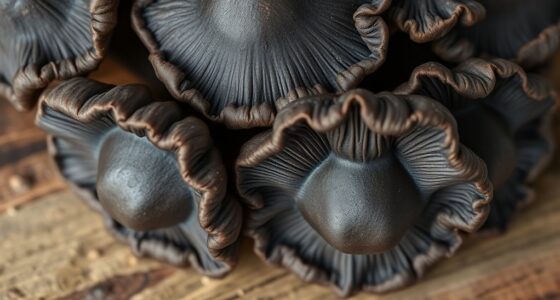
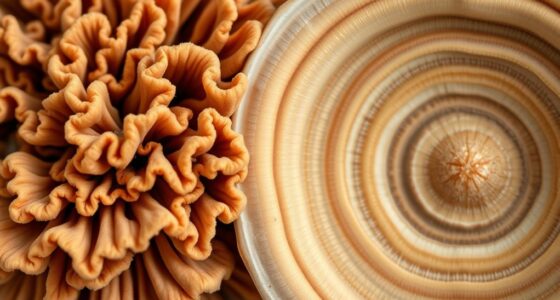
To tell puffballs from earthballs by their interior textures, look inside and observe. Puffballs are soft and spongy, turning into a fine, powdery spore mass as they mature, which they explosively release. Earthballs, on the other hand, have a dense, rubbery core that remains solid, with spores stored inside a less dispersible structure. Understanding these differences helps identify the fungi, and plenty more details await if you keep exploring.
Key Takeaways
- Puffballs have a soft, spongy interior that turns into powdery spores when mature.
- Earthballs feature a dense, rubbery core that remains solid, not powdery.
- Cutting a puffball reveals a fluffy or powdery interior, unlike the firm interior of an earthball.
- Puffballs disperse spores explosively as powder; earthballs rely on other dispersal methods.
- Interior texture differences help identify the fungi and understand their spore dispersal strategies.
When examining fungi, understanding their interior textures can reveal a lot about their identities and characteristics. This knowledge isn’t just about identification; it’s a gateway to appreciating how these organisms fit into the larger web of life. For puffballs and earthballs, their internal structures tell stories about their spore dispersal strategies and ecological roles, empowering you to see beyond their surface appearances and grasp their essential functions in nature’s balance.
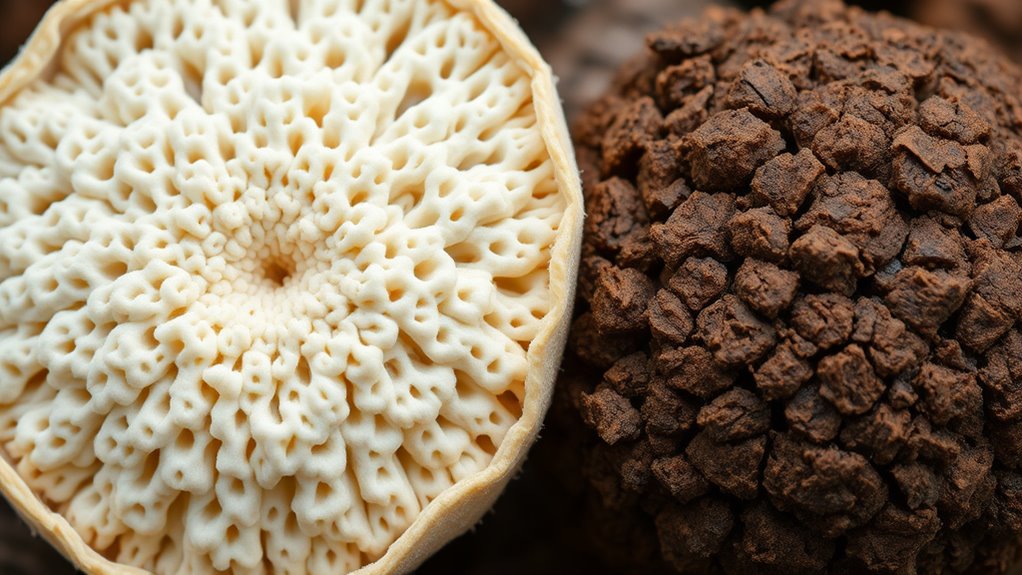
Puffballs and earthballs may look similar at first glance, but their interior textures hold key clues. When you cut into a puffball, you’ll find a soft, spongy interior that turns into a fine, powdery mass as it matures. This powder is packed with spores, ready to be released in a burst when the outer wall is disturbed—like a natural aerosol, dispersing spores widely. This method of spore dispersal champions mobility and rapid colonization, allowing puffballs to spread their genetic material over large areas efficiently. Recognizing this interior texture not only helps you identify the fungi but also reveals how they actively participate in ecological roles such as nutrient recycling and supporting soil health. Puffballs break down organic matter, returning nutrients to the environment, and their spore dispersal ensures their ecological contributions continue across generations.
Cut into a puffball to see its soft, powdery, spore-filled interior essential for nutrient cycling and ecological balance.
In contrast, earthballs possess a denser, more solid interior that often resembles a firm, almost rubbery core. When you examine an earthball’s interior, you’ll notice the absence of the powdery spore mass typical of puffballs. Instead, their spores are stored within a more enclosed, less readily dispersible structure. This physical trait influences their ecological role—they tend to rely on different dispersal mechanisms, sometimes involving animals or environmental factors like rain to release spores gradually. The sturdiness of their interior also means earthballs can endure harsher conditions, making them a resilient part of their ecosystem. By understanding their interior textures, you grasp how earthballs fit into ecological roles of long-term spore storage and slow, reliable dispersal, helping sustain fungi populations even in challenging environments.
Additionally, advances in spore dispersal research shed light on how fungi adapt their interior structures to optimize survival and ecological impact. Your exploration of internal textures isn’t just about identification; it’s a way to understand how fungi serve the greater good of ecosystems. Puffballs and earthballs demonstrate diverse strategies—one quick and explosive, the other slow and steady—to disperse spores and fulfill their ecological roles. Recognizing these differences empowers you to see fungi as active participants in nature’s grand cycle, emphasizing their importance in nutrient cycling, soil health, and biodiversity. This knowledge liberates you from superficial observations, inviting a deeper appreciation of fungi’s intricate and essential contributions to life on Earth.
Frequently Asked Questions
Are Puffballs or Earthballs More Toxic?
You should know that earthballs are generally more toxic than puffballs. Toxicity indicators include their dark, firm interior and bitter taste, unlike edible puffballs with white, uniform flesh. If you’re seeking liberation from confusion, always check these features carefully. Avoid earthballs unless you’re absolutely sure they’re safe, as their toxicity can cause serious health issues. Puffballs, when properly identified, offer a safe, edible option for mushroom enthusiasts.
Can Interior Texture Indicate Edibility?
You wonder if interior texture reveals edibility? It can, but don’t rely solely on it. Edibility indicators like a spongy, uniform interior often suggest a safe puffball, while a dense, fibrous interior hints at toxicity in earthballs. Stay vigilant—interior texture offers clues, yet it’s no guarantee. Trust your knowledge, but always double-check with expert sources before liberating yourself into foraging adventures.
Do All Puffballs Have the Same Interior?
Not all puffballs share the same interior. Morphological variations, like size, shape, and spore development, differ among species, and habitat preferences influence these differences. You’ll notice some have smooth, uniform interiors, while others may show granular or fibrous textures. Understanding these distinctions helps you identify safe, edible puffballs and allows you to appreciate the diversity and freedom in foraging. Trust your observations and enjoy the exploration.
How Does Spore Release Differ Between the Two?
You’ll notice that puffballs release spores through a sudden burst when their outer layer breaks, dispersing spores into the air with force. Earthballs, however, release spores more gradually, often through a pore or slit. Environmental influences like humidity and wind play a vital role in spore dispersal mechanisms, helping these fungi spread widely. Embrace this natural process and feel liberated knowing nature’s spores are freely traveling to create new life.
Are There Visual Cues to Distinguish Them Easily?
Yes, you can distinguish them visually by observing spore color and cap surface. Puffballs usually have a uniform, smooth surface with a white or cream spore release, while earthballs often display a rougher, darker, or cracked cap. These cues allow you to identify and liberate yourself from confusion, helping you appreciate nature’s diversity. Trust your eyes and observe carefully to confidently tell puffballs from earthballs.
Conclusion
When you compare puffballs and earthballs, their interior textures tell a clear story. Imagine you’re hiking and spot a strange, firm ball—you might mistake it for an earthball, but a squeeze reveals its soft, spongy interior, unlike the airy puffball. Just like a forager who learned to tell the difference, you’ll avoid dangerous look-alikes and enjoy safely identifying fungi. Remember, a quick interior test can save you from a risky mistake!